Should You Remove a Large Tree Near Your Home? A Decision Guide
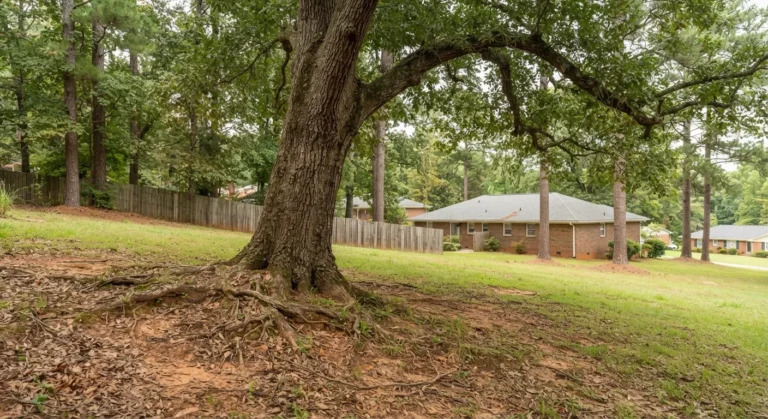
Big trees are a big part of Rome’s charm. Shady oaks line streets from Between the Rivers to West Rome. Tall pines rise over neighborhoods near Berry College and Shorter University. But a big tree near a house also brings big questions. Should you remove a large tree, or keep it? This guide walks Rome and Floyd County homeowners through the decision, step by step.
There is no single right answer. A healthy oak can add shade, beauty and value for decades. A failing one can put your family at risk. The goal is to tell the two apart.
Start With the Tree’s Health
First, find out if the tree is sound. Many large trees look fine from the street but hide problems. Others look rough but are stable.
- Is the crown full, or thinning from the top? See tree dying from the top down.
- Are there mushrooms or conks at the base? See mushrooms at the base of a tree.
- Are there deep cracks or weak V-forks? See cracked tree trunk.
- Has the lean changed? See leaning tree after a storm.
- Are there dead or hanging limbs?
One problem may be fixable. Several problems together usually point to removal.
Then Look at What It Could Hit
Arborists call this the target. A big tree in the back corner of a large lot is a low concern even with flaws. The same tree beside a bedroom is a different story.
- Bedrooms and living areas.
- Driveways and parked cars.
- Play sets, pools and patios.
- Power lines and your service drop.
- A neighbor’s house or fence.
A simple test: if it fell straight toward your home, would it reach? If yes, its health matters a lot more.
Reasons to Keep a Large Tree
- Shade and energy. Large trees cool homes in Georgia summers.
- Curb appeal. Mature trees are hard to replace. A new tree takes decades to reach that size.
- Stormwater. Big canopies slow rain and reduce runoff.
- Wildlife. Oaks support many birds and insects.
- Character. Many Rome neighborhoods are defined by their old trees.
Reasons to Remove a Large Tree
- It is dead, dying or decaying.
- It has a defect that cannot be fixed, like root rot or a deep trunk split.
- It leans toward the house and the lean is new.
- Its roots keep lifting slabs or invading pipes. See do tree roots damage foundations.
- It is simply too big for the space. See how close is too close.
- You are building or adding on in that spot.
Options Between Keep and Remove
It is not always all or nothing. Several middle paths can lower risk while keeping the tree.
- Crown reduction. Shortening long limbs back to strong side branches. Never topping. See why topping trees is bad.
- Deadwood removal. Taking out dead limbs that could drop.
- Cabling and bracing. Supporting a weak fork. See does tree cabling work.
- Clearance pruning. Lifting limbs off the roof.
- Monitoring. Yearly checks for a tree with minor issues.
Get a Professional Opinion
For a large tree near a home, a tree risk assessment is money well spent. A Level 2 assessment walks the whole tree. A Level 3 can test for hidden decay with tools like resistance drilling. You get a risk rating and clear options.
A written report also helps later. It shows you took reasonable care. That can matter with insurance or if a neighbor raises concerns.
What Removal Involves
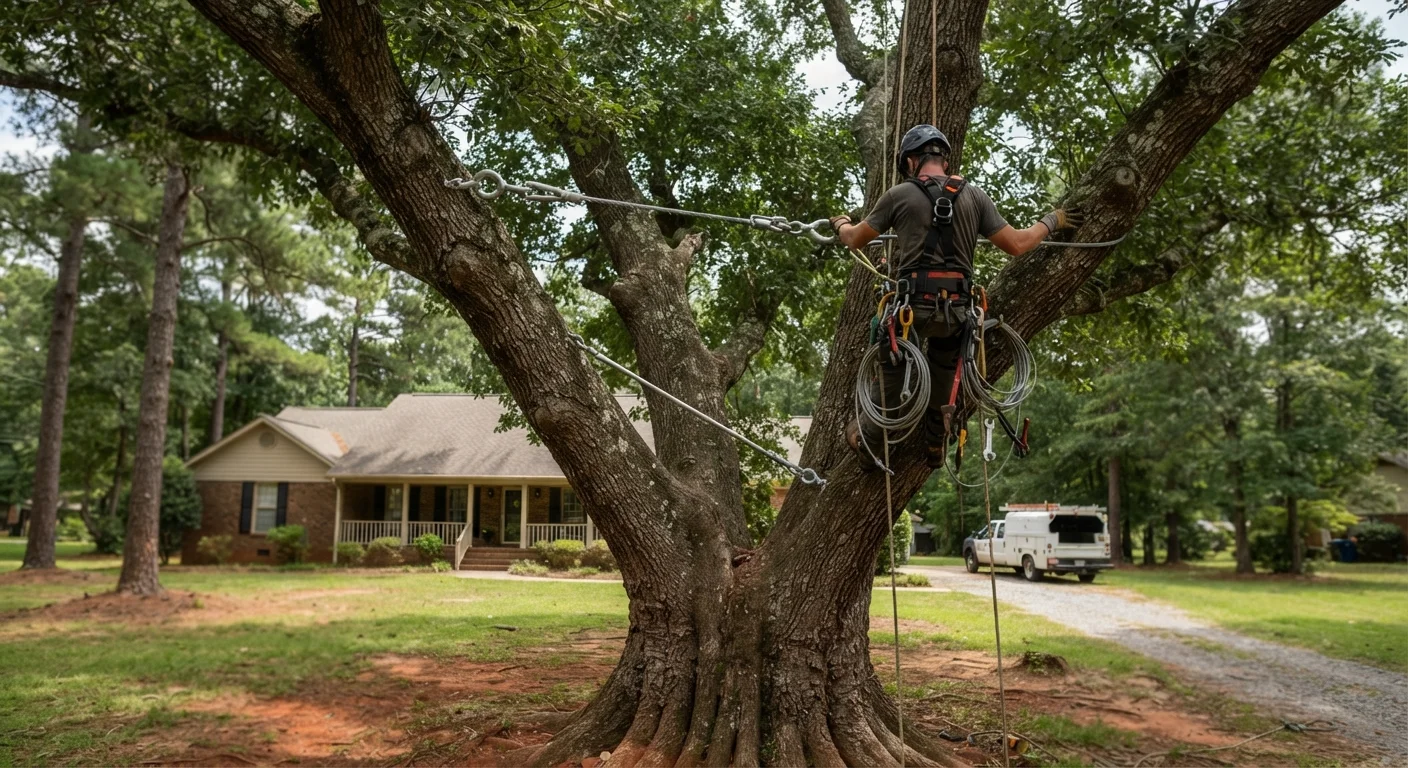
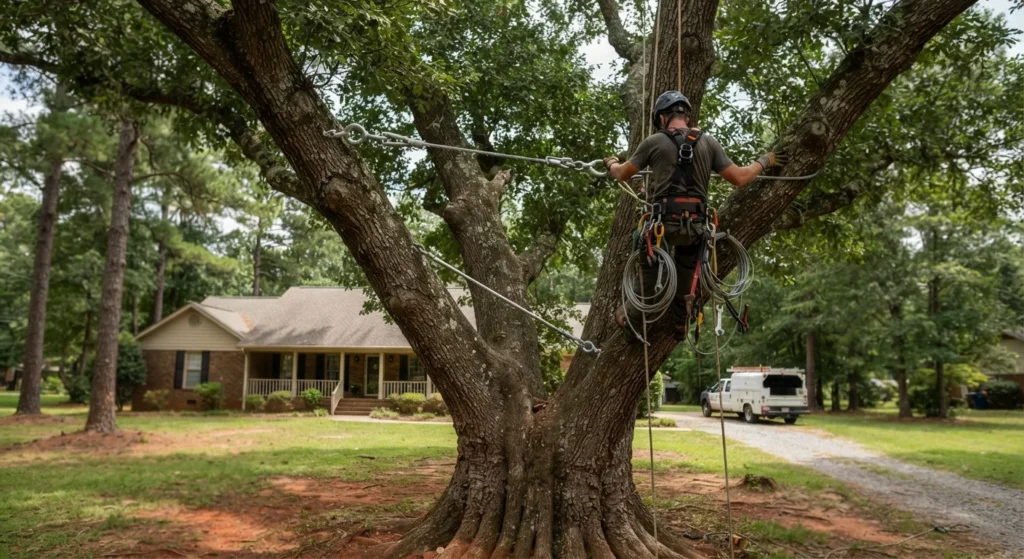
Taking down a large tree near a home is skilled work. Crews rarely fell it in one piece. Instead they climb or use a lift, then cut it in sections. Each piece is lowered by rope or lifted out by crane.
- Planning the work zone and protecting the roof, fence and lawn.
- Rigging limbs and lowering them in a controlled way.
- Taking the trunk down in short sections.
- Using a crane when climbing is unsafe or there is no room to lower. See when you need a crane.
- Chipping brush and hauling wood.
- Grinding the stump if you choose. See stump grinding vs stump removal.
What It Costs
Large tree work is priced on height, trunk size, access, what is under the tree and the gear needed. See what affects tree removal cost for the full list. Always get written quotes and check insurance. See how to compare tree removal quotes.
Timing the Decision
If the tree is sound, you have time. Plan pruning in late fall or winter. For oaks, avoid March through August when possible. See best time to prune trees in Georgia.
If the tree shows urgent signs, act now. Do not wait for storm season. A tree on your roof costs far more than a planned removal.
Our service details are on the large tree removal in Rome, GA page.
Unsure about a big tree near your home? Call for help near you in Rome or Floyd County.
Rome’s large oaks and pines are part of what makes the city special. Make each removal decision carefully, with good information and a plan.
FAQs
Do I need permission to remove a large tree on my property?
Some cities regulate tree removal, especially on larger lots or during development. Check with the City of Rome or Floyd County before work. See tree removal permits.
Will removing a big tree hurt my home value?
Mature healthy trees often add appeal. A dangerous tree can hurt value or scare buyers. See tree removal before selling a house.
Can I replant after removal?
Yes. Plant a new tree farther from the house and grind the old stump first.
Is a big healthy tree likely to fall?
Healthy trees with good roots usually ride out storms. Risk rises with defects, root damage and soaked soil.
Should I remove a large tree to install solar panels?
Weigh shade loss against solar gain. Pruning may be enough in some cases.
Sources
These outside sources informed this guide:
Georgia sources: UGA Extension: Shade and Street Tree Care · UGA Extension: Hiring a Tree Care Service