Leaning Tree After a Storm: When to Worry in Rome, GA
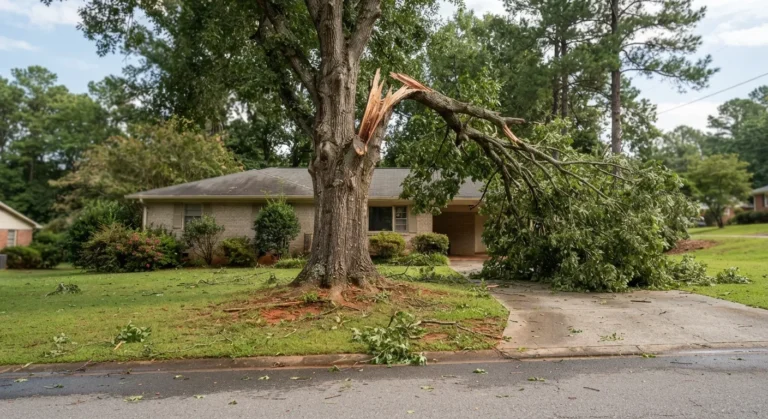
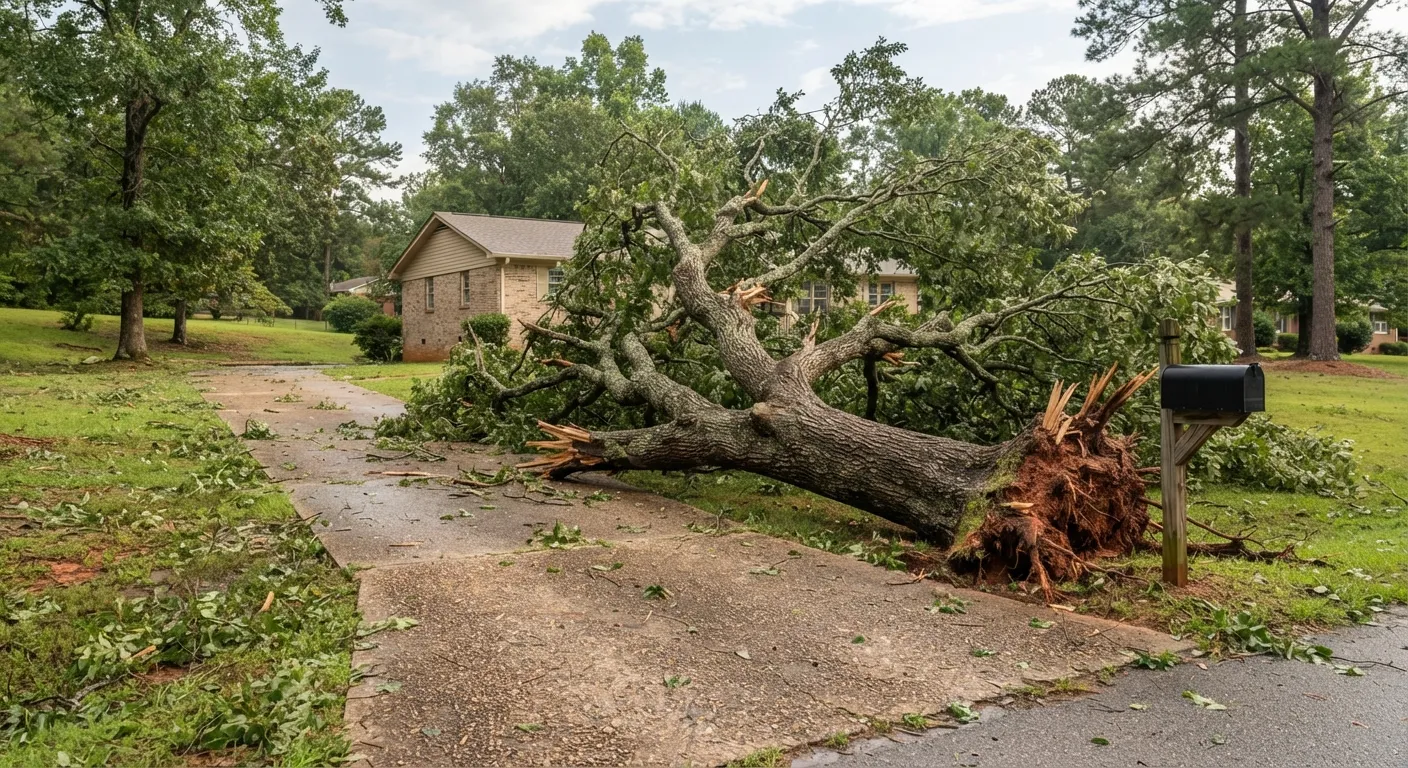
A storm passes. You walk outside. One of your trees now tilts toward the house. Is it safe? This guide helps Rome and Floyd County homeowners judge a leaning tree after a storm.
Old Lean vs. New Lean
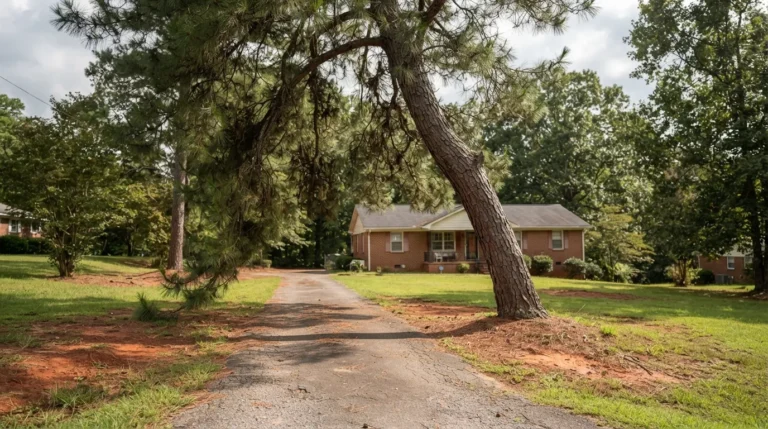
Many trees lean for life. They grow toward light or away from a building. Over the years they add wood to support that lean. Those trees are often stable.
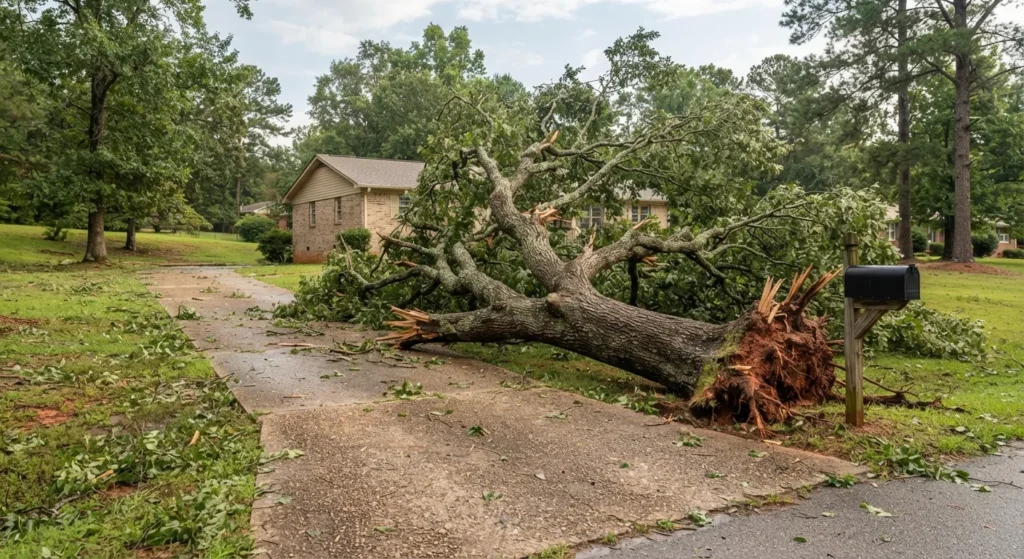
A new lean is different. It usually means roots have moved or broken. That is the case to worry about.
Red Flags on a Leaning Tree After a Storm
- Lifting soil. Mounded or cracked ground on the side opposite the lean.
- Exposed roots. Roots torn or pulled from the soil. See exposed tree roots.
- A lean that grows. Compare photos from day to day.
- Cracks at the base. Splits in the lower trunk or root flare.
- A target below. A house, driveway, play set or power line in reach.
Soaked clay soil is common after big rain in Rome. Wet ground holds roots poorly. A tree can keep shifting for days after the storm ends.
Safe Steps Right Now
- Keep everyone out of the fall zone.
- Move cars away from the lean side.
- Never push, pull or cable the tree yourself.
- Watch for wires in the canopy. If you see any, call the utility first.
- Take dated photos to track movement.
Can a Leaning Tree Be Saved?
Sometimes. Young trees can be re-staked. A mature tree with root damage is harder. Cabling and bracing help with weak limbs and forks. They do not fix a broken root plate. Learn more about tree cabling and bracing.
An arborist can judge the roots and the lean. Book a tree risk assessment if you are unsure.
When to Call for Removal
A new lean plus lifting soil is a removal case. So is any lean toward your home. Our leaning tree removal page explains the process. For urgent cases near 30161, 30165 or anywhere in Floyd County, see emergency tree removal.
Worried about cost or who pays? See tree removal cost and insurance coverage.
See a warning sign right now? Keep people and cars clear of the fall zone. Then call for help near you in Rome or Floyd County.
How to Track Movement Yourself
You do not need special tools to see if a lean is getting worse. Try these simple checks:
- Photo from a fixed spot. Stand in the same place each day. Line the trunk up with a fence post or corner of the house.
- Stake the soil. Push a stake into the ground at the edge of any soil crack. Watch if the gap grows.
- Plumb line. Hang a weighted string from a low branch. Mark where it points on the ground.
Any growth in the lean over a day or two means the roots are still moving. Treat it as urgent.
Why Rome Soil Matters
Much of Floyd County has clay soil. Clay holds water after heavy rain. Saturated ground loses grip on roots. Low ground near the Etowah, Oostanaula and Coosa rivers stays wet longer. Trees there can shift days after a storm passes.
Shallow-rooted trees and tall pines are most at risk in wet soil. See our pine trees guide for more.
Insurance and a Leaning Tree
Most policies pay to repair damage a tree causes. Removing a tree that has not fallen is often not covered. Photos of a new lean and any damage help your claim. See tree removal insurance for details.
Who Pays If It Falls on a Neighbor?
In Georgia, the owner of the damaged property usually files with their own insurer when a healthy tree falls in a storm. The picture changes if the tree owner knew it was dead or diseased. Written notice from a neighbor or arborist before it fell can shift liability. This is general info, not legal advice. See neighbor tree responsibility and ask an attorney or your insurer about your case.
Unsure how much sound wood is left? An arborist can test for hidden decay during a tree risk assessment.
Leaning Pines vs. Leaning Oaks
Pines grow tall with weight high up. A pine that tips after rain often has a broken or lifting root plate. Oaks may lean more slowly as roots fail or decay spreads. Both need prompt checks if the lean is new.
What Arborists Look For
- Soil heave or cracks at the root plate.
- Torn or exposed roots.
- Decay at the base.
- How the trunk curves. Old leans often curve upward toward the light.
- What the tree would hit.
If the Tree Is Near a Neighbor’s Home
Tell your neighbor right away. Keep them out of the fall zone. Document your actions. Quick, clear communication protects everyone.
Quick Recap
- A long-time lean is often stable. A new lean is not.
- Lifting soil is the most urgent sign.
- Keep everyone out of the fall zone.
- Track movement with photos and stakes.
- Call for an assessment or removal if the lean grows.
Local Notes for Rome and Floyd County
Rome’s rivers, the Etowah, Oostanaula and Coosa, leave low ground with soft, wet soil after heavy rain. Neighborhoods near the riverbanks, Between the Rivers, and low parts of West and South Rome see this most. Trees there can shift days after a storm. If you live near 30161 or 30165 and see a new lean, act early. A short drive from anywhere in Floyd County, help near you is a phone call away.
FAQs
How much lean is too much?
There is no single safe angle. A sudden change matters more than the degree.
Will a leaning tree straighten on its own?
A mature tree will not. Its roots have already shifted.
Can I cut a leaning tree myself?
A leaning tree holds stored tension. Cuts can make it fall the wrong way or split. Leave it to a trained crew.
How fast can a crew come?
In storm season, demand is high. Call early and describe the lean, size and what it threatens.
Can I prop up a leaning tree?
Mature trees cannot be safely propped by homeowners.
Is a leaning tree covered by insurance?
Removal before it falls is usually not covered.
Sources
These outside sources informed this guide:
Georgia sources: UGA Extension: Is My Tree Dying? · Georgia Forestry Commission: Trees and Storm Safety