Signs a Tree Is About to Fall: 9 Warnings for Rome, GA Homes
Most trees give warnings before they fail. The trick is knowing what to look for. This guide covers the signs a tree is about to fall, in plain words, for homeowners in Rome, GA 30161 and across Floyd County.
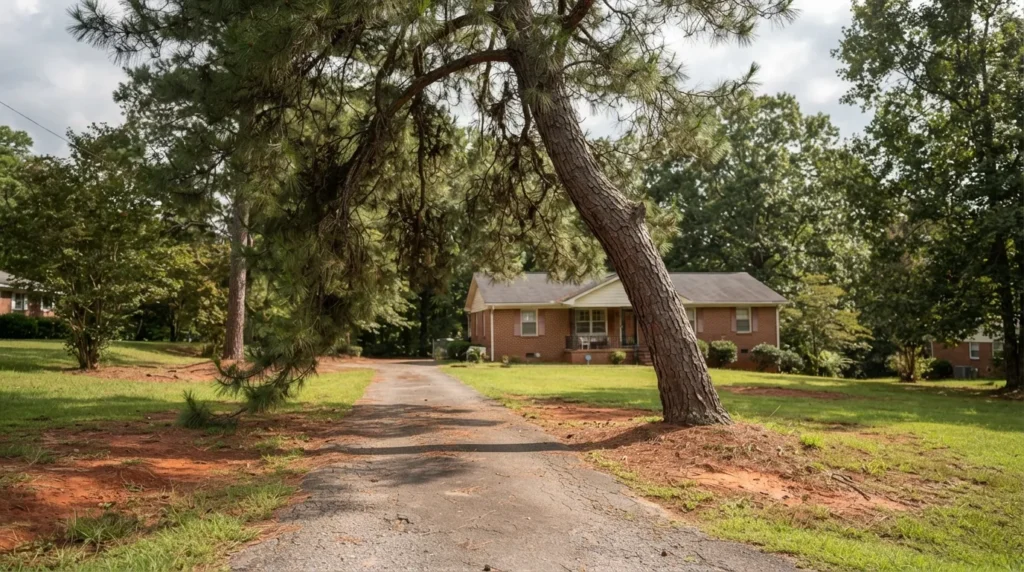
Our area has big oaks, tulip poplars and tall pines. Many stand close to homes. Wet clay soil near the Etowah and Oostanaula rivers can also loosen roots after heavy rain. That mix makes early checks worth the time.
The 9 Signs a Tree Is About to Fall
No single sign proves a tree will fall. But each one raises the risk. Two or more together deserve a professional look.
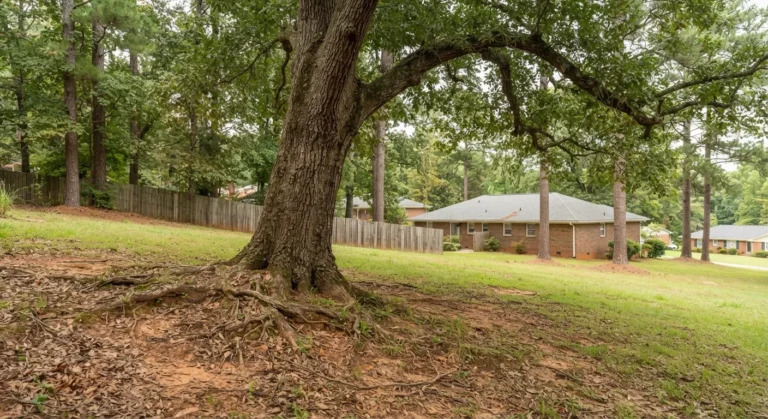
1. Soil lifting or cracking at the base
Look at the ground on the side away from the lean. If the soil is mounded, cracked or lifting, roots may be tearing loose. This is one of the most urgent signs.
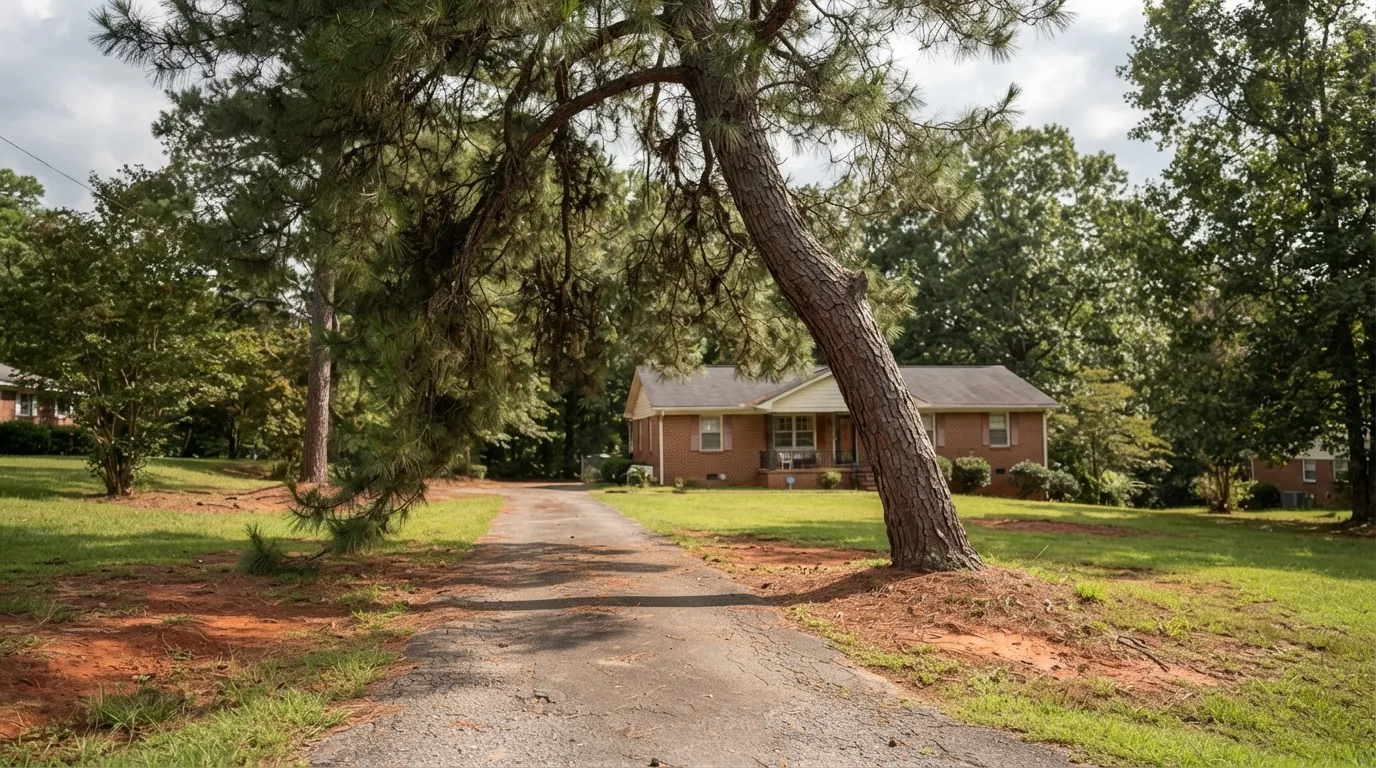
2. A new or worsening lean
A tree that has leaned for decades is often stable. A lean that appeared after a storm is different. Read our guide on a leaning tree after a storm.
3. Deep cracks in the trunk
Cracks that go into the wood weaken the trunk. Cracks below a fork are a special concern. See is a cracked tree trunk dangerous.
4. Mushrooms or conks at the base
Fungus on the trunk or roots often means decay inside. Some root-rot fungi can topple a tree before the canopy looks sick. More in mushrooms at the base of a tree.
5. Hollow spots and cavities
Trees can wall off decay. So a cavity is not always a death sentence. But a cavity with fungus or soft wood needs checking.
6. Dead branches or a dead top
Dead wood is brittle. It can drop on a calm day. A crown dying from the top down is also a warning. See tree dying from the top down.
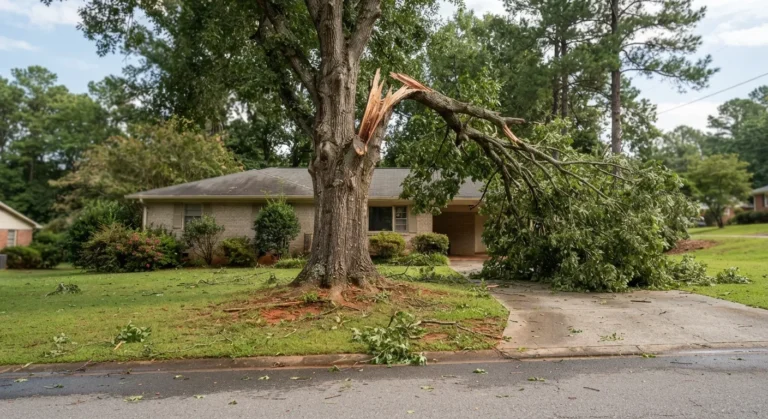
7. Hanging, broken limbs
A broken limb caught in the canopy can fall at any time. Read about hanging broken branches.
8. Weak V-shaped forks
Two trunks joined in a tight V often trap bark between them. This weak joint can split apart in wind.
9. Root damage from digging
Trenching, new driveways and grade changes can cut major roots. Problems often show up a year or more later.
What to Do If You Spot These Signs
- Keep people, pets and cars out of the fall zone. That is roughly the tree height in every direction.
- Do not climb or cut a damaged tree yourself. See our DIY tree removal safety guide.
- Take photos from several angles. They help with quotes and insurance.
- If wires are involved, stay back and call Georgia Power or your EMC first. See tree on a power line.
- Book a tree risk assessment for anything near your home.
When It Becomes an Emergency
Fast changes mean act now. A sudden lean, cracking sounds or lifting soil are emergency signs. In that case, emergency tree removal in Rome, GA is the safe call.
If the tree is stable but sick, you have time. Get an assessment and plan the work.
See a warning sign right now? Keep people and cars clear of the fall zone. Then call for help near you in Rome or Floyd County.
Seasonal Risk in Rome and Floyd County
Risk is not the same all year. Spring storms and summer thunderstorms bring strong gusts. Leafed-out crowns catch more wind. Late summer drought weakens roots and adds dead wood. Winter ice can snap limbs on pines and oaks.
A good habit is a walk-around check twice a year. Do one in early spring and one in fall. Check again after any big storm. Our seasonal tree care guide has a full calendar.
A 10-Minute Self-Check
- Stand back and look at the whole tree. Is it straight or leaning more than before?
- Walk the base. Look for fungus, cracks, soft wood or lifting soil.
- Look up. Note dead limbs, bare tops and broken branches.
- Check forks. Tight V-shapes with bark trapped inside are weak.
- Note targets. What would it hit if it fell?
- Take photos so you can compare later.
How Pros Check Hidden Decay
Decay often hides inside a trunk that looks fine. Arborists use a few tools to find it:
- Sounding. Tapping the trunk with a mallet. Hollow wood sounds dull.
- Resistance drilling. A thin bit, about 1/16 inch wide, is drilled into the trunk. A graph shows solid, decayed or hollow wood. The tiny hole seals over in time.
- Root collar digging. Removing soil at the base to check major roots.
These tests give real evidence for a keep-or-remove choice. Ask about them during a tree risk assessment.
Who Pays If It Falls on a Neighbor?
In Georgia, the owner of the damaged property usually files with their own insurer when a healthy tree falls in a storm. The picture changes if the tree owner knew it was dead or diseased. Written notice from a neighbor or arborist before it fell can shift liability. This is general info, not legal advice. See neighbor tree responsibility and ask an attorney or your insurer about your case.
FAQs
Can a tree fall with no warning?
Yes. Root rot can hide below ground. That is why fungus at the base matters even when the leaves look healthy.
Which trees fail most often around Rome?
Big oaks with root damage and tall pines in wet soil are common concerns here. Our oak and pine guides explain why.
How often should I have my trees checked?
A yearly look is wise for big trees near your home. Check again after every major storm.
Do healthy-looking trees fall?
Yes. Root rot and storm winds can bring down trees with full green crowns.
Before You Call for Help
- Note which signs you saw and where.
- Take photos from two or three angles.
- Measure or estimate the tree height and distance to your home.
Sources
These outside sources informed this guide:
- UGA Extension, Forsyth County: Hazardous Trees
- Penn State Extension: Tree Diseases That Create Hazards
- SavATree: Is Your Tree Leaning?
Georgia sources: UGA Extension: Is My Tree Dying? · UGA Extension: Tree Ownership and Responsibility