
Home / Emergency Tree Removal / Stump Grinding & Removal
Rome, GA & Floyd County — What Happens to What’s Left Behind
Stump Grinding vs. Stump Removal in Rome, GA
Tree removal takes the tree down, but the stump is a separate decision — and it’s often priced and scheduled separately too.
This page covers the two main stump removal options, when each makes sense, and one caveat that catches people off guard afterward.
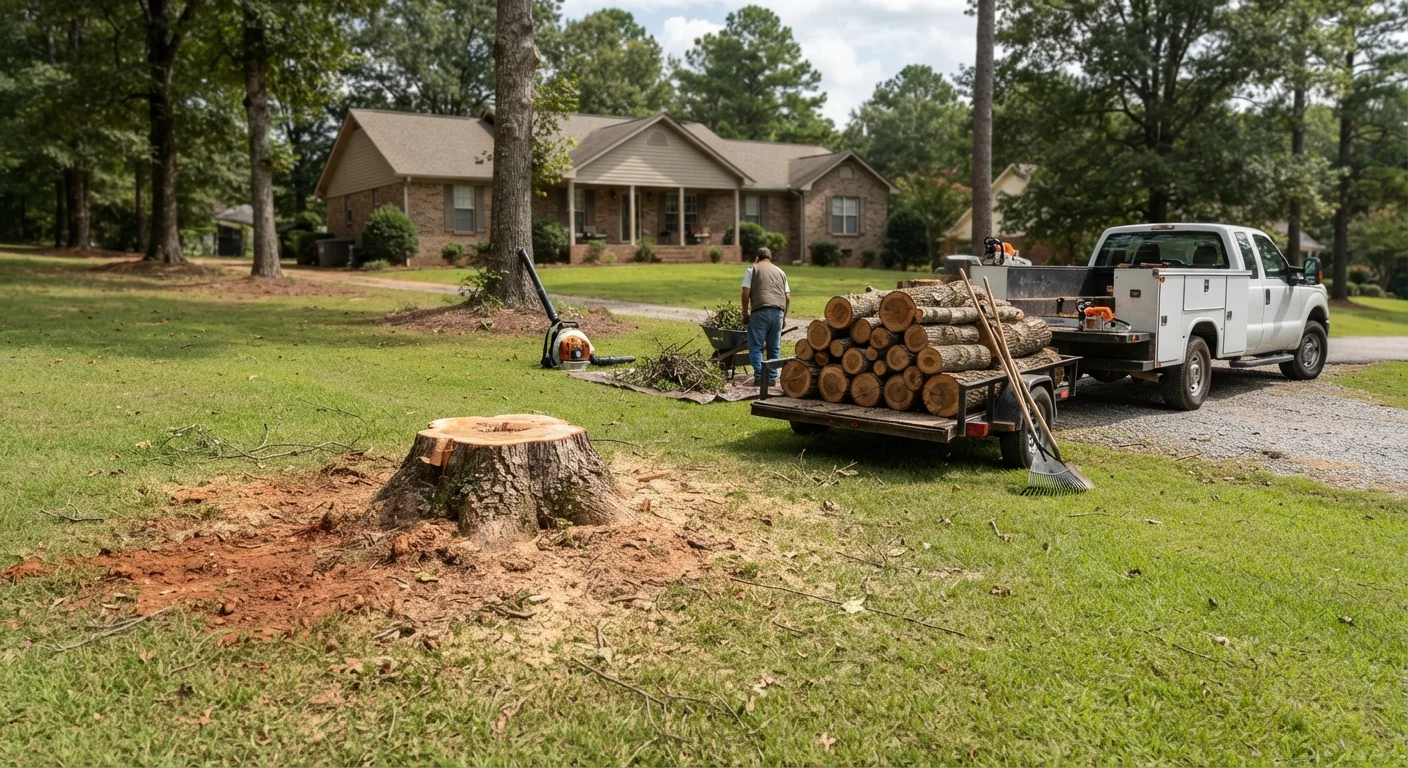
Stump Grinding: The Faster, Less Invasive Option
Grinding uses a specialized machine to chew the visible stump and surface roots down below ground level. It typically leaves a bed of wood chips where the stump used to be.
This is generally faster, less disruptive to the surrounding yard, and less expensive than full removal.
What it doesn’t do: grinding removes the visible stump but leaves the deeper root system in the ground. The roots will gradually decay over time, but they’re not physically extracted the way they would be with full removal.
Full Stump Removal: More Thorough, More Disruptive
Full removal extracts the stump and a significant portion of the root mass, generally using excavation equipment. This leaves a larger hole that needs to be filled, and disturbs more of the surrounding yard than grinding does.
But it’s the more complete option if you want the root system gone rather than just decaying in place over time.
Which One Should You Choose?
Grinding is usually the better fit if:
- You want the visible stump gone and plan to landscape or plant grass over the spot
- Budget and speed matter more than fully clearing the root system
- You’re not planning to build directly over that exact spot
Full removal is usually worth the extra cost and disruption if:
- You’re planning construction, a new structure, or hardscaping directly over that location
- You want to replant a tree in the exact same spot relatively soon and don’t want to wait for old roots to decay
- The tree was removed due to disease or a pest problem, and there’s a concern the stump or root system could continue harboring it
Storm damage right now? We answer 24/7.
📞 Call Now: (762) 470-0249The Regrowth Caveat
This is the detail that surprises people. Some tree species can sprout new growth from roots left in the ground after grinding, even though the visible stump is gone.
How likely this is depends heavily on the specific species and how much root material remains.
If you’ve had a stump ground and are seeing new shoots coming up nearby afterward, that’s usually root sprouting. It’s not a sign the grinding was done incorrectly. It’s a normal outcome for certain species.
Full removal, since it takes out more of the root mass, reduces this risk but doesn’t eliminate it entirely for particularly persistent species.
Before Any Digging: Call 811
Whether your stump removal project involves grinding or full removal, contact Georgia’s 811 utility-locate service before digging begins. This applies if the work goes deep enough to risk hitting buried utility lines.
This is a free, standard safety step — utility companies mark the location of underground lines so equipment doesn’t strike them during excavation.
Full removal, involving more digging, makes this more relevant than grinding, but it’s worth confirming with your provider either way.
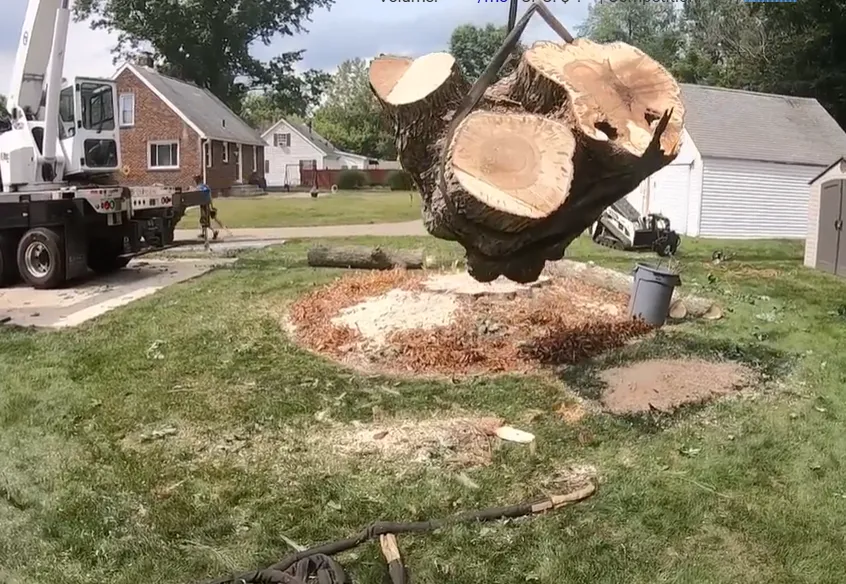
What Happens to the Area Afterward
After grinding, the wood-chip debris is typically removed or can be left as mulch. The shallow depression is usually filled with topsoil before grass seed or sod goes down.
After full removal, the larger hole needs to be backfilled with soil, and it’s worth letting it settle before planting anything directly on top. Freshly disturbed, loosely packed soil can settle further over the following months.
If you’re planning to replant a tree in the same spot, decomposing wood and root material can affect soil conditions for a period of time.
Waiting a season, or removing more of the old root material first, generally gives a new planting a better start.
Free written estimate — call now, day or night.
📞 Call Now: (762) 470-0249
Stump Removal Cost
Stump handling is typically priced separately from tree removal itself. Grinding is generally less expensive than full removal due to the reduced time, equipment, and disruption involved. → Full cost breakdown.
For general guidance on stump and root system decay, the UGA Cooperative Extension publishes homeowner resources on tree and stump care.
Rome & Floyd County Context
This applies across Rome (ZIP codes 30161, 30162, 30165) and surrounding Floyd County communities including Armuchee, Cave Spring, Lindale, and Shannon.
Many local yards have utility lines running closer to the surface than people expect. That’s exactly why the 811 call matters here as much as anywhere else.
Get a Local Estimate
Tell us about the stump and what you’re planning for the spot. We’ll connect you with an available local crew serving Rome and Floyd County.
Clearing a whole lot? See land clearing in Rome.
Not sure if it’s urgent? Call and describe it — free advice, no pressure.
📞 Call Now: (762) 470-0249How Stump Removal Works: Step by Step
- Call 811 first. Georgia 811 marks buried utility lines before any grinding. It is free.
- Clear the area. Rocks, decorations, and loose debris are removed around the stump.
- Grind below grade. The grinder cuts the stump down, usually several inches below the soil.
- Remove surface roots if needed. Large surface roots can be ground out as an added step.
- Backfill and clean up. The hole is filled with grindings or soil, and the area is cleaned.
Latest Articles
- What to Do With Stump Grindings (Wood Chips)
- How Deep Does Stump Grinding Go?
- What Happens to the Wood After Tree Removal?
Related Guides
- Will a Tree Stump Grow Back? How to Stop Stump Sprouts
- Can You Remove a Tree Stump Yourself? Options and Risks
- Stump Grinding Cost in Rome, GA: What Drives the Price
- After Stump Grinding: How to Plant Grass or Replant a Tree
- Do I Need a Permit to Clear Land in Rome, GA?
- How Deep Does Stump Grinding Go?
- What to Do With Stump Grindings
Frequently Asked Questions
Is stump grinding included with tree removal?
No, stump removal is not automatically. It’s typically a separate line item you need to request and price out on its own. That’s true even when it’s done as part of the same visit as the removal.
How long does it take for ground-up stump debris to fully decompose?
It varies by species, stump size, and conditions. But the wood-chip layer left after grinding generally breaks down over a period of months to a couple of years, gradually settling as it does.
Will new shoots keep coming up after grinding?
Sometimes, for a period of time, especially with species prone to root sprouting. This typically diminishes as the remaining root system decays, though it can take a season or more to fully stop for persistent species.
Can I plant a new tree in the exact same spot right away?
It’s usually better to wait, particularly after grinding, since decomposing root material can affect soil conditions for a new planting. If you want to replant immediately, full removal followed by fresh soil is generally the more reliable path.