Part of our guide: Emergency Tree Removal
Home / Emergency Tree Removal / Crane Tree Removal
Rome, GA & Floyd County — When a Crane Is the Right Call
Crane Tree Removal in Rome, GA — When It’s Actually Necessary
Crane tree removal in Rome, GA isn’t standard for most jobs. It’s a specific solution for situations where climbing and rigging alone can’t safely control a tree’s size, weight, or position relative to a structure.
This page covers exactly when that’s the case, what setup actually requires, and why it changes the cost.
When Crane Tree Removal in Rome, GA Becomes Necessary
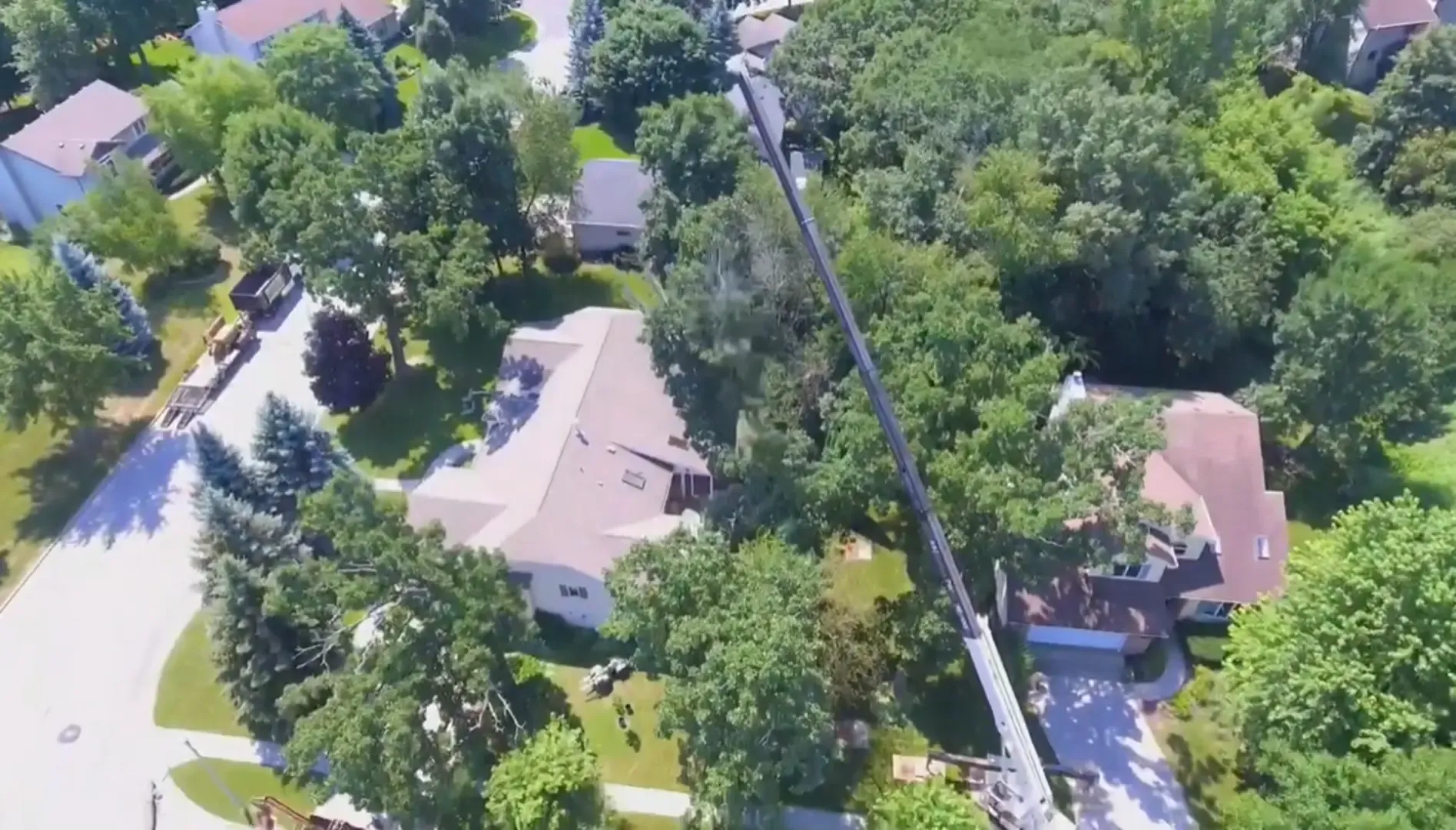
- The tree is too large or too heavy for a climber and ground rigging to safely lower in sections. This is especially true with big trunk sections near the top of what rigging gear can handle
- There’s no safe landing zone for lowered pieces. A tight side yard, a pool, a fence line, or anywhere a rigged section coming down would cause damage
- The tree leans toward a structure in a way that makes directional felling or standard rigging too risky
- Multiple hazards stack together: a large tree, a nearby structure, and limited access all at once. A crane solves several problems simultaneously. It lifts pieces straight up and away rather than lowering them through tight space
If none of these apply, sectional removal with standard rigging is usually sufficient and considerably less expensive. → Full standing-tree-near-a-structure guide
How Crane Removal Actually Works
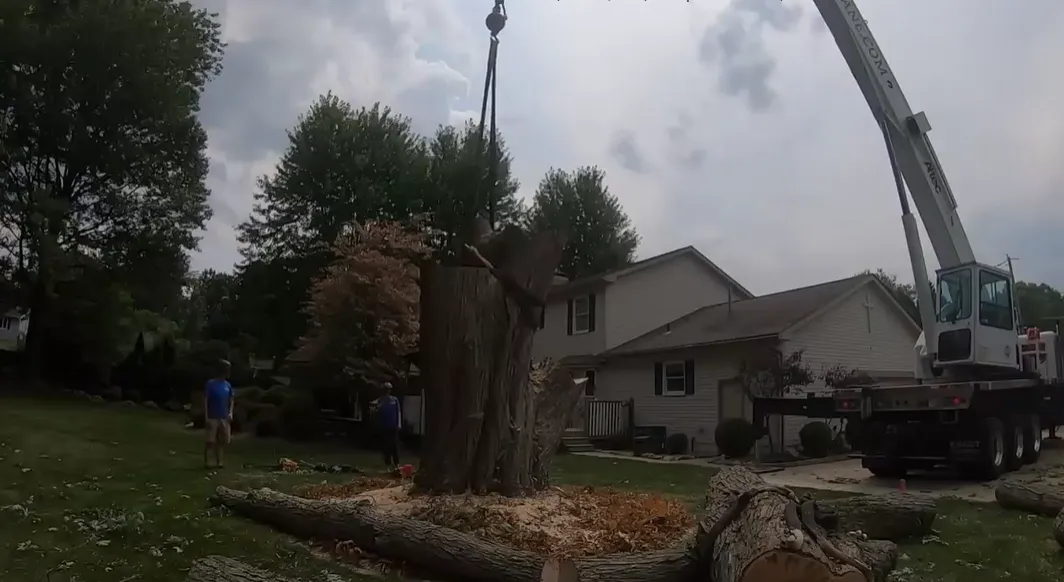
Crane-assisted removal, the more common approach, works like this. A climber ascends the tree and attaches rigging to a section before cutting it. The crane takes the weight of that section as it’s cut free.
Then it lifts and swings the section to a clear landing zone. This is how crane tree removal in Rome, GA usually works.
Rather than the section being lowered by hand-operated ropes and ground crew as it would be in standard rigging.
A full crane pick is used less often. The crane does more of the lifting work directly, sometimes with less climbing involved. It’s generally for specific large sections or situations where climbing itself is considered too risky.
Either way, this requires more coordination than standard removal. A crane operator, typically a climber, and ground crew all work in sync. They communicate clearly about each cut and each lift.
Setup Space: What a Crane Actually Needs
Swing radius: the crane needs enough clear space to rotate and move lifted sections without obstruction. That space sometimes extends well beyond the immediate work area.
Overhead clearance: cranes must maintain their own safe distance from power lines. That can add complexity when lines are near the tree being removed. This is assessed before the crane is ever positioned.
Outrigger footprint and ground-bearing capacity — a crane’s stabilizing outriggers concentrate significant weight onto a small footprint. The ground (or driveway) underneath needs to be assessed for whether it can bear that load without shifting, cracking, or sinking.
Access to position the crane at all.
Narrow driveways, tight side yards, or steep grades can limit where a crane can even be placed. That sometimes affects whether crane removal is a realistic option for a specific property in the first place.
Free written estimate — call now, day or night.
📞 Call Now: (762) 470-0249Protecting Your Driveway and Lawn
Outrigger pads or plywood mats are standard practice under a crane’s stabilizing legs. They spread the load across a wider area. That reduces the risk of cracked pavement or a sunken, damaged lawn.
Good crane tree removal in Rome, GA protects your driveway and lawn.
Ask directly whether this is part of the plan — it should be standard, not an upsell.
Street and Right-of-Way Considerations
A crane may need to be positioned in the street. Its boom may need to swing over a public sidewalk or street to reach the work area. That can involve coordination beyond your own property line.
Sometimes a brief street closure or notification to the relevant city department. → Full right-of-way and jurisdiction breakdown
Why Crane Work Costs More
- Mobilization: getting a crane to the site, positioned, and set up takes real time and specialized transport. This cost applies regardless of how long the actual tree work takes
- A larger crew — crane work typically requires a dedicated operator in addition to the climbing and ground crew a standard removal would need
- Hourly crane rates — cranes are billed differently than standard tree removal labor, often with their own rate structure
- Sometimes a minimum job charge. Mobilizing a crane for a very short job still carries most of the same setup cost as a longer one
→ Full cost breakdown for emergency tree removal
Not sure if it’s urgent? Call and describe it — free advice, no pressure.
📞 Call Now: (762) 470-0249Safety Notes Specific to Crane Work
- Ground stability matters as much as the tree itself. An unstable or saturated ground surface can affect outrigger safety, which is part of why a site assessment happens before setup, not after
- Wind conditions affect crane operations more than standard rigging work, since lifted sections can act like sails. A crew may reasonably reschedule if conditions aren’t safe
- Bystander and vehicle clearance during lifts is managed deliberately — this isn’t a job to watch from directly underneath
Rome & Floyd County Context
Many of Rome’s older neighborhoods, particularly near downtown and the hillside streets across the seven hills, have narrower driveways and tighter lots than newer subdivisions. That makes crane access planning a genuinely important early step rather than an afterthought.
This applies across Rome (ZIP codes 30161, 30162, 30165) and surrounding Floyd County communities including Armuchee, Cave Spring, Lindale, and Shannon.
Get a Local Estimate
Tell us about the tree, its location, and your property’s access — we’ll connect you with an available local crew serving Rome and Floyd County.
Tree emergency near you? A local crew is one call away.
📞 Call Now: (762) 470-0249How Crane Tree Removal Works: Step by Step
- Site check and crane placement. The crew confirms crane access, ground strength, and clearance from wires.
- Climber rigs the first section. A climber ties in and attaches the crane line to a section of the tree.
- Cut and lift each piece. Each section is cut free and lifted over the house instead of dropped.
- Lower pieces to the ground crew. Pieces are set down in a clear area for cutting and chipping.
- Final cleanup. The crew chips brush, hauls wood, and cleans the yard as quoted.
Latest Articles
- How to Protect Your House and Yard During Tree Removal
- Branches Over Your Roof: When to Prune and When to Remove
- Tree Too Close to House? How Far Is Safe and What to Do
Frequently Asked Questions
How do I know if my property can even accommodate a crane?
This generally requires a site visit. Driveway width, overhead clearance, ground stability, and swing radius all depend on the specific property. They can’t be reliably judged from a phone call alone.
Does crane removal take less time than standard removal?
Not necessarily the tree-cutting portion. But a crane can make an otherwise slow, cautious rigging job significantly faster. It lifts sections directly away instead of lowering them piece by piece. The net time depends on the specific situation.
Will a crane damage my driveway?
Not if outrigger pads or mats are used to spread the load, which is standard practice for a professional crew. Ask specifically about this before work starts if you’re concerned about an older or thinner driveway surface.
Is crane removal always more expensive than sectional rigging?
Generally yes, due to mobilization and the larger crew involved. But some trees would take considerably longer with rigging alone, and carry more risk.
For those, a crane can sometimes be the more efficient overall choice despite the higher line-item cost. Crane tree removal in Rome, GA can be worth the higher cost.