Tree Removal for HOAs & Community Associations in Rome, GA
For Homeowners Associations & Community Managers — Rome & Floyd County, GA
Tree Removal for HOAs: 4 Rules Boards Should Know
Tree removal for HOAs often turns on one question: is the tree on common area or a private lot? For hiring qualified crews, see the International Society of Arboriculture.
Tree disputes are one of the more common sources of friction inside a homeowners association — who’s responsible, who needs to approve what, and who pays when something goes wrong. This page is written for board members, community managers, and residents navigating an HOA’s tree rules.
Common Area vs. Private Lot: The Core Distinction
Most HOA tree situations come down to one basic question: is the tree on a common area the association maintains, or on an individual homeowner’s lot?
- Common-area trees — along greenbelts, entrances, shared walkways, or amenity areas — are generally the association’s responsibility to maintain and remove when necessary.
- Private-lot trees — on an individual homeowner’s property — are generally that homeowner’s responsibility, even if the HOA’s governing documents (CC&Rs) require approval before removal or impose species/replacement rules.
- Boundary-line trees, where a trunk sits on or near a shared property line, can involve shared responsibility depending on the specific governing documents and applicable state law.
This split is set by each association’s specific CC&Rs, not a universal rule — if your governing documents say something different, that specific language controls.
Why HOA Tree Decisions Cause So Much Friction
A few patterns show up repeatedly in how these disputes unfold:
- A homeowner wants to remove a tree, but needs HOA approval first — many associations require written approval before removing any tree, even a healthy one on a private lot, and skipping that step can trigger fines or a forced replacement requirement.
- A homeowner wants to keep a tree the HOA wants removed — common-area tree decisions affect the whole community, and a board weighing safety, liability, or maintenance costs against a resident’s attachment to a specific tree is a frequent source of tension.
- Removal without proper approval — on either side. A board member or association removing a tree without following the association’s own process, or a homeowner removing a tree without required approval, both create real disputes and sometimes legal exposure.
- Damage caused by a common-area tree — if a common-area tree’s roots or a falling limb damages an individual homeowner’s property, responsibility typically falls to the association, though this depends on the specific circumstances and governing documents.
What a Board Should Document Before Approving (or Ordering) Removal
- The specific reason — hazard, disease, root damage to infrastructure, or a homeowner request — recorded in board minutes or written correspondence
- Consistency with past decisions — an association that approves removal for one resident’s circumstances but denies a materially similar request for another opens itself to a fair-treatment dispute
- A written process homeowners can actually follow — clear governing-document language on what requires approval and how to request it reduces disputes considerably compared to an ad hoc, case-by-case approach
None of this is legal advice specific to your association — HOA tree authority and liability depend on your specific governing documents and state law, and an association’s attorney is the right resource for anything genuinely contested.
Hazardous Trees in Common Areas
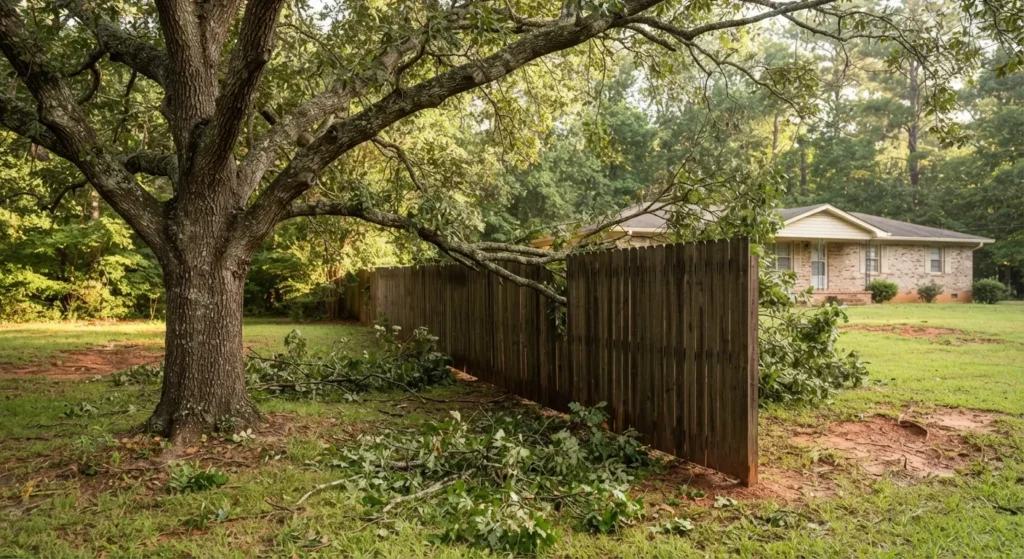
A hazardous tree in a common area is generally the association’s responsibility to assess and address, and delaying action on a known hazard carries the same kind of liability exposure for an association that it would for an individual property owner. → Full hazard-sign checklist · Full risk assessment guide
Working With a Tree Service as an Association
- Get a written, itemized scope for any common-area tree work, the same as you would for an individual property — this matters more for an association, since board decisions are subject to more scrutiny than an individual homeowner’s choice
- Confirm insurance and credentials before approving a vendor for association work → How to vet a tree service
- Consider a standing relationship for routine common-area tree maintenance rather than treating every situation as a one-off emergency
Cost Considerations for Associations
Common-area tree work is priced the same way as any removal — by size, access, and complexity — but an association managing multiple trees or a recurring maintenance need may find more predictable budgeting with a standing maintenance schedule rather than reactive, one-at-a-time requests. → Full cost breakdown
Rome & Floyd County Context
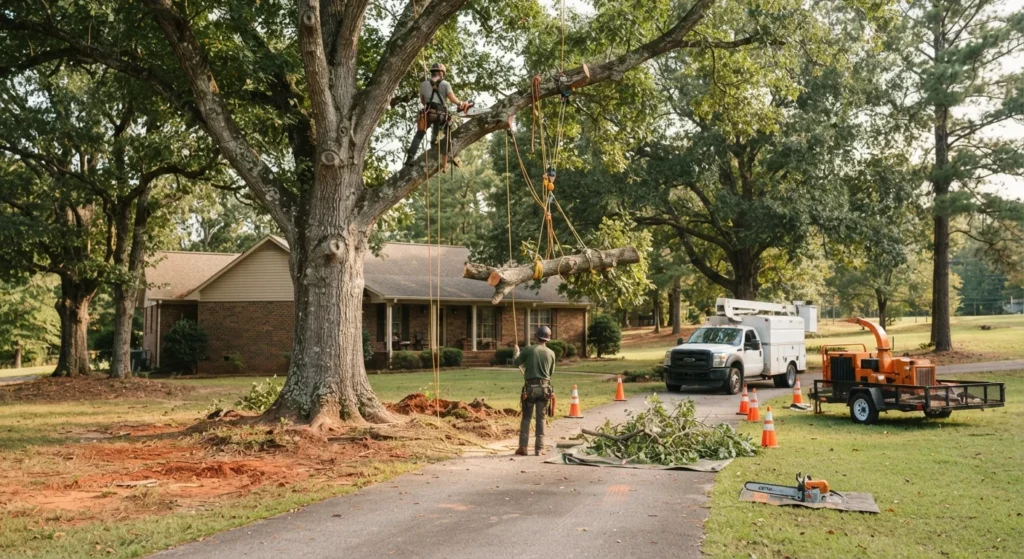
This applies across Rome (ZIP codes 30161, 30162, 30165) and surrounding Floyd County communities including Armuchee, Cave Spring, Lindale, and Shannon — several of which include planned communities and HOAs with mature common-area tree canopy to manage.
Get an HOA Common-Area Assessment
Tell us about the community and what you’re seeing — we’ll connect you with an available local arborist or tree service serving Rome and Floyd County.
Frequently Asked Questions
Can an HOA force a homeowner to remove a healthy tree?
Generally only if the association’s governing documents (CC&Rs) give it that authority and the rule is applied consistently across the community — this varies significantly by association, so the specific governing documents control.
Does a homeowner need HOA approval to remove a tree on their own lot?
Often yes, if the governing documents require it — even for a tree the homeowner considers entirely their own decision. Skipping required approval can lead to fines or a forced replacement requirement.
Who pays if a common-area tree damages a homeowner’s property?
This typically falls to the association, since it’s generally responsible for common-area trees, but the specific outcome depends on the governing documents and the circumstances of the damage.
What should a board do if a resident reports a hazardous common-area tree?
Document the report and get a professional assessment promptly — delaying action on a known hazard creates liability exposure for the association, similar to how it would for an individual property owner.