
Home / Land Clearing
Rome, GA & Floyd County — Lot, Land & Brush Clearing
Land Clearing in Rome, GA
Land clearing in Rome, GA covers construction, reclaiming an overgrown property, or opening up land for a fence line or pasture. It is a different scope of work than removing an individual hazardous tree. Serving Rome, Lindale, Shannon, Armuchee and Cave Spring.
Each land clearing in Rome, GA project needs its own plan.
Different equipment, different planning, and in some cases, different regulatory requirements. This page covers the main approaches.
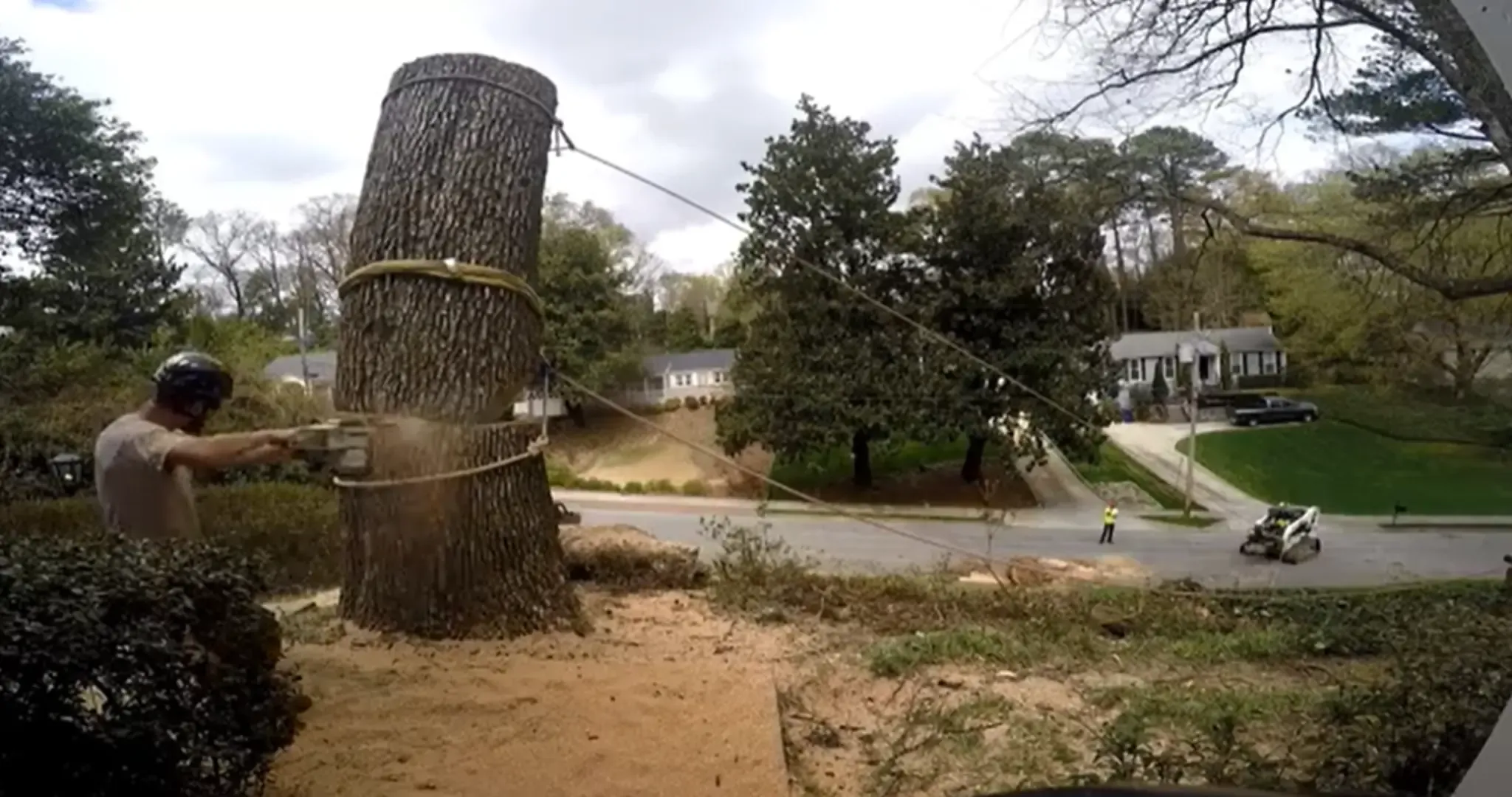
Land Clearing in Rome, GA: Selective vs. Full Clearing
Selective clearing removes specific trees, underbrush, or vegetation while intentionally preserving others. Common when you want to open up a wooded lot for a building site or driveway. It keeps mature shade trees or a natural buffer intact.
Full clearing removes essentially everything on a defined area, typically down to bare or graded ground. Used for new construction sites, agricultural land preparation, or situations where the land’s future use doesn’t call for preserving existing vegetation.
Deciding between the two early matters. Selective clearing generally requires more careful, deliberate work to protect what’s being kept. Full clearing prioritizes efficiency across the whole area. Good land clearing in Rome, GA starts with that choice.
Forestry Mulching: A Distinct Method
Forestry mulching uses a specialized mulching head. It’s typically mounted on a skid steer or similar machine. It grinds standing brush, underbrush, and smaller trees into mulch in place. Rather than cutting material down and hauling it away separately.
This is often an efficient option for reclaiming overgrown land or clearing dense underbrush across a larger area. It leaves a mulch layer on-site that can help with erosion control while it breaks down naturally.
Forestry mulching generally handles brush and smaller-diameter trees well; larger, established trees typically still need to be removed with standard tree-removal methods first.
Stump and Root Clearing (Grubbing)
For a site being prepared for construction, agriculture, or a finished grade, stumps and root masses usually need to come out entirely. They can’t just be ground down. That’s common for land clearing in Rome, GA.
This more thorough process is sometimes called grubbing.
It’s more disruptive to the soil than stump grinding on an individual residential tree. But it’s necessary when the finished use of the land requires a clean, buildable surface. → Compare to standard stump grinding vs. removal
Tree emergency near you? A local crew is one call away.
📞 Call Now: (762) 470-0249When Land Clearing Triggers Additional Requirements
This is where land clearing genuinely differs from removing a single tree in a yard:
- Georgia’s Erosion and Sedimentation Act requires a Land Disturbing Activity (LDA) permit for land disturbance of one acre or more. This covers clearing, grading, and excavating, and is administered at the local level (in this area, generally through Rome-Floyd Planning & Zoning). Smaller lots inside certain subdivisions can also be subject to this depending on local ordinance.
- The Rome-Floyd Unified Land Development Code includes tree conservation rules is specifically written for development and land-disturbance projects. This is where it actually applies, more so than for a homeowner removing a single hazardous tree from an existing yard. → Full permit and legal question breakdown
- Erosion control measures (silt fencing, sediment barriers) are often required as part of a permitted land-disturbing project, particularly near any stream or drainage area.
If your project is under an acre and isn’t part of a larger development, it may fall outside these specific requirements.
But for anything approaching that threshold, or any project tied to new construction, checking with Rome-Floyd Planning &. Zoning before clearing begins avoids a costly stop-work situation later.
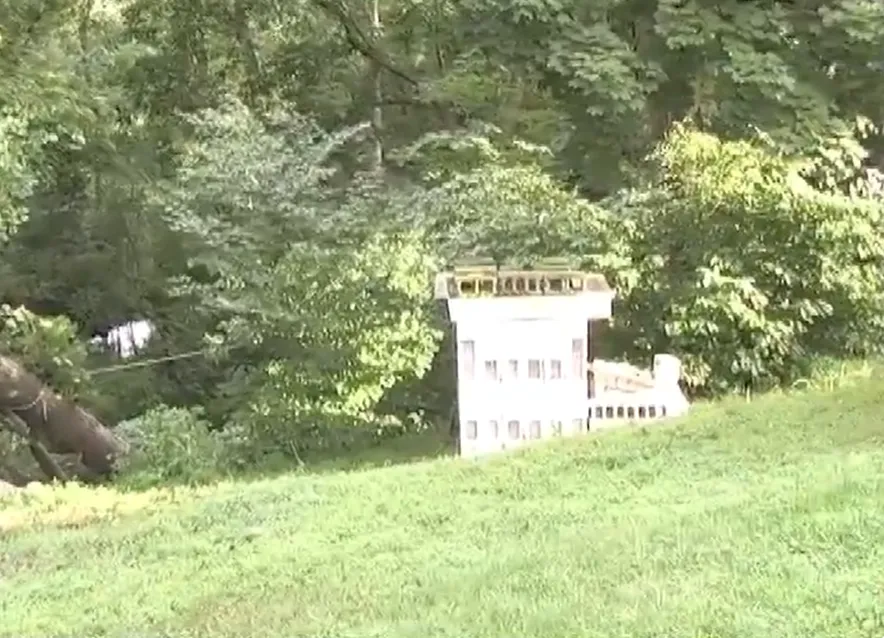
Sediment logs and erosion control after clearing in Rome, GA
After clearing, bare soil can wash into streams. Georgia’s erosion law requires controls on permitted sites, and the state’s Green Book is the reference. Common tools are silt fence, straw bales, sediment logs, seed and mulch. Even sites under an acre benefit from simple controls, especially on slopes.
Sediment logs (sometimes called wattles or filter socks) are tube-shaped barriers laid across a slope to slow runoff and trap soil. They are one option alongside silt fence and straw bales.
Common erosion controls after clearing
| Control | What it does | Where it fits | Good to know |
|---|---|---|---|
| Silt fence | Traps sediment on the downslope side of bare ground | Along the low edge of a cleared area | Overlap sections and keep it upright. Double rows may be required near streams. |
| Straw bales | Slow runoff and filter some sediment | Low edges and small drainage paths | Stuff straw between bales so water can’t slip through. |
| Sediment logs | Slow water across a slope and trap soil | Slopes and ditch lines | Ask your local permit office whether it accepts them on permitted work. |
| Seed and mulch | Cover bare soil so it stays put | The whole cleared area | Stabilize soon after clearing. Mulch protects new seed. |
| Natural buffer | Filters runoff before it reaches a stream | Along creeks and streams | Georgia generally requires a 25-foot undisturbed buffer, 50 feet on trout waters. |
When does Georgia require a permit for clearing?
Georgia requires a Land Disturbing Activity permit for disturbance of one acre or more, with exemptions for some agricultural and forestry work and for minor jobs. Rome and Floyd County’s Building Inspection department handles land disturbance permits and erosion control. The state’s Manual for Erosion and Sediment Control in Georgia, known as the Green Book, lists the approved practices. Confirm with the local permit office before you start.
Planning a Land Clearing Project
- Define the scope clearly — selective or full, and exactly which boundaries the work covers
- Flag any trees you want preserved clearly on-site before equipment arrives, especially for selective clearing
- Ask about debris handling: mulched material left on-site, hauled away, or burned. Keep in mind Rome and Floyd County’s burn restrictions apply here too → Full debris and disposal rules
- Check permit requirements early if the project approaches or exceeds an acre, or is tied to any construction plan
Cost
Land clearing is priced differently than single-tree removal — usually by acreage, density of vegetation, and method (forestry mulching vs. cut-and-haul), rather than per tree. Get a scope-specific estimate rather than assuming standard removal pricing applies.
Storm damage right now? We answer 24/7.
📞 Call Now: (762) 470-0249Rome & Floyd County Context
This applies across Rome (ZIP codes 30161, 30162, 30165) and surrounding Floyd County communities including Armuchee, Cave Spring, Lindale, and Shannon.
An area with a mix of established residential lots, more rural acreage, and ongoing development, all of which come with different land-clearing considerations.
Get a Local Estimate
Tell us about your property and what you’re planning — we’ll connect you with an available local land clearing provider serving Rome and Floyd County.
How Land Clearing Works: Step by Step
- Define the area. Mark boundaries and the trees you want to keep.
- Check rules and utilities. Confirm permits, stream buffers, and call 811 before work.
- Remove trees and brush. Trees are felled and brush is cleared or mulched.
- Handle stumps. Stumps are ground or pulled, depending on your plans.
- Grade and clean up. The site is cleared of debris and prepared for the next step.
More Land Clearing Services in Rome, GA
- Brush clearing in Rome, GA
- Hunting trail, shooting lane and view clearing
- Forestry mulching
- Lot clearing
Related Guides
- Brush Clearing in Rome, GA: Underbrush and Pasture Work
- Hunting Trail Clearing in Rome, GA (Lanes and Views)
- Forestry Mulching vs Bulldozing: Which Is Better?
- Do I Need a Permit to Clear Land in Rome, GA?
- Land Clearing Cost in Rome, GA: What Drives the Price
Latest Articles
- Tree Cable Inspection: How Often Should Cables Be Checked?
- Tree Cabling Cost in Rome, GA: Install and Upkeep
- Tree Removal With No Access to Your Backyard in Rome, GA
Frequently Asked Questions
Do I need a permit to clear a wooded lot for a driveway?
It depends on the size of the disturbance and whether it’s part of a larger development. Clearing under an acre and unrelated to a subdivision or construction project may not require a Land Disturbing Activity permit.
But anything approaching that size or tied to new construction is worth checking with Rome-Floyd Planning & Zoning first.
What’s the difference between forestry mulching and traditional clearing?
Forestry mulching grinds brush and smaller trees into mulch in place using a specialized machine, while traditional clearing cuts material down and hauls it away. Mulching is often faster for dense underbrush; traditional clearing is generally still needed for larger, established trees.
Can I keep specific trees while clearing the rest of my lot?
Yes — this is exactly what selective clearing is for. Clearly marking which trees you want preserved before work starts is the most reliable way to make sure they’re protected during the process.
Is land clearing debris subject to the same burn restrictions as regular yard debris?
Yes. Floyd County’s seasonal burn restrictions and Rome’s prohibition on burning stumps and contractor-generated debris apply to land clearing projects. They apply the same way as to a single tree removal.
What are sediment logs used for after land clearing?
Sediment logs are tube-shaped barriers laid across a slope to slow runoff and trap soil. They are used on cleared slopes and ditch lines, often alongside silt fence and seeding. Ask your local permit office whether they are accepted on a permitted site.
Do I need erosion controls if I clear less than an acre?
Georgia’s permit requirement starts at one acre, but erosion control is still a good idea on smaller sites, especially on slopes or near water. Georgia also requires a 25-foot undisturbed buffer along streams.
Sources
- Georgia Soil and Water Conservation Commission, Erosion and Sedimentation Act overview: https://gaswcc.georgia.gov/sites/gaswcc.georgia.gov/files/related_files/site_page/GSWCC-2016-02-Chapter-1-9-21-15.pdf
- City of Tybee Island, “Erosion Control for Home Builders” (silt fence, straw bales, seed and mulch, 25-foot buffer, controls on sites of an acre or less): https://www.cityoftybee.org/DocumentCenter/View/163/Erosion-Control-for-Homebuilders-2025
- Georgia Department of Transportation, stream buffer overview (25-foot and 50-foot buffers): https://www.dot.ga.gov/PartnerSmart/EnvironmentalProcedures/Ecology1/Guidebooks/Buffer%20Variance.pdf
- Dawson County, Georgia, summary of O.C.G.A. § 12-7-17 exemptions: https://www.dawsoncountyga.gov/571/LDP-Exemptions