Home / Tree Removal Insurance
Rome, GA & Floyd County — Coverage, Documentation & Protecting Yourself
Tree Removal Insurance in Rome, GA: What Does It Cover?
Sometimes — and the honest answer depends on your specific policy and what the tree actually damaged, not a single universal rule.
This page breaks down coverage by scenario, what documentation actually helps a claim, and a real, well-documented scam pattern worth knowing before you sign anything.
Tree Removal Insurance Coverage by Scenario
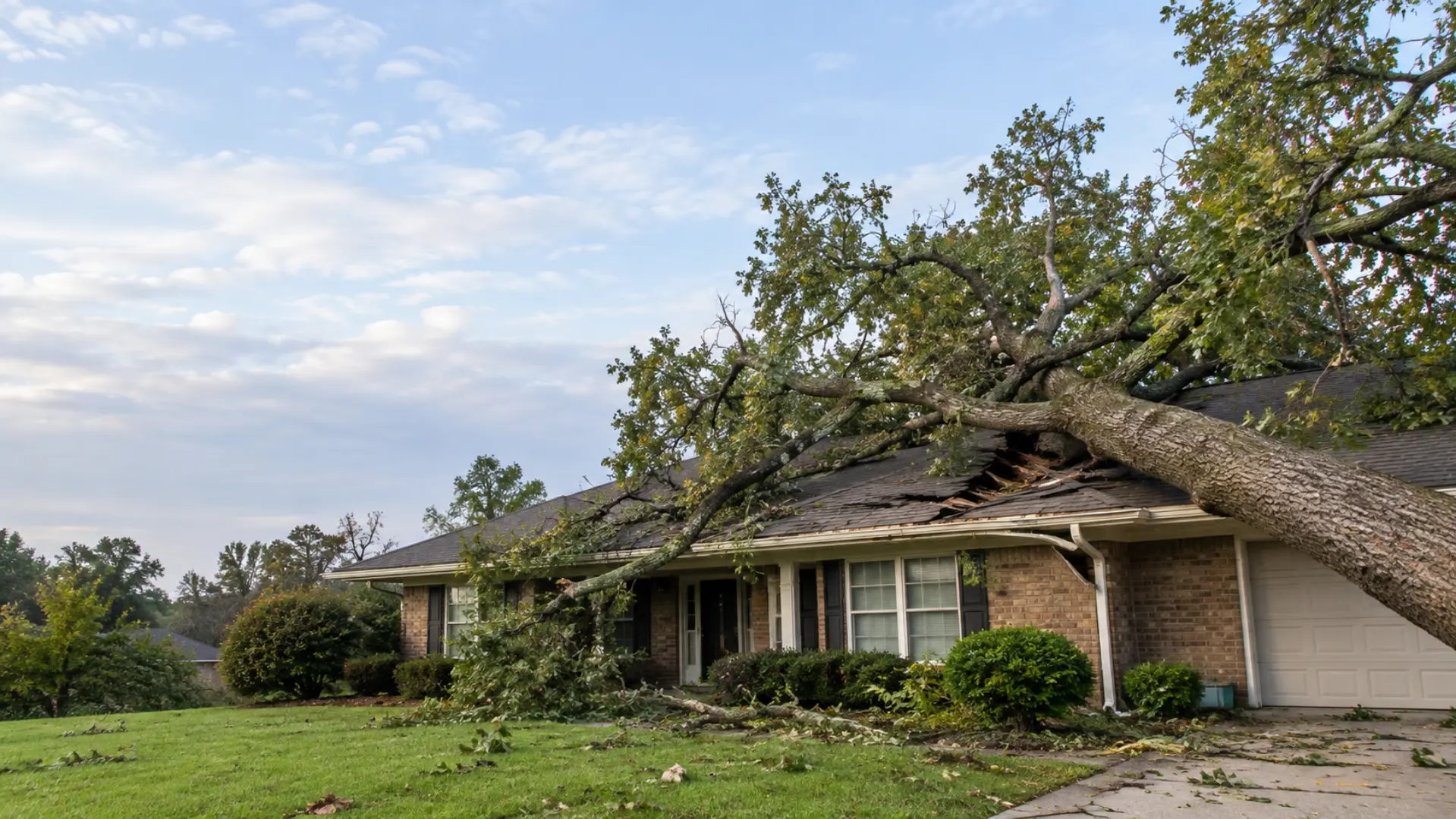
A tree damaged your house, garage, or a fence
This is generally the clearest case for coverage. Removal of the specific tree that caused the damage is typically covered under your homeowners policy’s dwelling or other-structures coverage. It’s directly tied to a covered loss. That’s how tree removal insurance usually applies.
Insurers usually want documentation — photos and an itemized invoice — not just a receipt.
A tree fell on your vehicle
This is an auto insurance question, specifically comprehensive coverage, not homeowners. A lot of people call their homeowners carrier first out of instinct and end up needing to redirect the claim.
Understanding tree removal insurance coverage in advance, per the Insurance Information Institute, helps avoid claim surprises. → Full vehicle-specific breakdown
A tree fell in your yard and damaged nothing
This is the gap that surprises people most. If a tree comes down with no structure, vehicle, or covered item damaged, many homeowners policies do not cover removal at all.
Confirm with your specific carrier rather than assuming either way — some policies have limited debris-removal provisions even without direct property damage.
A neighbor’s tree fell on your property
Coverage generally follows the property where the tree lands, regardless of whose tree it originally was. Meaning your own homeowners policy is often what responds, not your neighbor’s.
There’s an exception if the neighbor’s tree was already visibly hazardous and they knew, or should have known, before it fell. That can shift responsibility back to them. This is genuinely case-specific. → Full neighbor tree responsibility guide
Documentation That Actually Helps a Claim
- Photograph the damage before any cleanup or tarping happens, from multiple angles, including anything the tree damaged and the tree itself as it’s resting
- Call your insurer early — some claims have time-sensitive reporting windows, and starting the process sooner avoids unnecessary delays
- Keep the tree removal invoice separate from any structural or vehicle repair invoice — adjusters generally want to see each cost itemized on its own
- Note the date, time, and cause (storm, fallen limb, etc.) as specifically as you can when you first report the claim
- Ask your adjuster directly about additional living expenses (ALE) if home damage makes part of the house temporarily uninhabitable — this isn’t always volunteered upfront
Watch for Storm-Chasing Contractors
After a significant storm, it’s common for out-of-area contractors to go door-to-door offering emergency tree and repair work. They often promise to “handle everything with your insurance directly.” Georgia has documented real cases where these arrangements went badly for homeowners:
- Assignment of benefits (AOB) documents that sign away your right to negotiate directly with your own insurer. They’re sometimes buried in paperwork presented as a standard work order
- Inflated final bills well above the original verbal quote, sometimes discovered only after the work is already done
- Property liens placed when a homeowner disputes an inflated bill, even when the original agreement was vague or verbal
How to protect yourself:
- Get a written, itemized estimate before any work starts, from more than one provider if time allows
- Read anything before signing it, especially anything described as being for insurance purposes — an AOB is a specific legal document, not just paperwork
- Be cautious of anyone pressuring you to sign quickly, especially someone who showed up unprompted rather than someone you contacted
- Verify basic business legitimacy — a permanent local address and verifiable insurance are reasonable things to ask about
Tree emergency near you? A local crew is one call away.
📞 Call Now: (762) 470-0249If Your Claim Is Denied or You Disagree With the Payout
- Ask your insurer directly for the specific policy language the denial is based on — a vague denial should be pushed back on
- A second, independent estimate from another tree service or contractor can support your position. Use it if you believe the payout doesn’t reflect the actual cost of the work
- Georgia’s Office of the Commissioner of Insurance and Safety Fire has a Consumer Services Division. It handles disputes between policyholders and insurers if you can’t resolve it directly. This is a real state resource, not a last resort you should be afraid to use
Cost If Insurance Doesn’t Cover It
If your situation falls into a gap that isn’t covered, cost still comes down to the same core factors as any removal. Size, access, structure proximity, and timing. → Full cost breakdown
Rome & Floyd County Context
This applies across Rome (ZIP codes 30161, 30162, 30165) and surrounding Floyd County communities including Armuchee, Cave Spring, Lindale, and Shannon.
Storm-driven tree damage claims are common enough here that most local providers and adjusters are used to the process. You’re not navigating unfamiliar territory. → Full local storm context
Storm damage right now? We answer 24/7.
📞 Call Now: (762) 470-0249How to File an Insurance Claim for Tree Removal: Step by Step
- Photograph everything. Take photos of the tree, the damage, and the scene before cleanup starts.
- Prevent further damage. Cover roof holes with a tarp if it is safe. Keep receipts.
- Call your insurer quickly. Report the claim and ask about the tree removal limit on your policy.
- Get a written removal estimate. Insurers need an itemized quote for tree removal and cleanup.
- Keep all records. Save invoices, photos, and adjuster notes until the claim closes.
Get Connected With Emergency Help
Tell us what happened and where — we’ll connect you with an available local crew serving Rome and Floyd County.
Thinking about doing it yourself? Read our DIY tree removal safety guide.
Related guides: Tree removal for landlords and property managers
Related Guides
- Neighbor’s Tree Fell on My Car: Who Pays in Georgia?
- Comprehensive Car Insurance Tree Damage: What It Pays in Georgia
- City Tree Fell on Car in Georgia: How to Make a Claim
- Does Insurance Pay to Remove a Tree Near Your House?
Latest Articles
- Removing Several Trees at Once: Planning and Pricing
- Tree Service Insurance: What to Ask Before You Hire
- What a Written Tree Removal Estimate Should Include
Frequently Asked Questions
Will my premium go up if I file a tree damage claim?
This depends on your specific insurer and policy history. A single weather-related claim is often treated differently than a claim tied to homeowner negligence, but there’s no universal rule. Ask your agent directly about how a specific claim might affect your policy.
Do I need a public adjuster?
Not usually for a straightforward tree claim. But say you’re dealing with significant structural damage or a payout that seems well below the actual repair cost. A public adjuster is worth considering. They work for you, not the insurance company.
What’s an assignment of benefits (AOB), and should I ever sign one?
An AOB transfers your right to negotiate and receive payment directly to a contractor, meaning they deal with your insurer instead of you. It’s not automatically a scam, but it removes your direct control over the claim.
Read it carefully and understand exactly what you’re signing before agreeing to one.
Does it matter if the tree that fell was already dead before the storm?
It can. Some policies distinguish between storm damage and damage from a tree that was already known to be hazardous or neglected.
This is one of the more common areas insurers scrutinize closely. Documentation of the tree’s prior condition (or lack of prior warning signs) can matter. Tree removal insurance claims often hinge on it.
My neighbor’s tree fell on my house. Who pays?
In Georgia, it is usually YOUR homeowners policy that responds — even for your neighbor’s tree — because where the tree lands decides who pays. The exception: if the tree was visibly dead or diseased, or your neighbor had written notice it was a hazard and did nothing, their side can be held responsible. Either way, do not wait on the neighbor dispute to start: photograph everything, open your claim, and get the tree off the structure. Your insurer can chase reimbursement later; the roof cannot wait.
How much will insurance actually pay for the removal itself?
Less than most people expect. On a standard Georgia homeowners policy, fallen-tree removal is commonly capped at about $500 per tree and $1,000 total for the whole storm loss — even if three trees came down. Repairs to the damaged structure are covered separately, and your deductible comes off the top. Quick check before you file: if the removal costs less than your deductible, filing may not pay. Read your own policy’s tree-removal line or ask your agent — limits vary.
Related guide: Tree fell on your house.