Part of our guide: Emergency Tree Removal
Home / Emergency Tree Removal / Leaning or Dangerous Tree Removal
Rome, GA & Floyd County — Standing Tree Hazard Assessment
Leaning Dangerous Tree Removal in Rome, GA
Leaning dangerous tree removal isn’t always obvious to call for, and not every hazard is obvious from the ground.
This page covers the real warning signs worth taking seriously. It explains the difference between a tree that’s always leaned a certain way and one that’s newly failing.
It also covers what happens once a tree is confirmed hazardous. Leaning dangerous tree removal starts with knowing which you have.
If a tree is actively cracking, moving, or dropping large debris right now, treat it as an emergency. Get people clear of the area before reading further.
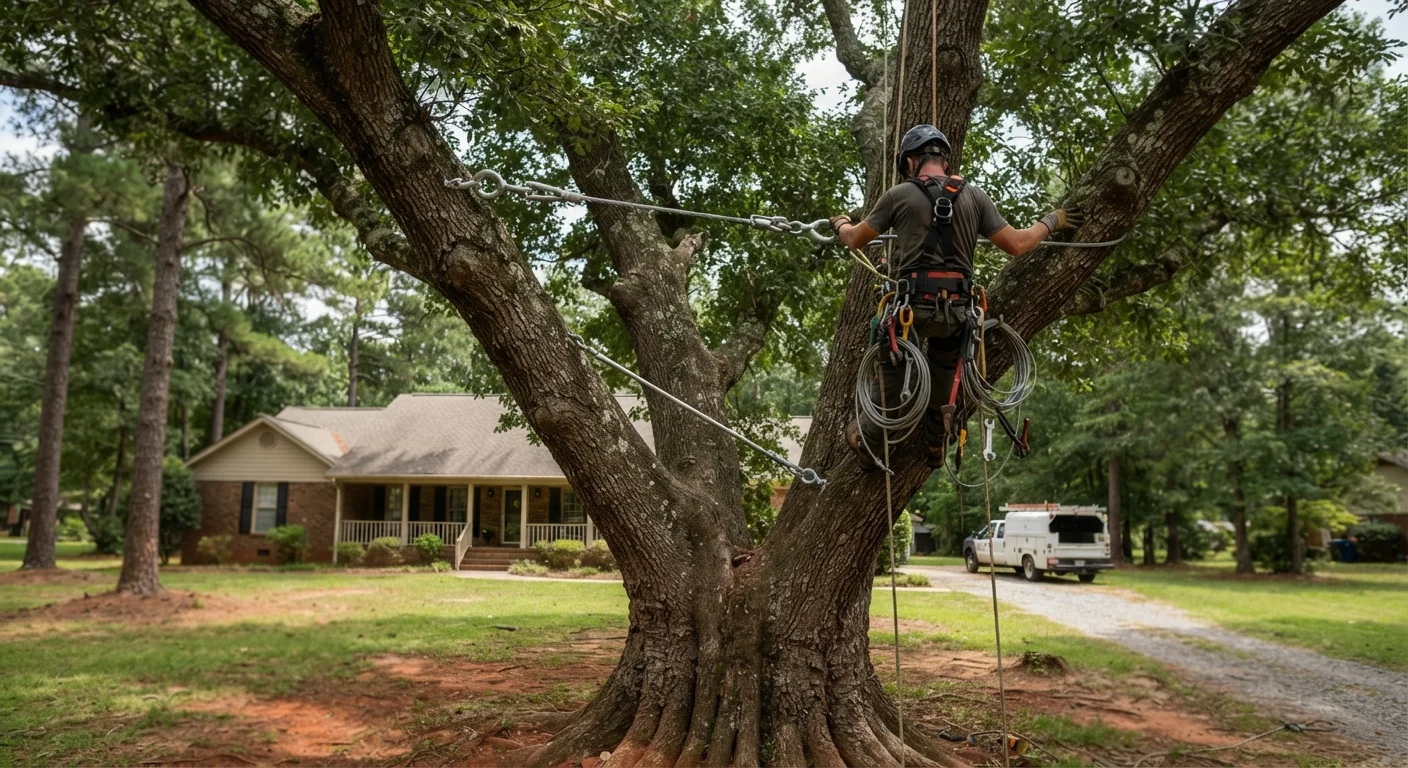
Leaning Dangerous Tree Removal: Old Lean vs. New Lean
Plenty of healthy, stable trees lean. Trees grow toward light, and a tree that’s had a consistent, gradual lean for years without changing is often not the emergency it looks like. What matters is change:
- A tree that’s always leaned the same amount and shows no new soil disturbance at the base is usually stable. It’s still worth a periodic look if it’s near a structure.
- A tree that’s developed a new lean, or one that’s visibly increased, especially after wind or heavy rain, is a different situation entirely. This is one of the clearest signs of root failure in progress.
- A sudden lean after a storm should be treated as urgent regardless of the tree’s prior history.
If you’re not sure whether a lean is new or long-standing, compare photos over a few weeks. Or get a professional’s assessment. Either settles it faster than guessing.
The Full Hazard-Sign Checklist
This is the complete list. If a tree shows more than one of these at once, that combination matters more than any single sign on its own.
Root and base signs
- Soil heaving, cracking, or lifting on the ground around the base. Especially on the side opposite a lean, which suggests the root plate is being pulled up as the tree tips
- Exposed roots that have shifted position recently, rather than roots that have simply always been visible at the surface
- Mushrooms, conks, or other fungal growth at the base or on visible roots. This is a sign of internal decay, not a cosmetic issue, even though it’s easy to dismiss as “just some mushrooms”
- Soil that looks disturbed, mounded, or cracked in a way that wasn’t there before
Trunk signs
- Vertical cracks or splits in the trunk, especially ones that are new or that widen after wind
- Cavities, hollow-sounding sections, or soft, decayed wood you can press into
- Bark that’s peeling away in sheets, particularly if it exposes decayed wood underneath
- A trunk that’s visibly bent, not just leaning as a whole unit
Canopy and limb signs
- A significant amount of deadwood — bare, brittle branches with no leaves during the growing season
- A canopy that’s noticeably thinner than it used to be, or thinner than similar trees nearby
- Large limbs with visible cracks at the point where they meet the trunk (limb unions)
- Limbs that have failed before, leaving exposed wounds that haven’t closed over
Whole-tree and site signs
- A history of storm damage to this specific tree, even if it looked fine afterward
- Construction, grading, or trenching near the root zone within the past few years, which can damage roots without any visible sign for a while afterward
- Standing water or consistently soggy soil around the base, which can weaken root structure over time
None of these signs alone is an automatic “remove this tree” verdict.
But a tree showing several at once deserves a professional risk assessment rather than a guess. So does any sign paired with proximity to a house, driveway, or place people regularly stand.
Dead, Dying, and Just Stressed Aren’t the Same Thing
- A fully dead tree with no leaves, brittle bark, and no green under the bark when scratched is a genuine hazard, especially near a structure. Dead wood loses structural integrity over time and becomes unpredictable.
- A dying or stressed tree — thin canopy, some dieback, but still partially alive — is more of a judgment call. Some stressed trees recover; others continue declining. This is exactly the kind of situation a risk assessment is built for.
- A tree that looks stressed but shows none of the structural hazard signs above may just need better care, not removal. Pruning, watering adjustments, or addressing a root-zone issue can sometimes turn a struggling tree around.
Tree emergency near you? A local crew is one call away.
📞 Call Now: (762) 470-0249What a Professional Risk Assessment Actually Involves
An ISA-certified arborist or someone with Tree Risk Assessment Qualification (TRAQ) training looks at the whole picture.
Species-typical growth patterns, the specific combination of signs present, what’s within striking distance if the tree fails. Sometimes tools like a resistance drill or sounding mallet check for internal decay that isn’t visible from outside.
TRAQ is a real, specific credential.
The Georgia Arborist Association has held TRAQ training locally at the Rome-Floyd ECO Center. This level of assessment is genuinely available in this region, not just something you’d have to drive to Atlanta for.
Leaning dangerous tree removal decisions benefit from that assessment. → Full guide to tree risk assessment
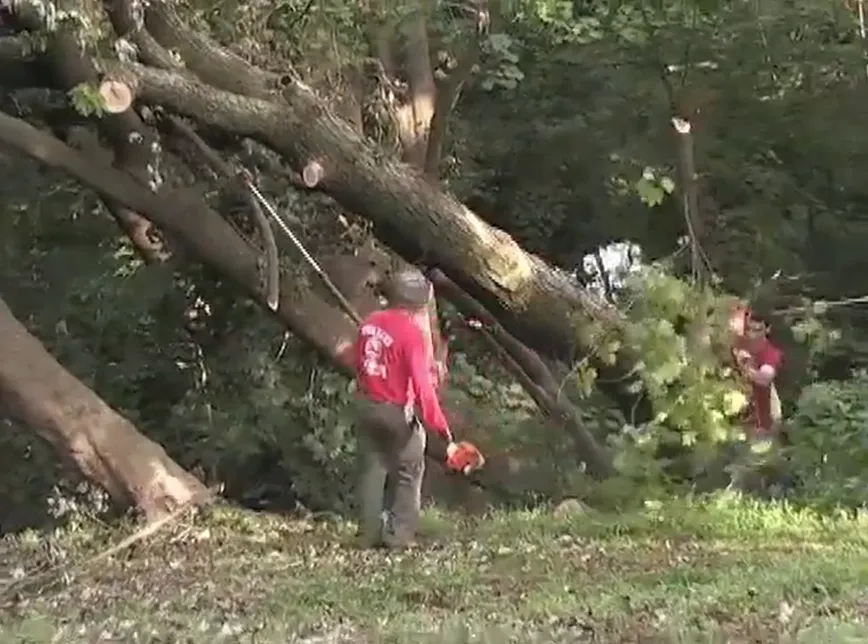
Removal vs. Preserving the Tree
Not every hazardous tree has to come down entirely:
- Cabling or bracing can sometimes preserve an otherwise healthy tree with a structural weakness, like a split trunk union. This is a real alternative worth asking about, not just a way to avoid the cost of removal. → Tree cabling and bracing
- Crown reduction or selective pruning can sometimes address a lean or weight imbalance without full removal, depending on the cause.
- Full removal is the right call when the structural failure risk is severe, especially near a house, driveway, or power line. It’s also right when the underlying cause (major root loss, extensive internal decay) can’t realistically be corrected.
If the tree is close to a structure, the removal itself may need extra care or specialized equipment. → Tree removal near a house · Crane tree removal
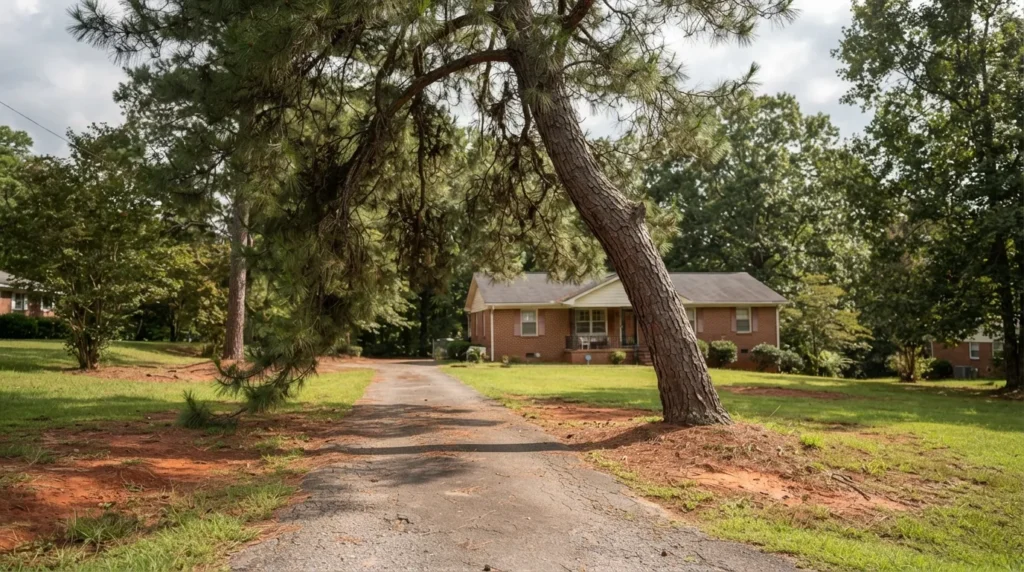
Cost and Timing
Removing a standing hazardous tree is priced similarly to any other removal.
Size, access, and proximity to structures drive the cost. Leaning dangerous tree removal cost follows those factors. A crane is sometimes needed if the tree is too close to safely fell in sections without one. → Full cost breakdown
Storm damage right now? We answer 24/7.
📞 Call Now: (762) 470-0249Rome & Floyd County Context
Mature trees are part of what makes Rome’s older neighborhoods — near downtown, Mount Berry, and East Rome — genuinely beautiful.
But decades of growth near homes and driveways also means hazard signs show up regularly here. That’s especially true after the storm events the area sees most years.
This applies across Rome (ZIP codes 30161, 30162, 30165) and surrounding Floyd County communities including Armuchee, Cave Spring, Lindale, and Shannon. → Full local storm context
Get a Local Assessment
Tell us what you’re seeing — we’ll connect you with an available local tree service or arborist serving Rome and Floyd County.
Leaning dangerous tree removal is not a DIY job. Thinking about doing it yourself? Read our DIY tree removal safety guide. Also see split and cracked trees.
How to Deal With a Leaning Tree: Step by Step
- Check if the lean is new. A sudden lean after a storm is far more dangerous than a slow lean over years.
- Look at the soil and roots. Raised, cracked soil or exposed roots on the side opposite the lean signal failure.
- Measure what it could hit. Compare the tree height to its distance from the house, cars, and power lines.
- Keep people out of the fall zone. Block off an area at least as long as the tree is tall.
- Get a professional assessment. Call (762) 470-0249 to arrange a hazard check and a written removal quote.
Latest Articles
- How to Protect Your House and Yard During Tree Removal
- Branches Over Your Roof: When to Prune and When to Remove
- Tree Too Close to House? How Far Is Safe and What to Do
Related Guides
- Tree Decay: Signs of Rot and When It’s Dangerous
- Tree Disease Diagnosis: How to Tell Disease From Stress
Frequently Asked Questions
Is a leaning tree always dangerous?
No — many trees lean naturally toward light and have done so stably for years. What matters more is whether the lean is new, increasing, or paired with other signs like soil heaving or root exposure.
Can a dying tree be saved instead of removed?
Sometimes, depending on the cause. A tree that’s stressed but structurally sound may respond to better care. One with significant internal decay or major root loss usually can’t be reversed.
An assessment is the only way to tell which situation you’re in.
How much does a tree risk assessment cost, separate from removal?
This varies by provider and whether a basic visual assessment or a more detailed inspection (sometimes involving tools to check for internal decay) is needed. Ask directly when you contact a local arborist or tree service.
What if the hazardous tree is on my neighbor’s property?
You can raise the concern with your neighbor directly. Leaning dangerous tree removal can also involve local code rules.
In some cases a hazardous tree on private property can become a code enforcement matter if it poses a public safety risk. → Neighbor tree responsibility