Home / DIY Tree Removal Safety
Rome, GA & Floyd County — An Honest Answer, Not a Sales Pitch
Can I Remove a Tree Myself? DIY Tree Removal Safety
This page isn’t here to talk you out of doing anything you’re genuinely capable of doing safely. Small, low, straightforward jobs are often fine for a reasonably careful homeowner.
It’s here to draw an honest line between that and the much larger category of tree work that seriously injures people every year. That way you can tell which side of that line your situation is actually on.
If a power line is involved, or the tree is under any visible tension, bend, or lean against something else, stop here. This isn’t a DIY situation, regardless of the tree’s size.
DIY Tree Removal Safety: Where DIY Is Genuinely Reasonable
- Small deadwood you can reach from the ground, with no structure, vehicle, or power line anywhere nearby
- Debris cleanup after a professional removal — hauling cut sections, raking smaller material, general yard cleanup
- Minor pruning on small ornamental trees, within easy reach, using proper hand tools
- A small, fully-down tree lying flat on the ground. It has no hang-up and no visible bend or tension in the wood. No structure or line is anywhere near it
If your situation matches one of these, careful DIY work is a reasonable choice for most homeowners. Use the right basic precautions: eye protection, gloves, sturdy footing, and awareness of what’s around you.
Good DIY tree removal safety starts with knowing your limits.
Where DIY Becomes Genuinely Dangerous
Height. Anything requiring a ladder to reach, let alone climbing into a tree, introduces a fall risk. Professional crews manage it with training and equipment most homeowners don’t have.
This is one of the more common ways DIY tree work goes seriously wrong.
Stored tension. A branch or trunk section that’s bent, pinned under another piece of wood, or leaning against something else can be holding significant spring-like energy. That energy isn’t visible just by looking at it.
Cutting into that tension incorrectly can cause the wood to release suddenly and violently.
This is a leading cause of injury in storm cleanup specifically, and it’s genuinely hard for an untrained eye to spot reliably. → More on stored tension in storm-damaged wood
Power lines. Any tree touching, near, or entangled with a line is never a DIY situation, full stop. This includes lines that look dead. → Full power line safety guidance
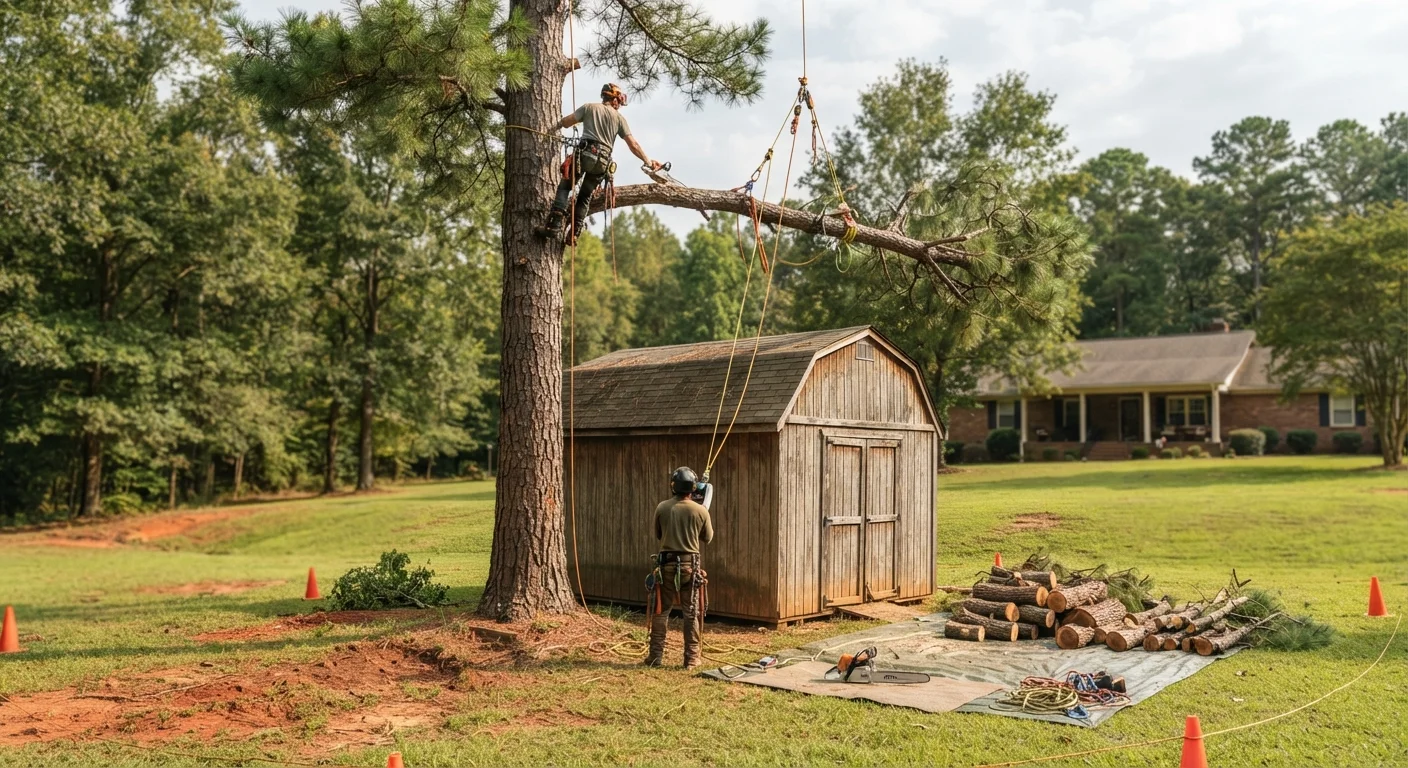
Proximity to a structure. A tree close to a house, garage, fence, or vehicle is risky. A miscalculated fall direction could cause real damage. That takes directional control and rigging technique that need real training to do safely.
DIY tree removal safety also means respecting fall direction.
Size and weight. A chainsaw capable of cutting through a large trunk is a genuinely dangerous tool in inexperienced hands. The physics of a falling large tree aren’t intuitive, even to someone who’s watched plenty of videos.
Think of how far the canopy can reach. Think of how unpredictably a large trunk can roll or shift once cut.
A tree already flagged as hazardous behaves less predictably than a healthy tree. That includes trees that are leaning, cracked, showing root movement, or otherwise structurally compromised.
That’s exactly the wrong situation for a first attempt at tree work. → Full hazard-sign checklist
The Specific Hazards, Plainly
- Chainsaw kickback: a sudden, forceful upward or backward movement of the saw when the tip contacts something unexpectedly. It can cause serious injury in a fraction of a second
- Struck-by injury — from a falling limb, a released tension branch, or the tree itself moving in an unexpected direction
- Electrocution — from contact with a line, or from a tree or branch that’s still touching one
- Being pinned or crushed — by a trunk or large limb that shifts or falls unpredictably during cutting
Most of these hazards aren’t about being careless. They’re about not having the training to recognize warning signs (tension, decay, an unstable lean) that an experienced crew reads automatically.
Not sure if it’s urgent? Call and describe it — free advice, no pressure.
📞 Call Now: (762) 470-0249Equipment Most Homeowners Genuinely Lack
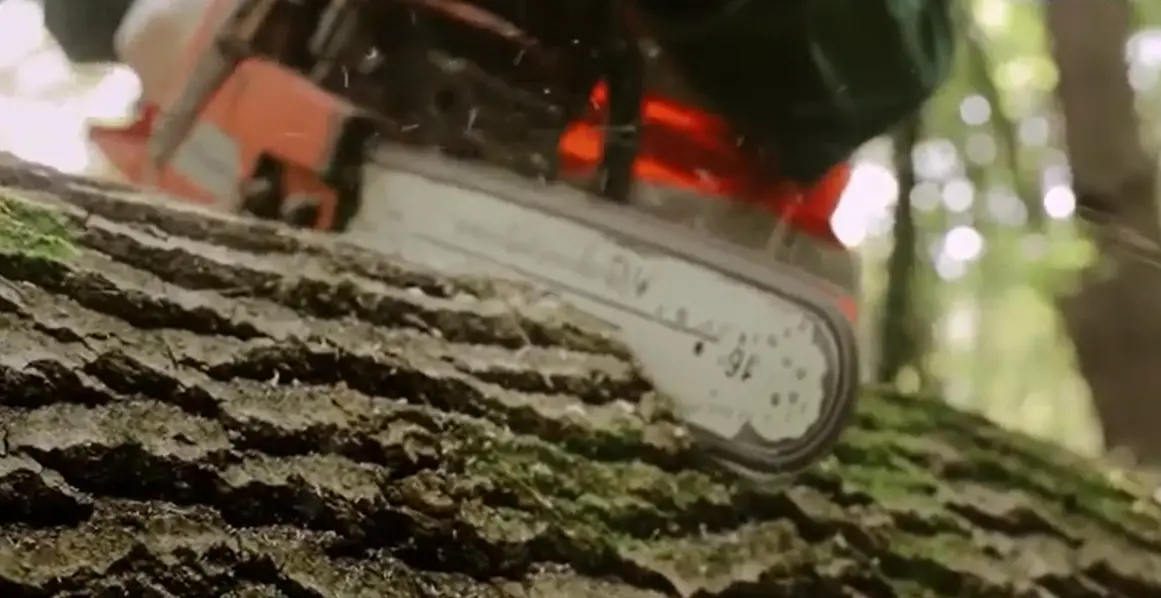
Professional crews use more than just a chainsaw. They use proper chainsaw chaps and a helmet with face shield and hearing protection. They match the saw’s bar length to the tree being cut.
They use rigging gear (ropes, rigging blocks, and the technique to use them) for anything beyond ground-level work.
Renting a chainsaw for a weekend doesn’t replicate the full safety setup a professional crew brings. It also doesn’t replicate their experience reading a specific tree’s risk. DIY tree removal safety includes the right gear, not just any saw.
The Liability Side of DIY
This is worth thinking through before deciding. Say DIY tree work damages your own home or a neighbor’s property, or injures you or someone helping you.
The financial exposure generally falls more directly on you than it would with a professional, insured crew.
Homeowners insurance doesn’t work the same way workers’ compensation would for a professional crew member.
An injury to yourself during DIY work isn’t something any insurance is specifically designed to cover as “on the job.” A cheaper upfront cost can turn into a much larger expense if something goes wrong.
Is DIY Actually Cheaper?
Sometimes, for genuinely small, low-risk jobs.
But factor in equipment rental or purchase, your own time, and the real (if hopefully small) risk of a costly mistake. Don’t assume it’s the more economical choice for anything beyond simple work.
Weigh cost against DIY tree removal safety before you buy a saw. → Full cost breakdown for professional removal
Tree emergency near you? A local crew is one call away.
📞 Call Now: (762) 470-0249Small Jobs Most Homeowners Can Handle
- Picking up small fallen branches.
- Cutting small limbs you can reach from the ground.
- Removing small saplings and shrubs.
- Cutting up small branches already on the ground, if you are trained with a saw.
Rule of thumb: if you need a ladder, or the tree is taller than the distance to anything it could hit, stop.
Hidden Risks People Miss
- Spring poles. Bent trees or limbs that snap back when cut.
- Barber chair. The trunk splits upward and kicks back.
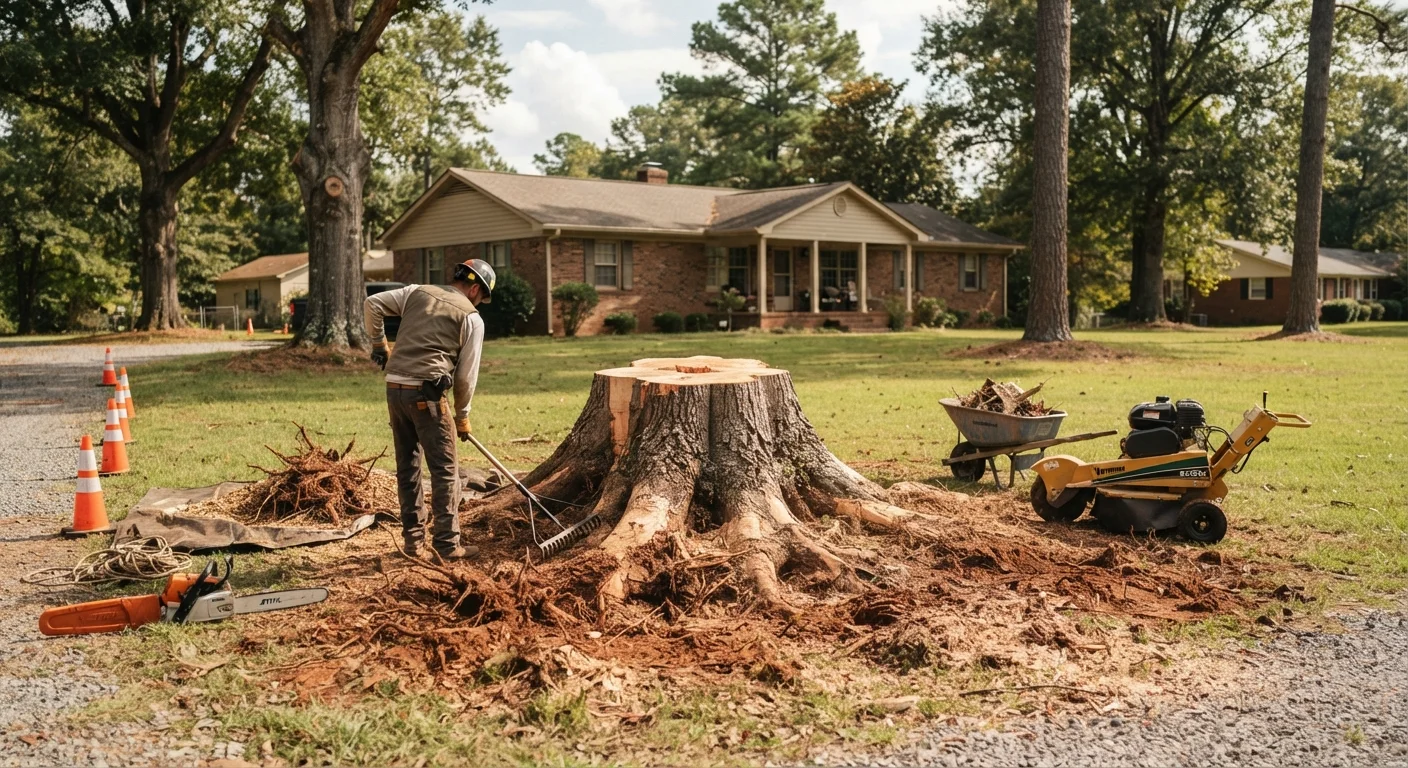
- Buried lines. Call Georgia 811 before digging out a stump.
- Neighbor damage. If your tree hits their property, you may be responsible.
DIY After a Storm in Rome, GA
Storm damage is the most dangerous time to DIY.
Trees are under tension. Lines may be live. The ground is soft.
If a tree is on your house, car or a power line, do not touch it. See storm damage tree removal or tree on a power line.
When to Call a Professional Instead
- Anything involving a power line, no exceptions
- Any tree showing hazard signs — lean, cracks, root movement, decay
- Anything requiring a ladder or climbing
- Anything near a structure, vehicle, or fence where a miscalculation would cause real damage
- Any storm-damaged wood under visible bend, tension, or hang-up
- Any tree beyond a size you’re genuinely confident handling with basic hand tools
If you’re weighing a specific situation and unsure which category it falls into, treating it as a professional job is the safer default. → Full emergency tree removal guide
Rome & Floyd County Context
Rome’s storm pattern means DIY temptation comes up often here. A tree down after a storm, a pressing need to clear a driveway, and a chainsaw already in the garage.
The urgency is real, but it’s exactly the situation where stored tension and unpredictable wood behavior are most likely to be present.
This applies across Rome (ZIP codes 30161, 30162, 30165) and surrounding Floyd County communities including Armuchee, Cave Spring, Lindale, and Shannon.
How to Decide on DIY Tree Removal: Step by Step
- Measure the tree. Trees taller than about 15–20 feet are best left to professionals.
- Check what it could hit. Any house, car, fence, or wire within reach changes the risk.
- Look for tension and damage. Storm-bent, split, or hung-up trees can release suddenly.
- Check your gear and skills. You need proper safety gear and chainsaw experience.
- Call a pro if unsure. If any answer worries you, call (762) 470-0249 instead.
Get Connected With Professional Help
Tell us what you’re dealing with — we’ll connect you with an available local crew serving Rome and Floyd County.
Storm damage right now? We answer 24/7.
📞 Call Now: (762) 470-0249Related Guides
Frequently Asked Questions
Is it safe to cut up a small fallen tree myself?
Careful DIY cutting is often reasonable if it’s genuinely small and fully resting flat on the ground. It also needs no bend or tension and no structure or power line nearby. Use proper eye and hand protection.
Anything larger, pinned, or leaning against something else is a different situation.
What size tree is too big for DIY removal?
There’s no single universal number, since access, lean, and condition matter as much as diameter.
But leave anything requiring more than basic hand tools to a professional. The same goes for a trunk large enough that you can’t confidently predict how it will move once cut.
Can I remove a small tree near my house myself?
Proximity to a structure changes the calculation regardless of the tree’s size, since a miscalculated fall direction can cause real damage. This is one of the more common situations where DIY attempts go wrong.
What safety gear do I actually need for basic DIY tree work?
At minimum: eye protection, ear protection if using a chainsaw, sturdy gloves, and footwear with good traction.
For anything beyond very small jobs, chainsaw chaps and a helmet with a face shield are genuinely worth the investment. Don’t skip them to save money.
How close to a power line is too close?
Stay at least 10 feet away, with yourself and any tool. If a tree or limb touches a line, keep everyone back and call the utility first.
What should I do if a tree falls on my house?
Get everyone out of the damaged area, avoid any downed lines, and call for professional help. Do not climb on the roof or cut the tree yourself.