Home / Tree Risk Assessment
Rome, GA & Floyd County — Not Sure If It’s a Problem? Start Here
Tree Risk Assessment in Rome, GA — Do You Need One?
A tree risk assessment rome ga homeowner requests is not always urgent. Not every concern about a tree is an emergency, and not every tree that looks fine actually is one.
If you’re standing in your yard trying to decide whether a tree is worth worrying about, this page is for you.
It covers when a professional assessment makes sense, what actually happens during one, and what you can expect it to tell you.
If the tree is actively cracking, moving, or already dropping large debris, this isn’t a “schedule it for next week” situation. Treat it as urgent instead. → Full hazard-sign checklist
Tree Risk Assessment: When It Actually Makes Sense
- You noticed something and aren’t sure if it matters. A lean that seems new, some deadwood, a bit of fungus at the base, or a crack you don’t know how serious it is
- A tree is close enough to a structure, driveway, or play area that a failure would matter, even if nothing looks wrong right now
- Before storm season, especially for mature trees you’ve never had specifically evaluated
- After construction, grading, or trenching near a tree’s root zone, since root damage can take years to show → More on root damage
- A real estate transaction, insurance requirement, or dispute with a neighbor sometimes calls for a documented, professional opinion rather than an informal look
If none of this describes your situation and the tree simply doesn’t concern you, you likely don’t need one right now. Assessments are for genuine uncertainty or elevated risk, not routine peace of mind on every tree in the yard.
Is My Tree Actually Dying, or Just Dormant?
This is one of the most common worries homeowners raise. The answer depends, and it’s hard to tell without a trained eye. That’s where a tree risk assessment helps. A few starting points:
Normal seasonal behavior vs. real decline. Deciduous trees dropping leaves in fall is normal.
Leaf loss out of season is worth a closer look. So is uneven loss, with one side bare. So is thin canopy during peak growing season.
Common worrying signs, and what they actually mean:
- Brown or scorched leaf edges can mean drought stress, root damage, or in some cases disease — not necessarily death
- Thinning canopy over a season or two often reflects root stress, construction damage, or age-related decline rather than a sudden crisis
- Dead branches scattered through an otherwise green canopy (sometimes called dieback) can be normal minor shedding. It can also be an early sign of a larger problem, depending on how much of the tree is affected
- A tree that dropped a large healthy-looking branch with no storm involved is worth an assessment. This can be a sign of internal weakness that wasn’t visible from outside
Rot, fungus, and mushrooms. Mushrooms or shelf-like fungal growth on a trunk or exposed roots are a genuine sign of internal decay, not just a cosmetic issue. But a fungal presence doesn’t automatically mean the tree is doomed.
How much decay there is, where it is, and how much sound wood remains all matter. That’s what an assessment is for. Don’t guess from one visible symptom.
Disease, including oak wilt. Oak wilt and similar diseases can cause rapid browning and branch dieback. They’re alarming, given how common oaks are in local yards.
The tricky part: drought stress, root damage, and general decline can look similar from a distance. A proper diagnosis (sometimes involving a sample sent for lab confirmation) is the only reliable way to distinguish disease from other causes.
An arborist’s assessment is where that starts.
Drought stress and recovery. A tree that’s been through a dry stretch can show real decline symptoms. These include leaf scorch, early leaf drop, and thin canopy. They can improve with time and consistent watering.
The answer to “can watering save it” is sometimes. It works if the cause is drought stress. The tree must not have lost too much root or canopy function already.
This is another case where guessing does you no favors. An assessment tells you whether you’re looking at a recoverable stress response or something more serious.
The bottom line: if a tree you care about is showing any combination of these signs, the actual decision isn’t “remove it or ignore it”.
It’s “get it properly assessed,” since pruning, treatment, or simply monitoring are all real outcomes that don’t require losing the tree.
What a Professional Assessment Actually Involves
Arborist risk assessments happen at a few levels of depth. A good assessor will tell you which level fits your situation. They won’t default to the most expensive option:
A basic visual assessment covers a walk-around evaluation. Checking the trunk, canopy, visible roots, lean, and overall condition from the ground, sometimes supplemented with binoculars for canopy detail. This is enough for most routine concerns.
A more detailed assessment goes further when the basic look raises questions that need answering.
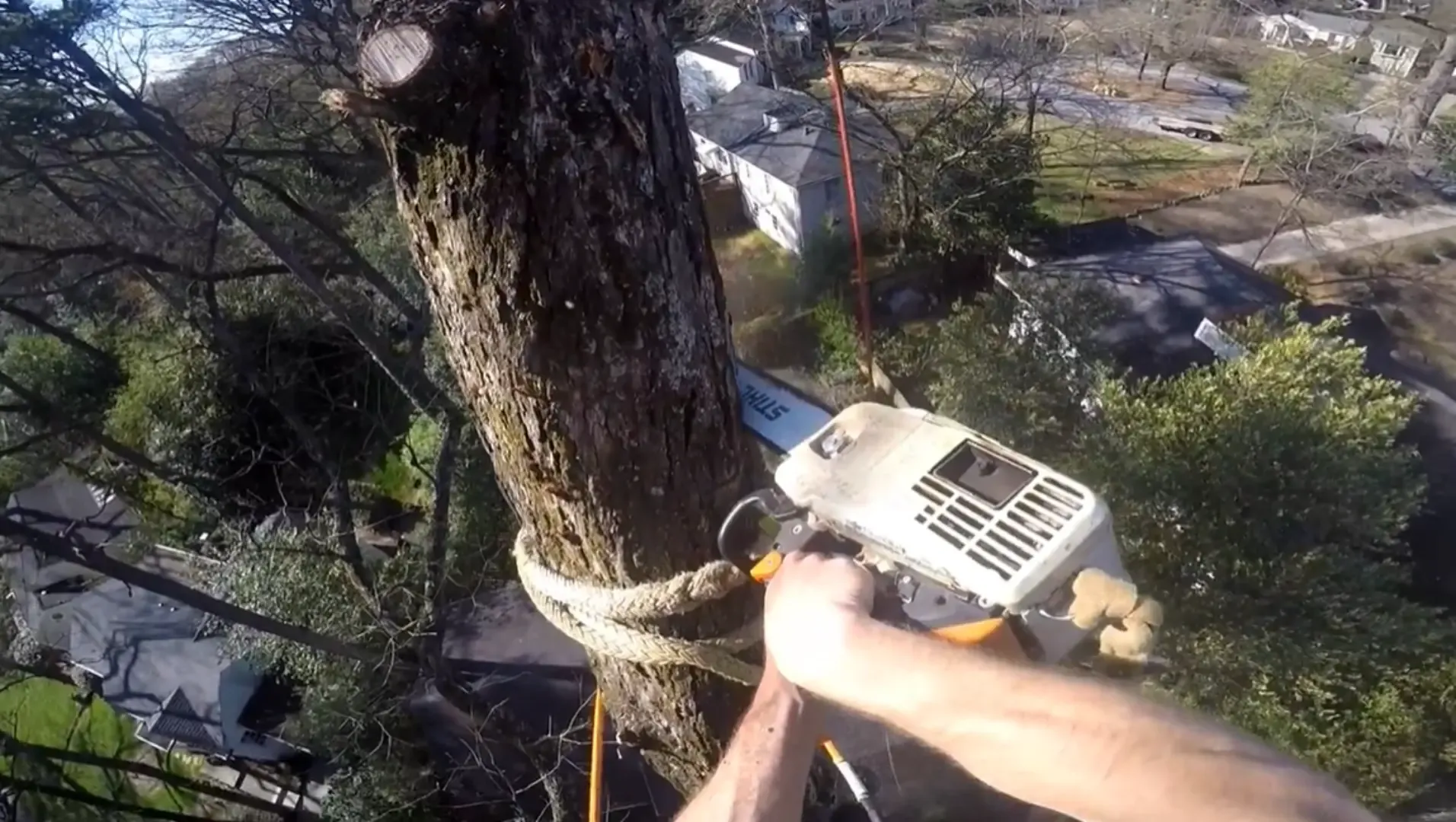
This can include climbing or aerial equipment to inspect the upper canopy. Sometimes tools like a resistance drill or sonic device check for internal decay that isn’t visible from outside.
Whichever level applies, a real assessment should result in a written opinion, not just a verbal “it looks fine” or “it needs to come down”. Especially if you might need that documentation later for insurance or a dispute.
Storm damage right now? We answer 24/7.
📞 Call Now: (762) 470-0249Why the Credential Behind the Assessment Matters
Georgia doesn’t license tree work as a regulated trade. No state-issued license guarantees that someone doing a risk assessment knows what they’re evaluating.
This is exactly why credentials like ISA Certified Arborist and TRAQ (Tree Risk Assessment Qualification) matter here. They count for more than in a state with stricter licensing.
They’re the closest thing to a verified standard you have to go on.
TRAQ specifically is a structured qualification focused on assessing tree risk using a consistent method, rather than just general tree care experience.
It’s a real, specific credential, not a marketing phrase. It’s available in this region. The Georgia Arborist Association has held TRAQ training locally at the Rome-Floyd ECO Center.
When you get a tree assessed, ask whether the person holds ISA certification or TRAQ training. Ask it the way you’d ask a home inspector about credentials.
What the Assessment Can Tell You
A completed assessment generally lands in one of a few outcomes:
- No significant concern — the tree is healthy and stable for now, sometimes with a suggested re-check interval
- Monitor going forward — something worth watching, but not urgent yet, often with specific signs to watch for
- Mitigation recommended — pruning, cabling, bracing, or reducing weight in specific areas to address a defined risk without full removal → Tree cabling and bracing
- Removal recommended — the risk is significant enough, or the underlying problem severe enough, that removal is the safer path → Full removal process
None of these outcomes are guesswork if the assessment was done properly. They should come with a clear explanation of what was found and why that conclusion follows from it.
Cost: Assessment vs. Removal
A standalone risk assessment is typically priced well below a full removal, since it’s an evaluation rather than physical work. Some providers apply the assessment fee toward the removal cost if you move forward with them.
It’s worth asking directly, since this isn’t universal. → Full removal cost breakdown
Free written estimate — call now, day or night.
📞 Call Now: (762) 470-0249Rome & Floyd County Context
This kind of qualified assessment isn’t something you have to drive to Atlanta for.
This shows how seriously local arborists take tree risk assessment.
This applies across Rome (ZIP codes 30161, 30162, 30165) and surrounding Floyd County communities including Armuchee, Cave Spring, Lindale, and Shannon.
Get a Local Assessment
Tell us what you’re seeing and where — we’ll connect you with an available local arborist or tree service serving Rome and Floyd County.
Need routine care instead? See tree trimming and pruning.
How to Get a Tree Risk Assessment: Step by Step
- List your concerns. Note leaning, cracks, dead limbs, mushrooms at the base, or bare branches.
- Note targets near the tree. Write down what the tree could hit: house, driveway, play area, or wires.
- Book a qualified assessor. Ask for an ISA-certified arborist, ideally with TRAQ risk assessment training.
- Walk the tree together. Point out what you noticed and ask how each sign affects risk.
- Get the findings in writing. Ask for a written risk rating and recommended action: monitor, prune, cable, or remove.
Related guides: Tree removal before selling a house
Related Guides
- Tree Decay: Signs of Rot and When It’s Dangerous
- Tree Disease Diagnosis: How to Tell Disease From Stress
Latest Articles
- How to Protect Your House and Yard During Tree Removal
- Branches Over Your Roof: When to Prune and When to Remove
- Tree Too Close to House? How Far Is Safe and What to Do
Frequently Asked Questions
Can I do my own basic assessment before calling a professional?
You can check for obvious signs. Look for a new lean, visible cracks, deadwood, or soil disturbance at the base. Internal decay and root-zone problems usually aren’t visible without training or tools.
A genuine concern still warrants a professional look. → Full hazard-sign checklist
How often should mature trees near my house be checked?
There’s no single universal interval — it depends on the tree’s species, age, condition, and proximity to structures. An arborist can recommend a reasonable check-in schedule based on your specific tree rather than a generic rule.
Does a tree risk assessment expire or need to be repeated after a storm?
An assessment reflects the tree’s condition at the time it was done. A significant storm afterward can change a tree risk assessment result. A tree that was previously cleared deserves a fresh look if it took new stress or visible damage.
Will an assessment tell me for certain whether a tree will fail?
No assessment can predict tree failure with total certainty — it’s a risk evaluation based on visible and detectable factors, not a guarantee. It significantly narrows the uncertainty compared to an untrained guess, which is the actual value it provides.