Home / Emergency Tree Removal / Tree Fell on House or Roof
Rome, GA & Floyd County — Structure Damage Response
Tree Fell on House Roof: What to Do Now
When a tree fell on house roof structures, it’s a different kind of emergency than one down in the yard.
The weight sitting on your roof can keep causing damage the longer it stays there. A tree fell on house roof framing? Treat it as urgent.
There’s usually more going on structurally than what you can see from the ground or even from inside.
Here’s how to handle it in order.
Get everyone out of the house and call 911 first. Do this if you can see daylight through the roof, hear cracking from inside, or smell gas.
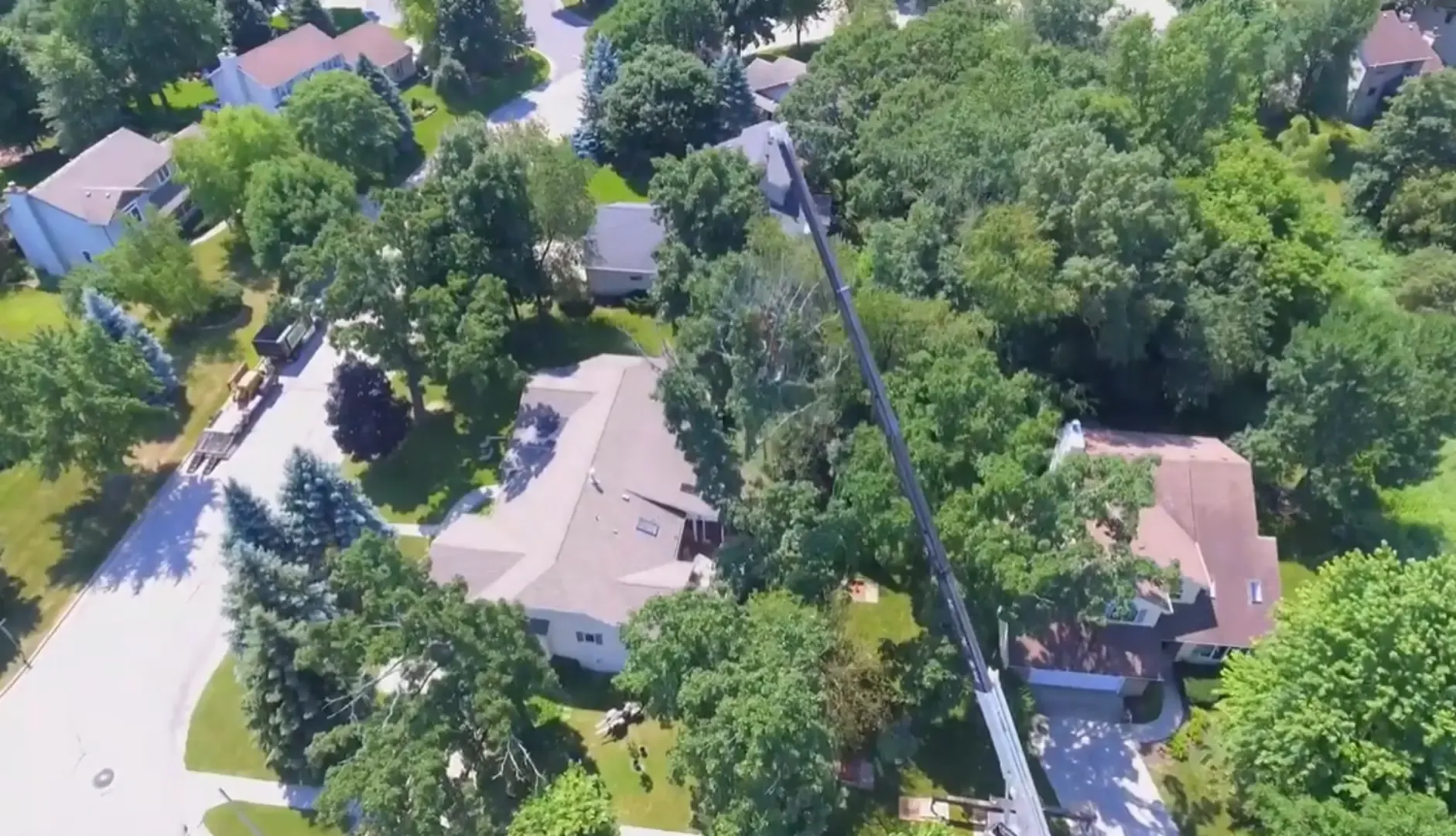
Tree Fell on House? What to Do Right Now
- Get everyone out of rooms under the tree.
- Stay away from downed power lines and call Georgia Power or 911.
- Shut off gas if you smell it and it is safe to reach the valve.
- Take photos from outside.
- Call your homeowners insurer.
- Call (762) 470-0249 to get a crew to remove the tree and tarp the roof.
Tree Fell on House Roof: First 15 Minutes
- Don’t go up on the roof, and don’t send anyone else up there. A tree resting on a roof can shift without warning, and the roof structure underneath may already be compromised even where it looks intact.
- Get out of any room directly under visible sagging, cracking, or a hole. Structural damage from a fallen tree isn’t always contained to the exact spot of impact.
- Check for gas. If you smell gas or hear hissing near the damage, leave the house and call your gas utility and 911 from outside.
- Shut off power to the affected area if it’s safe to reach the breaker without entering a damaged room. If you’re not sure it’s safe, don’t attempt it — wait for a professional.
- Don’t try to pull, cut, or move any part of the tree yourself. Weight distribution on a damaged roof is unpredictable, and removing the wrong branch first can shift the load in a bad direction.
Once the immediate area is safe, the next priority is stopping water and further damage from getting worse while you arrange removal and repairs.
Assessing How Bad It Is
Roof damage from a fallen tree generally falls into a few categories, and the category changes what happens next:
Surface damage only — missing shingles, minor gutter damage, no visible sagging or interior signs. Still needs professional inspection, since underlying decking or rafters can be cracked without an obvious exterior sign.
Structural penetration — a hole through the roof, visible sagging, or interior ceiling damage.
This needs a structural assessment before the tree is even removed. It’s often done by whoever handles your insurance repair, sometimes a structural engineer for larger trees. That way the removal itself doesn’t cause a partial collapse.
Whole-section compromise — significant sagging, visible interior structural movement, or a large tree resting across multiple roof sections. This may mean the home is temporarily unsafe to occupy in the affected area until it’s stabilized.
If you’re not sure which category you’re in, treat it as the more serious one until a professional tells you otherwise.
Temporary Protection Before Removal
You may need to protect the interior from rain before the tree comes off. It depends on the damage, weather, and how quickly a removal crew can get out:
- A tarp-over on any exposed roof area is standard practice. Many tree removal companies or roofers offer this as a same-visit service, separate from the actual tree removal
- Move valuables and furniture away from areas under visible water intrusion or ceiling staining
- Photograph everything before any tarping or temporary repair happens — this documentation matters for your insurance claim later
Tarping isn’t a repair, it’s a stopgap. It buys time to get the tree removed properly and a roofer or contractor scheduled for the actual repair.
Not sure if it’s urgent? Call and describe it — free advice, no pressure.
📞 Call Now: (762) 470-0249How Removal Works When a Structure Is Involved
This is more careful work than a tree removed in an open yard. Every tree fell on house roof job is planned around the structure. The goal is getting the tree off the house without causing more damage:
- Structural stability check first: confirming the roof can bear the process of removal. Or confirming the tree needs to be supported/cribbed before any weight comes off
- Sectional removal: the tree is typically taken down in controlled pieces rather than pulled off in one motion. Crews often use rigging to lower sections rather than letting them drop
- Careful attention to what’s underneath — gutters, siding, and any exposed structural elements get handled deliberately, not rushed
- Debris clearing away from the structure once the tree itself is off
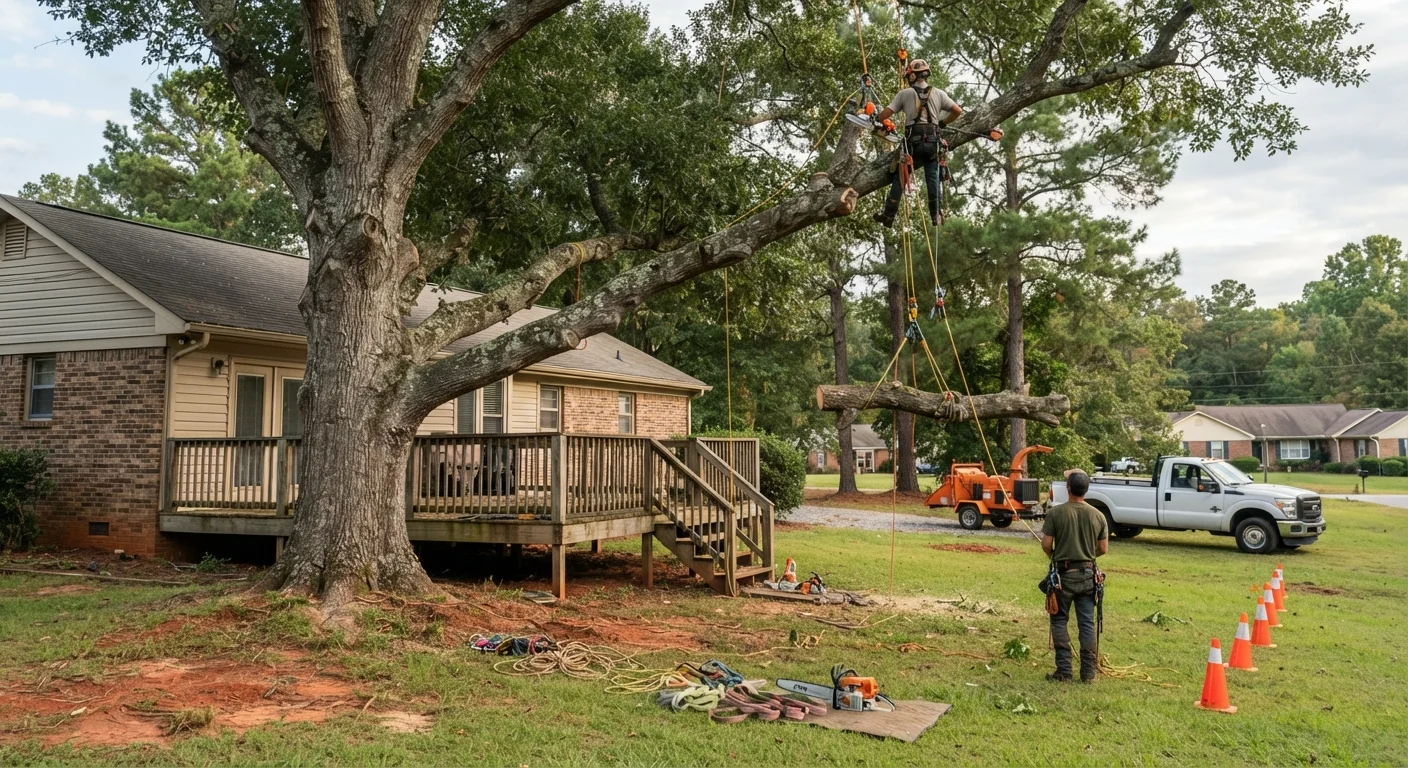
This is one of the scenarios where the safety and technique differences between an experienced crew and a general labor crew matter the most. The tree coming down safely is only half the job.
Not causing more damage to the house during removal is the other half. → Full removal process breakdown
Insurance: What Homeowners Coverage Typically Handles
Structure damage from a fallen tree is one of the more commonly covered tree scenarios, but “covered” doesn’t mean automatic or unlimited:
- Removal of the specific tree that caused the damage is generally covered under your homeowners policy’s dwelling coverage. It’s tied directly to a covered structural loss. A tree fell on house roof claim usually starts with your homeowners insurer
- Roof and structural repairs are handled separately from the tree removal line item — get separate, itemized documentation for each
- Additional living expenses (ALE) may be covered if the damage makes part of the home temporarily uninhabitable. Ask your adjuster directly, since this isn’t always volunteered
- Documentation matters more than people expect. Photograph the damage before tarping or removal, keep the tree removal invoice separate from the roofing invoice, and get everything in writing
Whether the tree was yours or a neighbor’s generally matters less than people assume. In most cases, coverage follows the structure that was damaged. → Full insurance breakdown, including neighbor-tree situations
One caution: after storms, some contractors go door-to-door. They offer to handle both the tree and the roof repair while “billing insurance directly.” Get multiple written estimates and read anything before you sign it.
Georgia has documented cases where these arrangements turned into bills well above the original quote.
Cost for This Scenario
Structure-adjacent removal typically costs more than an open-yard removal of a similar-sized tree. It takes slower, more careful technique. A crane or specialized rigging is also more likely to be needed.
Costs for a tree fell on house roof job vary widely. → Full cost breakdown
Tree emergency near you? A local crew is one call away.
📞 Call Now: (762) 470-0249Rome & Floyd County Context
Rome’s older neighborhoods near downtown, Mount Berry, and East Rome carry a lot of mature hardwood canopy close to rooflines.
Part of what makes the area attractive, and part of why house-and-roof tree damage shows up repeatedly after storms here.
This applies across Rome (ZIP codes 30161, 30162, 30165) and surrounding Floyd County communities including Armuchee, Cave Spring, Lindale, and Shannon. → Full local storm context
Get Connected With Emergency Help
Tell us what happened and where — we’ll connect you with an available local crew serving Rome and Floyd County.
Latest Articles
- Should You Remove a Tree Before an Ice Storm?
- When Do You Need a Crane for Tree Removal?
- Tree on a Power Line in Rome, GA: Who to Call and What Not to Do
Frequently Asked Questions
Is it safe to stay in the house if a tree is on the roof?
It depends on where the damage is and how severe it is. Staying in unaffected parts of the home is often fine. That’s when there’s no visible interior damage, sagging, or gas smell, and the affected area is isolated.
But avoid the room directly under the damage until it’s assessed.
Should I call a roofer or a tree removal company first?
Usually the tree removal company first, since the tree generally has to come off before a roofer can properly assess or begin repairs. Many areas have companies that coordinate both, or that handle temporary tarping themselves.
Will my insurance cover a hotel if my house isn’t livable?
Possibly, under additional living expenses (ALE) coverage — this depends entirely on your specific policy, so ask your adjuster directly rather than assuming either way.
How long does it typically take to remove a tree from a roof?
It varies widely based on tree size, how entangled it is with the structure, and whether a crane is needed. A straightforward case might be a few hours, while a large tree requiring careful rigging near a structure can take considerably longer.