
Home / Emergency Tree Removal / Tree Cabling & Bracing
Rome, GA & Floyd County — The Preserve-or-Remove Decision
Tree Cabling and Bracing in Rome, GA — Can This Tree Be Saved?
Not every tree with a structural weakness has to come down. Cabling and bracing are real, established techniques for supporting a tree with a weak point. They can sometimes turn a removal decision into a preservation one.
But they’re not a fix for every situation, and they come with honest tradeoffs worth understanding before you commit to either path.
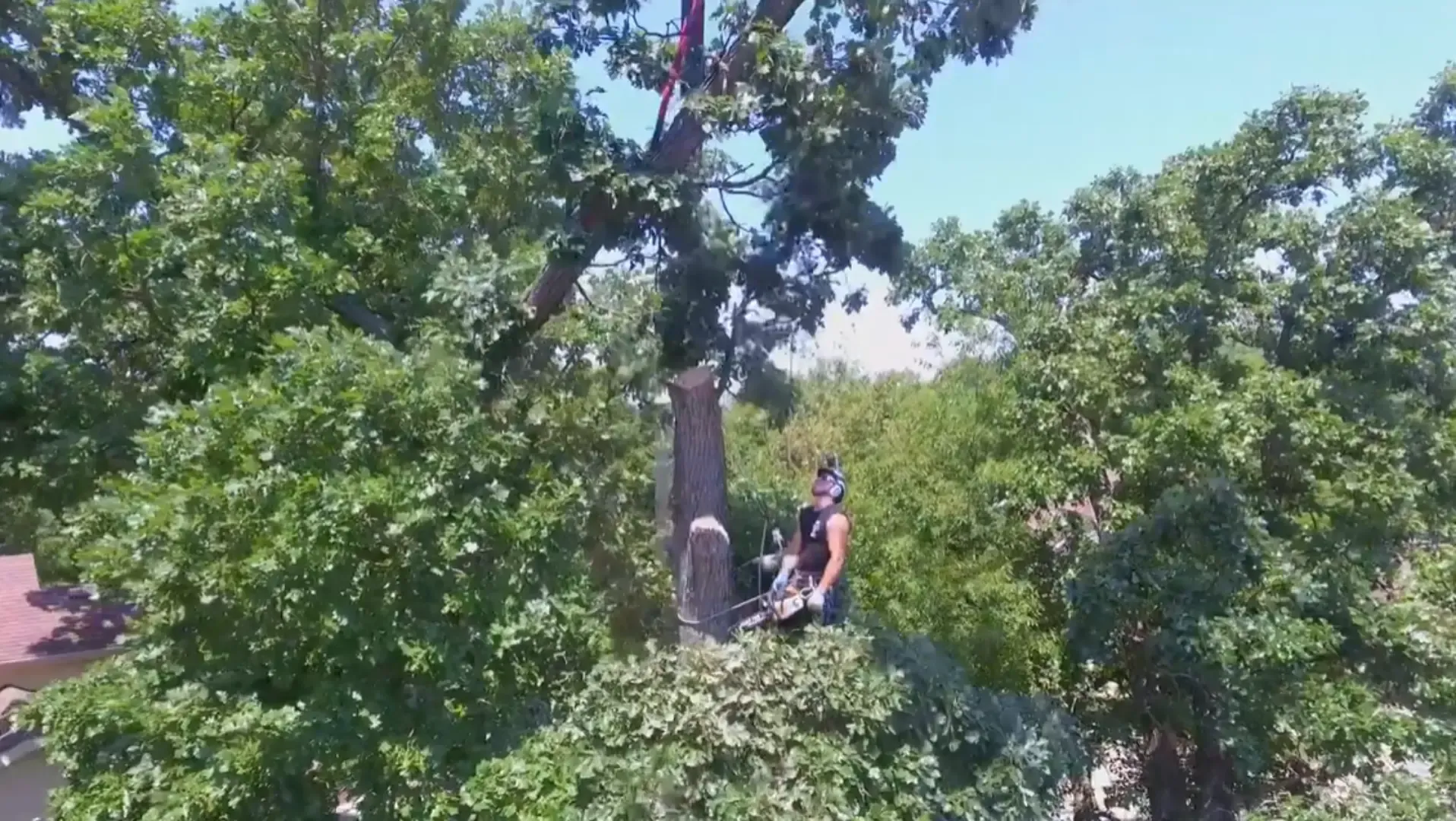
Tree Cabling and Bracing: What Cabling Actually Is
Cabling involves installing a flexible steel or synthetic cable high in the canopy, connecting two major limbs or co-dominant stems.
The cable limits how far those limbs can move independently, reducing the strain on a weak union without eliminating the tree’s natural movement entirely.
It’s most commonly used for trees with a co-dominant leader structure. That means two main trunks meeting at a narrow, weaker angle. The concern is that structure eventually splitting under wind load.
What Bracing Actually Is
Bracing uses rigid steel rods installed directly through the trunk or a major limb at the point of weakness. This provides direct physical support rather than limiting movement from above. Bracing and cabling are often used together.
Bracing addresses an existing weak point directly, while cabling manages ongoing stress on the structure as a whole.
When This Is a Genuine Candidate
- Early-stage co-dominant unions caught before a crack or split has progressed significantly
- A tree with real value worth preserving. A mature shade tree, a historically or personally significant tree, or one that would take decades to replace
- A weak union identified during a routine risk assessment, before any failure has occurred → Full risk assessment guide
- No significant decay present at or near the weak point — cabling and bracing support existing wood, they don’t compensate for wood that’s already rotting
Tree emergency near you? A local crew is one call away.
📞 Call Now: (762) 470-0249When Removal Is Still the Better Call
- Significant internal decay is already present, since hardware can’t meaningfully reinforce compromised wood
- A large portion of the trunk’s structural cross-section is already affected, not just a single limb union
- The tree is already actively failing — visibly moving, cracking further, or showing new signs of stress
- The tree’s location makes any residual risk hard to justify, even a reduced one. Directly over a frequently used entryway or a bedroom, for instance, where the consequence of an unlikely failure is severe
An honest assessment should tell you clearly which category your tree falls into rather than defaulting to whichever answer is more convenient.
What Installation Actually Involves
A qualified arborist assesses the specific weak point. They determine where cable or brace hardware should be positioned for it to actually do its job. Then they install it with minimal additional damage to the tree.
This is specialized work. Improperly placed or installed hardware can do more harm than good. That’s part of why this isn’t a general handyman or DIY project.
Cabling and bracing reduce risk. They don’t eliminate it. No honest provider should promise a cabled or braced tree will never fail.
The goal is meaningfully lowering the odds of a specific type of failure, not guaranteeing an outcome. Done correctly, tree cabling and bracing can add years of safe life to an otherwise valuable tree.
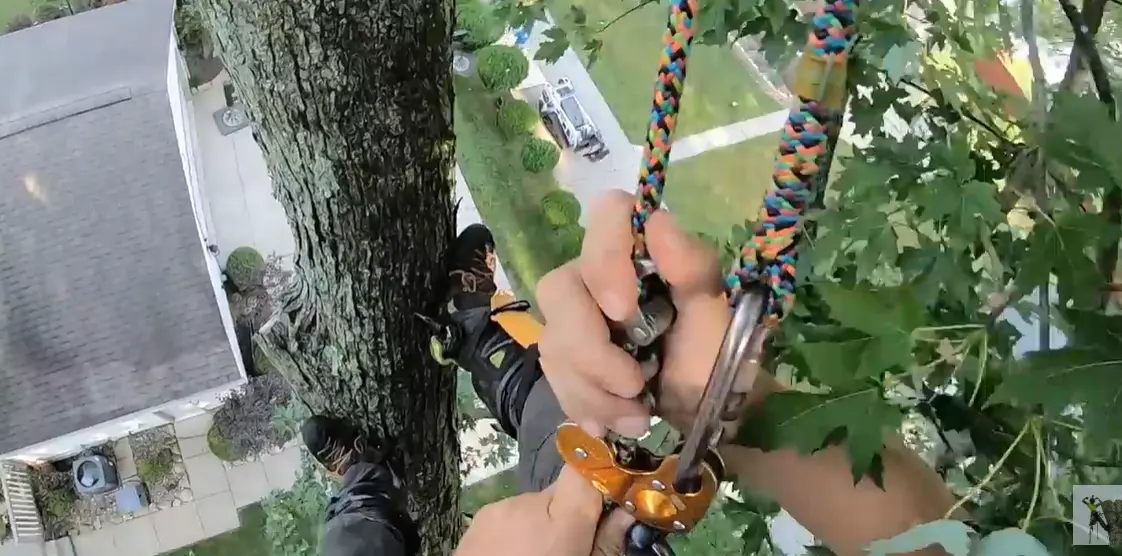
Maintenance and Reinspection
This isn’t a one-time, permanent fix.
Cables can loosen or need adjustment over time. Trees continue growing around installed hardware. Periodic reinspection is part of responsibly maintaining a cabled or braced tree rather than installing it once and forgetting about it.
Ask what a reasonable reinspection interval looks like for your specific tree when you have the work done.
Storm damage right now? We answer 24/7.
📞 Call Now: (762) 470-0249Tree Cabling and Bracing Tree Cabling and Bracing Cost Consideration
Cabling or bracing is often less expensive up front than full removal of a mature tree. But it comes with the ongoing cost of periodic reinspection over the tree’s remaining life — which removal doesn’t require.
Weighing the two isn’t just about the initial number. → Full removal cost breakdown, for comparison
Who Should Do Tree Cabling and Bracing Work
Cabling and bracing are specialized enough that general tree-cutting experience alone isn’t necessarily the right qualification.
Ask specifically about a provider’s experience with this type of work. ISA certification is a reasonable credential to look for here, the same way it matters for risk assessment.
Rome & Floyd County Context
Mature trees are common across Rome’s older neighborhoods, and many homeowners here understandably want to preserve a significant shade tree rather than default to removal.
Cabling and bracing are a real option worth discussing when the tree and situation are a genuine fit.
This applies across Rome (ZIP codes 30161, 30162, 30165) and surrounding Floyd County communities including Armuchee, Cave Spring, Lindale, and Shannon.
Free written estimate — call now, day or night.
📞 Call Now: (762) 470-0249Get a Local Assessment
Tell us about the tree and what’s concerning you. We’ll connect you with an available local arborist or tree service serving Rome and Floyd County.
Need routine care instead? See tree trimming and pruning.
How Tree Cabling and Bracing Works: Step by Step
- Assess the tree. An arborist checks if the tree is healthy enough to support.
- Choose cable or brace. Cables support weak forks. Rods brace split or cracked sections.
- Install high in the canopy. Cables are usually set about two-thirds up the limbs being supported.
- Adjust the tension. The system supports the limbs without making them rigid.
- Inspect every year. Check hardware and the tree yearly and after major storms.
Frequently Asked Questions
Does cabling a tree guarantee it won’t fail?
No — cabling and bracing reduce the risk associated with a specific structural weak point, but they don’t eliminate risk entirely. Any provider promising a guaranteed outcome should be questioned on that claim.
How long does cabling or bracing hardware last?
It varies by installation, tree growth rate, and conditions. But periodic reinspection — not a “set it and forget it” installation — is part of responsibly maintaining it over time.
Is cabling cheaper than removal?
Often the upfront cost is lower, but it comes with ongoing reinspection costs over the years that removal doesn’t require. It’s worth comparing the full picture, not just the initial price.
Can any tree service install cables and braces?
Not necessarily with the same level of expertise. This is specialized work. Asking about a provider’s specific experience with cabling and bracing, along with ISA certification, is a reasonable part of vetting who does it.