
Home / Land Clearing / Brush Clearing
By Seven Hills Tree Editorial · Updated October 6, 2026
Brush Clearing in Rome, GA: Underbrush and Pasture Work
Brush clearing in Rome, GA removes underbrush, saplings and overgrown vegetation from lots, fence lines and pasture. The main methods are forestry mulching, cut-and-haul and mowing.
The right one depends on how thick the brush is, what species it is, and whether you want mulch left behind. Land of one acre or more may need a state permit.
Brush clearing near you in Rome, GA 30161. Open 24/7.
What is brush clearing in Rome, and what does it cover?
Brush clearing removes woody and thick vegetation that isn’t big enough to count as trees: underbrush, saplings, briars, vines and invasive shrubs like Chinese privet.
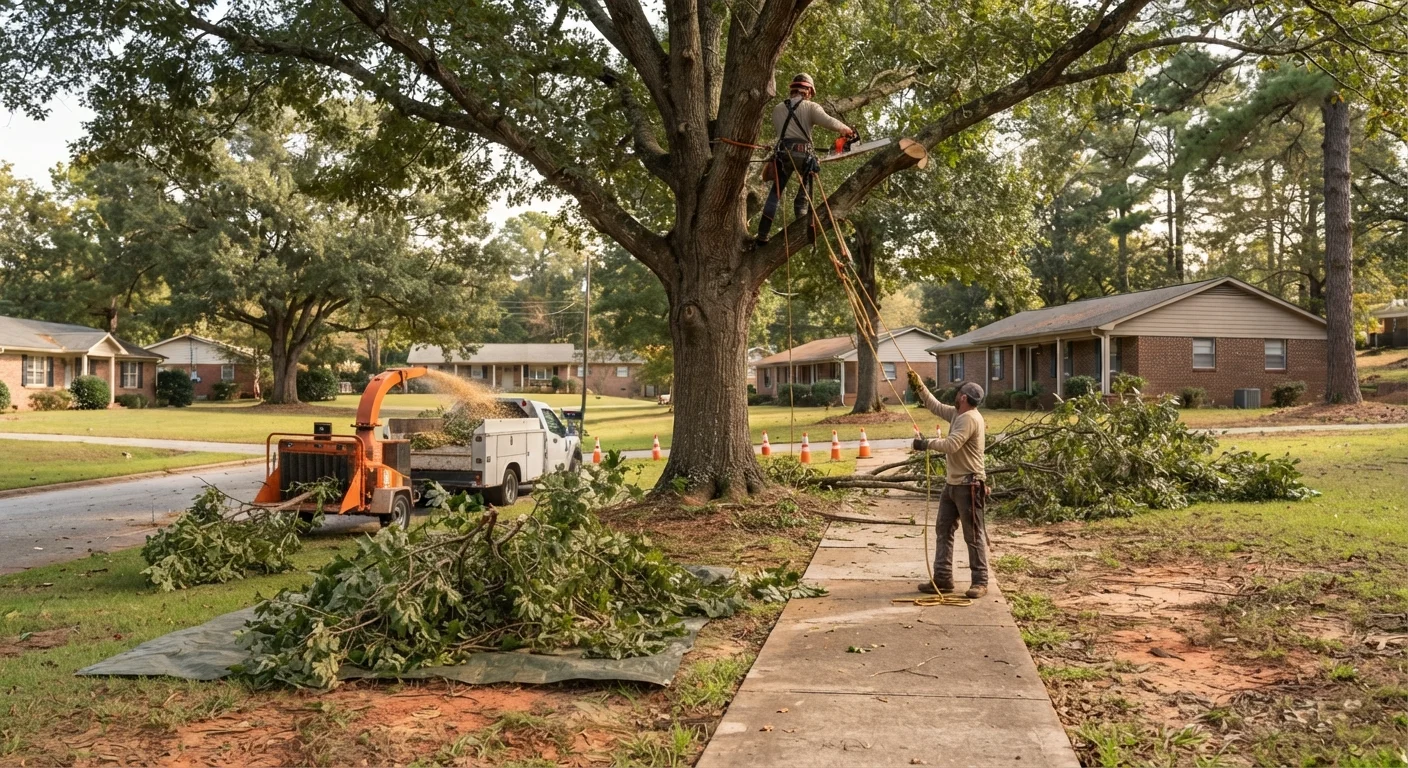
It reopens lots, fence lines, trails and pastures. Large trees are separate work and priced differently.
Which method is best: mulching, cut-and-haul or mowing?
Forestry mulching grinds brush in place and leaves a mulch layer. Cut-and-haul removes the material. Mowing handles smaller growth but often regrows. Extension guidance says cutting alone rarely stops sprouting species like privet, so many jobs need follow-up.
Pick based on density, species and what you want the ground to look like.
Brush clearing methods compared
| Method | Best for | What it leaves | Watch out for |
|---|---|---|---|
| Forestry mulching | Dense underbrush, saplings, privet thickets, trails | A thick mulch layer | Stumps get buried under the mulch, so cut-stump treatments can’t be used. Mulching in fall can spread privet seed. |
| Cut and haul | Lots where you want the material gone, or work near structures | Bare ground and stumps | Hauling cost. Stumps can resprout if untreated. |
| Mowing or brush hogging | Small brush, fence lines, keeping cleared ground open | Cut stems | Often regrows. Mowing alone is often ineffective on blackberry. |
| Hand cutting | Tight spots and selective work | Stumps | Cutting alone doesn’t stop rapid stump sprouting. |
Why does brush grow back after clearing?
Many woody plants resprout from stumps and roots. Chinese privet is a known example: extension specialists say cutting alone doesn’t control it because of rapid stump sprouting, and no single treatment will eradicate it.
Plan for follow-up work. Ask the crew what follow-up they recommend.
Herbicide treatment of stumps or regrowth is a separate step. Ask who handles it, and follow the product label.
Is brush clearing in Rome the same as pasture reclamation?
Pasture reclamation is brush clearing with a goal: getting grass back. It usually means clearing woody growth, then managing regrowth so forage can recover.
Mowing helps keep regrowth short. Extension sources note that mowing and herbicide timing matter, and that a single pass often isn’t enough.
Tell the crew what you plan to graze, mow or plant. That changes the method.
Do I need a permit or erosion controls to clear brush?
Georgia requires a Land Disturbing Activity permit for disturbance of one acre or more, and erosion controls often come with it. Rome and Floyd County’s Building Inspection department handles land disturbance permits and erosion control.
Small brush jobs under an acre may fall outside it. Call before you start if your project is close to an acre, near a creek or part of construction.
- Creeks and streams: Georgia generally requires a 25-foot natural vegetative buffer to stay undisturbed along streams. Trout waters need 50 feet.
- Farm and forestry exemptions: Georgia’s erosion law exempts agricultural operations and forestry land management practices, but the buffer rules still matter near water.
- Erosion barriers: silt fence, straw bales and similar barriers slow runoff on bare ground. Erosion controls after clearing
How much does brush clearing cost?
Cost is usually based on acreage, how dense the brush is, the method and the terrain, not a price per tree. Ask for a written scope that says what is cleared, what is left and whether hauling is included.
How tree and land work is priced
Brush clearing near you in Rome and Floyd County
Rome (ZIP codes 30161, 30162 and 30165) has plenty of overgrown lots, and the rural parts of Floyd County have fence lines, pasture and wooded acreage to match.
Armuchee, Shannon and Lindale are close enough to Rome that these jobs are routine.
If your land borders a creek, such as Armuchee Creek, check the buffer rule above before you start. Floyd County guide
Land clearing near you in Rome, GA 30161.
Related Guides
- Forestry Mulching vs Bulldozing: Which Is Better?
- Do I Need a Permit to Clear Land in Rome, GA?
- Land Clearing Cost in Rome, GA: What Drives the Price
Frequently asked questions
Will brush grow back after I clear it?
Often, yes. Many species resprout from stumps and roots. Plan for follow-up work, and ask the crew what they recommend for your species.
Is mulching better than burning brush?
Burning is not allowed in Floyd County from May 1 through September 30, and debris moved from another property can’t be burned at any time. Mulching leaves the material on site. Burn and debris rules
Do I need to clear brush before building?
Usually yes, and construction can trigger permits and erosion rules. Ask Rome and Floyd County Building Inspection before you start. Permit and legal guide
Sources
- Alabama Cooperative Extension System, “Control Options for Chinese Privet” (hand cutting, brush mulching, regrowth): https://www.aces.edu/blog/topics/control-invasive-plants/control-options-for-chinese-privet/
- UF/IFAS Extension, “Blackberry and Dewberry: Biology and Control” (mowing and herbicide timing): https://ask.ifas.ufl.edu/publication/AG238
- Mississippi State University Extension, “Controlling Hardy Hardwoods in Pasture Systems”: https://extension.msstate.edu/publications/controlling-hardy-hardwoods-pasture-systems
- Georgia Soil and Water Conservation Commission, Erosion and Sedimentation Act overview: https://gaswcc.georgia.gov/sites/gaswcc.georgia.gov/files/related_files/site_page/GSWCC-2016-02-Chapter-1-9-21-15.pdf
- Georgia Department of Transportation, stream buffer overview (25-foot and 50-foot buffers): https://www.dot.ga.gov/PartnerSmart/EnvironmentalProcedures/Ecology1/Guidebooks/Buffer%20Variance.pdf
- Dawson County, Georgia, summary of O.C.G.A. § 12-7-17 exemptions: https://www.dawsoncountyga.gov/571/LDP-Exemptions
This is general information, not legal or agronomic advice. Confirm permit and buffer questions with Rome-Floyd Building Inspection.