Mushrooms at the Base of a Tree: What They Mean for Safety
You notice mushrooms at the base of a tree in your yard. Are they harmless? Sometimes. But some fungi signal decay that can bring a big tree down. Here is what Rome, GA homeowners should know.
Why Mushrooms at the Base of a Tree Matter
A mushroom is the fruit of a fungus. The main body lives out of sight, in the soil, roots or wood. When fruit shows up on the trunk or root flare, the fungus has often been feeding on the tree for years.
Penn State Extension notes that any fungal fruiting body on the trunk or limbs is a sign of advanced decay and weakness.
Fungi That Signal Real Hazard
- Armillaria (shoestring root rot). Honey-colored mushroom clusters at the base, often in fall. It weakens roots, so trees can topple.
- Ganoderma (artist’s conk and varnish conk). Shelf-like conks at the soil line. Brown on top, white or cream below. It rots roots and the lower trunk.
- Inonotus dryadeus. Rough brown shelves at the base of oaks. Trees may fall before the crown looks sick.
- Chicken of the woods. Bright orange-yellow shelves. The wood can break in wind even before fruit appears.
Oaks are the most common large trees around Rome. Root rot on a big oak near a house is a serious concern. See our oak trees of Rome, GA guide.
When Mushrooms Are Probably Harmless
Mushrooms in the lawn, away from the trunk, often grow on buried wood or mulch. Fungus on mulch beds is also common after rain. These are not a direct sign of tree decay.
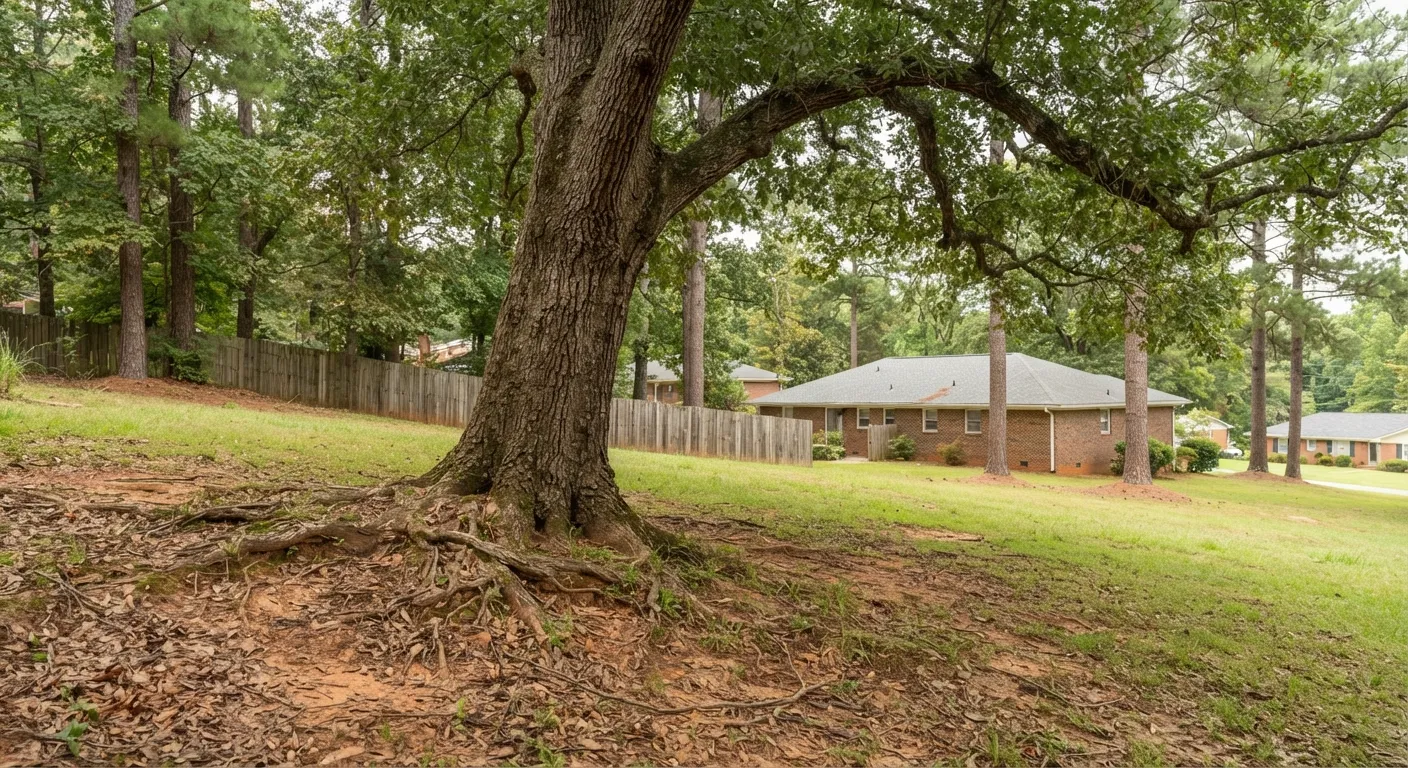
The concern is fungus touching the trunk, root flare or major roots.
What to Do Next
- Take clear photos of the fungus and where it grows.
- Do not just knock it off. The decay inside remains.
- Check for other warnings: lean, lifting soil, dead limbs. See signs a tree is about to fall.
- Book a tree risk assessment. An arborist can test how much sound wood is left.
Removal or Monitoring?
A small conk on a sound tree may just need watching. Root-rot fungi on a big tree near your home often mean removal. If the tree is dead or failing, see dead tree removal. For urgent cases anywhere in Floyd County, see emergency tree removal.
Worried about a tree right now? Keep people and cars clear. Then call for help near you in Rome or Floyd County.
Where the Fungus Grows Matters
- On the root flare or trunk base. Highest concern. Often root or butt rot.
- On a wound or old pruning cut. Decay may be local. Needs checking.
- On the upper trunk or limbs. The limb or section above may be weak.
- In the lawn several feet away. Often feeding on buried roots or wood. Usually less urgent.
How Pros Check Hidden Decay
Decay often hides inside a trunk that looks fine. Arborists use a few tools to find it:
- Sounding. Tapping the trunk with a mallet. Hollow wood sounds dull.
- Resistance drilling. A thin bit, about 1/16 inch wide, is drilled into the trunk. A graph shows solid, decayed or hollow wood. The tiny hole seals over in time.
- Root collar digging. Removing soil at the base to check major roots.
These tests give real evidence for a keep-or-remove choice. Ask about them during a tree risk assessment.
Fungi and Oaks Around Rome
Rome has many mature white, post, black and water oaks. Older oaks with past root damage are common hosts for root-rot fungi. Construction near the trunk raises the risk. Read more in our oak trees guide.
Worried about who pays if it falls on a neighbor? See neighbor tree responsibility.
Common Questions About Lawn Mushrooms
After rain, mushrooms often pop up in lawns. Many grow on buried roots of old trees or construction wood. These are usually harmless to the lawn. If they form a circle, they may be a “fairy ring,” a lawn fungus not related to tree decay.
Fungus on Mulch
Mulch beds often grow fungi, including slime molds and small mushrooms. These feed on the mulch itself. They are not a sign your tree is rotting.
Fungus After Construction
Roots damaged by digging or paving can let decay fungi in. Fungus may show up at the base a few years later. If you had work near a tree, watch for conks and mushrooms.
What a Decay Test Shows
Arborists can measure how much sound wood remains with tools like resistance drills. The result helps decide if a tree with fungus can stay or must go.
Quick Recap
- Fungus on the trunk or root flare signals decay.
- Lawn mushrooms away from the trunk are usually harmless.
- Some root-rot fungi can topple trees before the crown looks sick.
- Photos and an assessment are the next step.
- Removal is common for big infected trees near homes.
Local Notes for Rome and Floyd County
Rome’s older neighborhoods have many mature water, willow and red oaks. These trees often reach the age when root decay becomes common. Fungus at their base deserves a careful look. Homes near Myrtle Hill, East Rome and Lindale often sit under trees like these.
FAQs
Can a tree with root rot be saved?
Root rot cannot be cured. Care can slow stress, but the decay stays.
Should I pull the mushrooms off?
It will not help. The fungus lives inside the wood and soil.
Are tree mushrooms safe to touch?
Some wild mushrooms are toxic if eaten. Keep kids and pets away and do not eat any you cannot identify.
Does fungus spread to other trees?
Some root-rot fungi can spread through roots in soil. Removing the infected stump may be advised. See stump removal.
Can I treat root rot with fungicide?
Fungicides rarely help mature trees with established root rot.
Does fungus spread to my house?
Tree decay fungi do not attack homes, but wood-decay fungi can affect damp structural wood.
Sources
These outside sources informed this guide:
- Penn State Extension: Tree Diseases That Create Hazards
- UC IPM: Armillaria Root Rot
- UGA Extension, Bartow County: Mushrooms on Trees (Wood Decay)
- UGA Extension, Forsyth County: Hazardous Trees
Georgia sources: UGA Extension: Is My Tree Dying?