Cracked Tree Trunk: Is It Dangerous? A Rome, GA Guide
A crack in a trunk can be minor. Or it can be the start of a split that drops half a tree. This guide helps Rome and Floyd County homeowners judge a cracked tree trunk.
Surface Bark vs. Deep Cracks
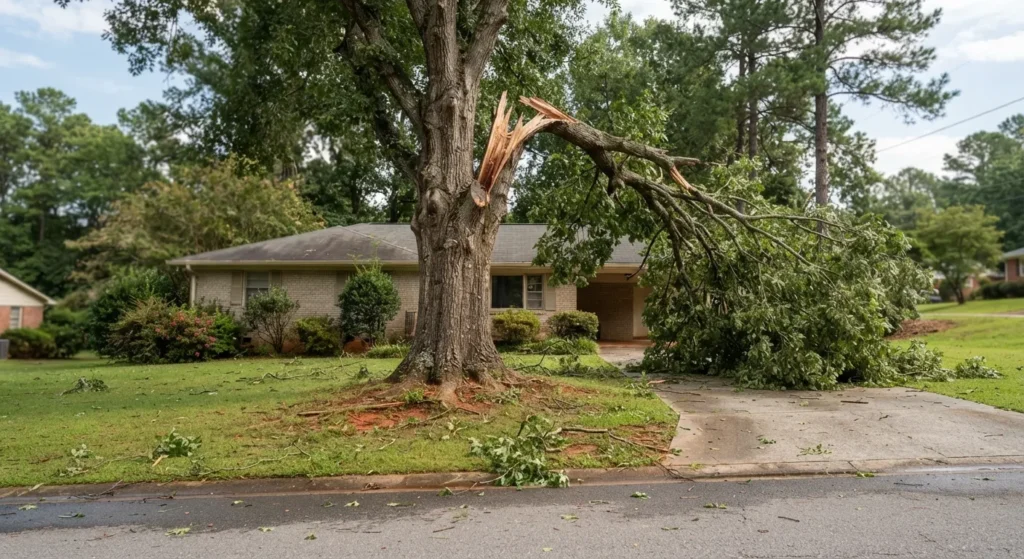
Bark can split from fast growth or frost. These shallow splits often seal over. They are rarely a hazard.
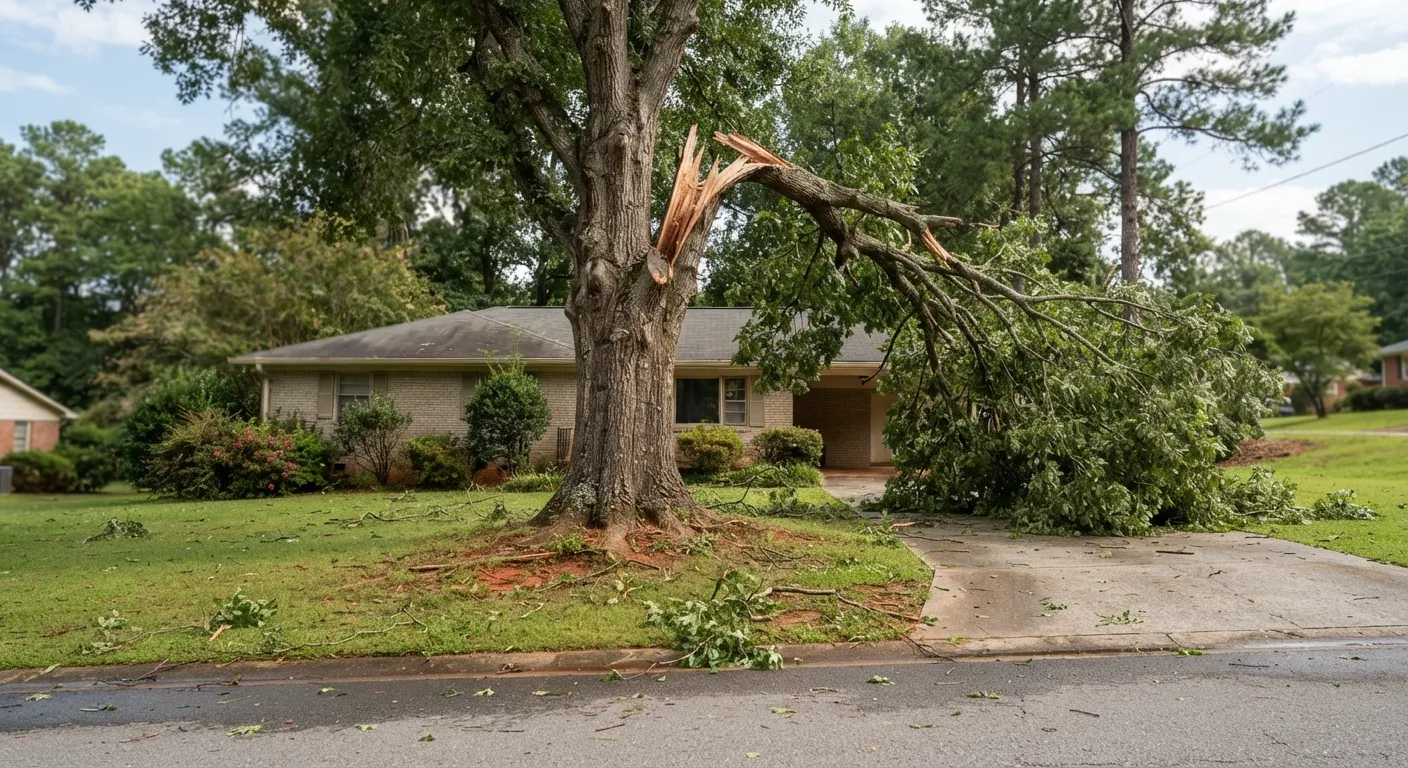
Deep cracks are different. UGA Extension lists stress cracks and buckling bark on the trunk among the signs of a hazardous tree. They call for prompt action.
When a Cracked Tree Trunk Is Dangerous
- The crack goes into the wood. You can see a gap or slide a thin tool inside.
- It sits below a fork. Cracks under a V-shaped union often mean the two stems are separating.
- It runs on both sides. A crack showing on opposite sides suggests the trunk is splitting through.
- It opens and closes. Movement in wind means the wood is failing.
- It pairs with decay. Fungus, soft wood or a cavity near the crack.
Weak V-Shaped Forks
Many oaks and maples grow two trunks of similar size. This is a codominant stem. When the fork is a tight V, bark gets trapped between the stems. This “included bark” stops the wood from bonding. In wind, the fork can tear apart.
Narrow, V-shaped forks are a common weak point. Learn more on our split and cracked tree removal page.
Can Cabling Save It?
Sometimes. A cable or brace can support a weak fork before it cracks. Once a deep crack has formed, support may not be enough. See tree cabling and bracing.
What to Do Now
- Keep people and cars out from under the tree.
- Photograph the crack and mark its ends. Check if it grows.
- Get a tree risk assessment for any crack near your home.
- If the crack is opening after a storm, treat it as urgent. See emergency tree removal in Rome, GA.
Worried about a tree right now? Keep people and cars clear. Then call for help near you in Rome or Floyd County.
Types of Cracks
- Vertical cracks. Run up and down the trunk. Common after frost or lightning.
- Horizontal cracks. Run across the trunk. Often mean the trunk is starting to snap. Very serious.
- Cracks at a fork. Signal stems pulling apart.
- Cracks with oozing or staining. May point to infection or a wetwood problem.
Storm Season and Cracked Trees
Strong summer storms and winter ice put heavy loads on weak forks. A crack that was small in spring can open wide after one storm. Check cracked trees after every big wind event in Rome and Floyd County.
Big crews with cranes may be needed for a split tree over a house. See crane tree removal.
Unsure how much sound wood is left? An arborist can test for hidden decay during a tree risk assessment.
Frost Cracks
Rapid temperature swings in winter can split bark and wood. These are frost cracks. They often reopen each winter and form a ridge of new wood. Many are not dangerous alone, but they let decay in.
Seams and Ribs
When a tree works to seal a crack, it builds a raised ridge along it. A long, thick ridge suggests an old crack the tree has managed for years. A fresh, open crack with no ridge is newer and more concerning.
How Cracks and Decay Work Together
A crack lets water and fungi into the wood. Decay then weakens the wood around it. Over time, a small crack can lead to a big hollow. That is why cracks plus fungus or soft wood are a red flag.
Monitoring a Crack
- Mark the top and bottom of the crack with a small paint dot.
- Photograph it with a ruler for scale.
- Check it after storms and every few months.
- Call a pro if it grows, widens or moves.
Codominant Oaks in Rome
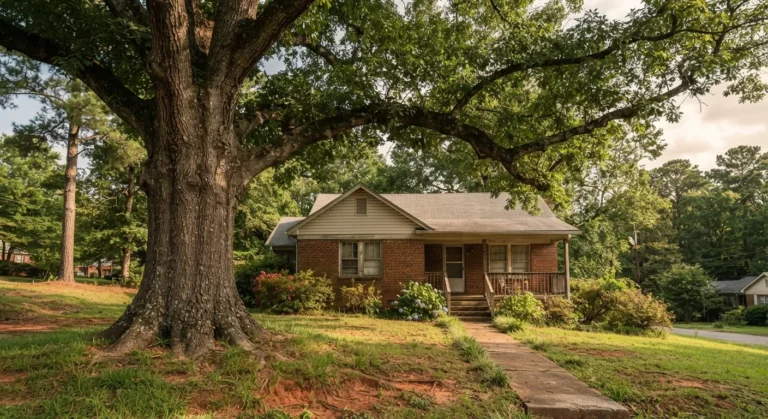
Many older oaks in Rome neighborhoods have two big trunks. These forks often hold for decades. But if a crack forms below the fork, treat it seriously.
Quick Recap
- Shallow bark splits are rarely a hazard.
- Deep, moving or horizontal cracks are serious.
- Cracks below a V-fork often mean the stems are separating.
- Cabling helps before a crack forms, not after it opens.
- Get urgent help if a crack opens after a storm.
Local Notes for Rome and Floyd County
Ice storms and summer thunderstorms both stress weak forks in Floyd County trees. Cracks often show after a bad winter. Walk your trees each spring and after storms. Homes in Armuchee, Shannon and Cave Spring with big yard oaks should be extra watchful.
FAQs
Can I seal a crack in a tree?
No. Sealants do not restore strength and can trap moisture.
Does lightning cause cracks?
Yes. Strikes can blow strips of bark and wood off. See storm damage tree removal.
Does a crack always mean removal?
No. Small, sealed cracks may only need monitoring or cabling. Deep or moving cracks often do.
What causes trunks to crack?
Weak forks, frost, lightning, storm loads and decay are the most common causes.
Can a tree recover from a crack?
Small cracks may be sealed off. Deep, active cracks rarely improve.
Are vertical cracks safer than horizontal ones?
Horizontal cracks often mean the trunk is starting to fail. They are very serious.
Should I wrap a cracked trunk with tape or metal bands?
No. Wraps and bands can girdle the tree as it grows. Proper bracing is installed through the wood by trained crews.
Do cracks get worse in winter?
Frost cracks often open in cold snaps and close in warm weather. Watch them through the seasons.
Before You Call a Pro
- Photograph the crack with something for scale.
- Note when you first saw it.
- Tell the crew if the crack moved in wind.
Can a crack close on its own?
The tree can build new wood along it, but the old crack remains inside.
Sources
These outside sources informed this guide:
- UGA Extension, Forsyth County: Hazardous Trees
- UC ANR: Multiple Trunks — Inspect Where the Trunks Meet
Georgia sources: UGA Extension: Is My Tree Dying?