Do Tree Roots Damage Foundations? What Rome Homeowners Should Know
Cracks in your foundation. A big tree nearby. Is the tree to blame? Maybe, but not the way most people think. This guide explains how tree roots damage foundations and when they do not.

How Roots Really Cause Problems
- Drying the soil. Roots pull water from clay. Clay shrinks as it dries. The foundation can settle and crack.
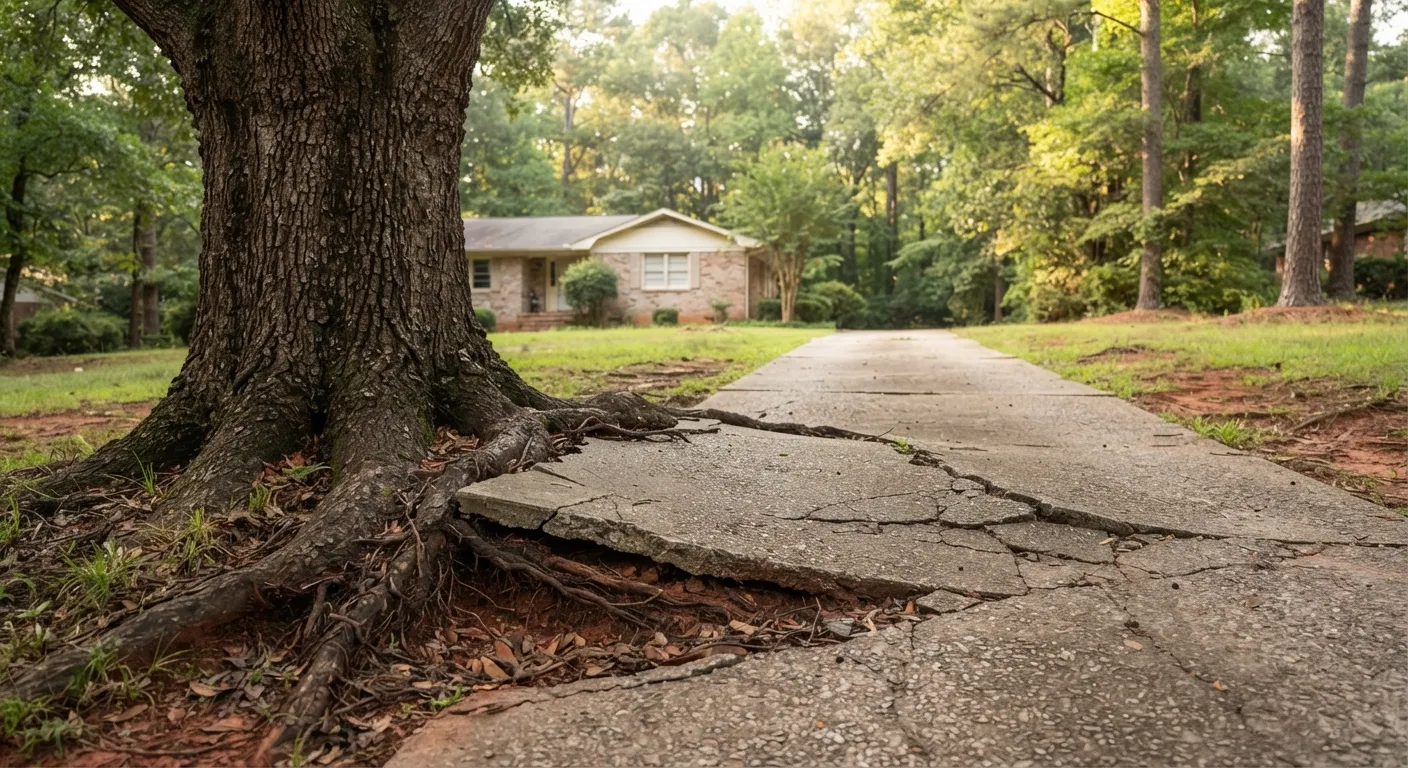
- Lifting. Roots growing under light slabs, walks and driveways can lift them.
- Pipes. Roots enter cracked sewer lines looking for water.
Roots rarely break through a solid foundation wall on their own.
Why This Matters in Rome
Much of Floyd County has clay soil. Clay swells when wet and shrinks when dry. That movement can crack foundations even with no trees around. A dry summer can make it worse.
Signs Roots May Be Involved
- Cracks on the side of the house nearest a big tree.
- Cracks that grow in dry spells.
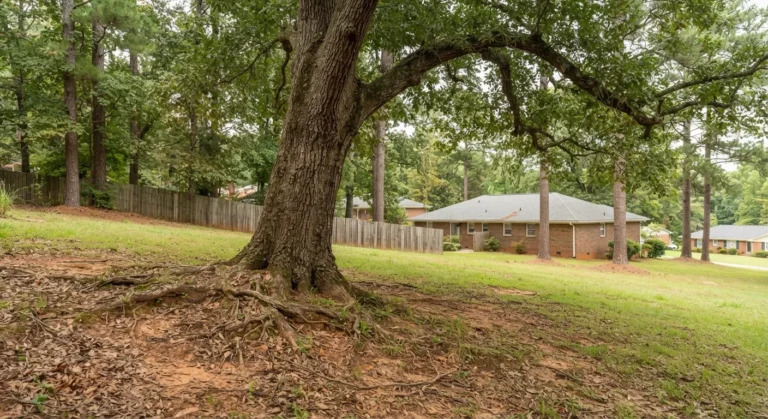
- Lifted sidewalks or driveway near the tree. See exposed tree roots.
- Slow drains or root blockages.
Before You Cut the Tree
Get the cause checked. A structural engineer or foundation pro can tell if roots are involved. Removing a big tree can also change soil moisture, and the soil can swell back.
Options Short of Removal
- Root barriers between the tree and the house.
- Even watering near the foundation in droughts.
- Fixing leaky pipes and gutters.
- Pruning roots only on expert advice. Cutting big roots can destabilize the tree.
When Removal Makes Sense
- The tree is too close and growing.
- Roots are lifting slabs or entering pipes again and again.
- The tree also has health or structure problems.
See tree removal near a house and how close is too close.
Worried a tree is too close to your home? Call for help near you in Rome or Floyd County.
Roots and Sewer Lines
Roots do not break into pipes for no reason. They find tiny cracks or loose joints where moisture leaks out. Then they grow inside. Older clay sewer lines are most at risk.
- Slow drains in several fixtures.
- Gurgling toilets.
- Sewage smell or soggy spots in the yard.
A plumber can run a camera to check. Fixing the pipe usually matters more than removing the tree.
Roots and Driveways, Walks and Patios
Thin slabs sit on the surface. Roots growing just below can lift and crack them. Shallow-rooted trees in compacted soil are common culprits. Grinding or bridging a lifted slab is often possible. Cutting large roots to fix it can hurt the tree, so ask a pro first.
Clay Soil and Drought in Floyd County
Georgia red clay holds water when wet and shrinks when dry. Big trees pull a lot of water. In a long dry spell, soil near a thirsty tree can shrink more than soil elsewhere. That uneven movement can lead to cracks.
After a drought ends, the soil can swell again. Some cracks open and close with the seasons. That is a sign of soil movement, not always roots.
Who to Call First
- A foundation or structural engineer to find the cause of cracks.
- A plumber if drains are slow.
- An arborist to judge the tree’s roots and health.
- A tree crew only after you know the tree is the problem.
Planting Smart Near a Home
- Choose smaller trees near the house.
- Plant big shade trees well away from the foundation.
- Avoid fast-growing, water-loving trees close to pipes.
- Give roots room to grow away from the house.
For trees already too close, see how close is too close. For root hazards to stability, see exposed tree roots.
What Engineers Look At
- Crack patterns and widths.
- Floor and wall levels.
- Soil type and moisture.
- Drainage, gutters and downspouts.
- Nearby trees and their size.
Their report can tell you if trees, soil, water or construction are the main cause.
Gutters and Downspouts Matter
Water pouring off the roof right at the foundation can soften and swell clay. Then dry spells shrink it. Extending downspouts several feet from the house often helps more than cutting a tree.
Trees Planted Too Close by Builders
Some builders plant fast-growing trees close to new homes for quick curb appeal. In ten or twenty years, those trees may be large. Plan ahead. Move or replace them while they are small.
Old Trees That Were There First
Many Rome homes were built among existing oaks. Their roots were cut during construction. These trees may decline years later. Watch for top dieback and fungus.
Quick Recap
- Roots rarely break solid foundations directly.
- They can dry clay soil and cause settling.
- They lift slabs and enter cracked pipes.
- Get an engineer’s opinion first.
- Root barriers and drainage fixes can help.
Local Notes for Rome and Floyd County
Georgia red clay shrinks and swells with moisture. That alone can crack foundations. Before removing a tree, have the cause checked. Fixing drainage often helps.
FAQs
Will insurance cover root damage?
Often not. Many policies exclude gradual settling. Ask your agent.
Which trees have aggressive roots?
Fast-growing trees like willows and silver maples are common culprits.
Can I cut roots near my foundation?
Small roots, yes. Large structural roots near the trunk can make a tree unstable.
Does a root barrier work?
It can redirect roots when installed correctly and deep enough.
Do I need to remove a tree to fix my foundation?
Not always. Ask your engineer whether the tree is truly part of the problem.
Are oak roots bad for foundations?
Large oaks pull a lot of water and can contribute to soil drying near foundations in clay.
Common Root and Foundation Mistakes
- Cutting a tree before finding the cause of cracks.
- Cutting large roots close to the trunk.
- Ignoring gutters and drainage.
- Planting fast-growing trees close to the house.
Should I water trees near my house?
Even watering during drought can help limit soil shrinkage.
Sources
These outside sources informed this guide:
- UGA Extension, Bartow County: Construction Damage to Trees
- UGA CAES: UGA Training Program Should Save Trees, Sidewalks
Georgia sources: UGA Extension: Shade and Street Tree Care · Georgia Forestry Commission: Care for Your Trees