What Is a Tree Risk Assessment? Levels 1, 2 and 3 Explained
You are worried about a big tree. Someone suggests a risk assessment. What does that involve? This guide explains it in plain words for Rome and Floyd County homeowners.
The Three Levels
The International Society of Arboriculture uses three levels.
Level 1: Limited visual
A quick look from one side, a drive-by or aerial view. It spots only obvious problems, like a dead tree. It cannot clear a tree as safe.
Level 2: Basic
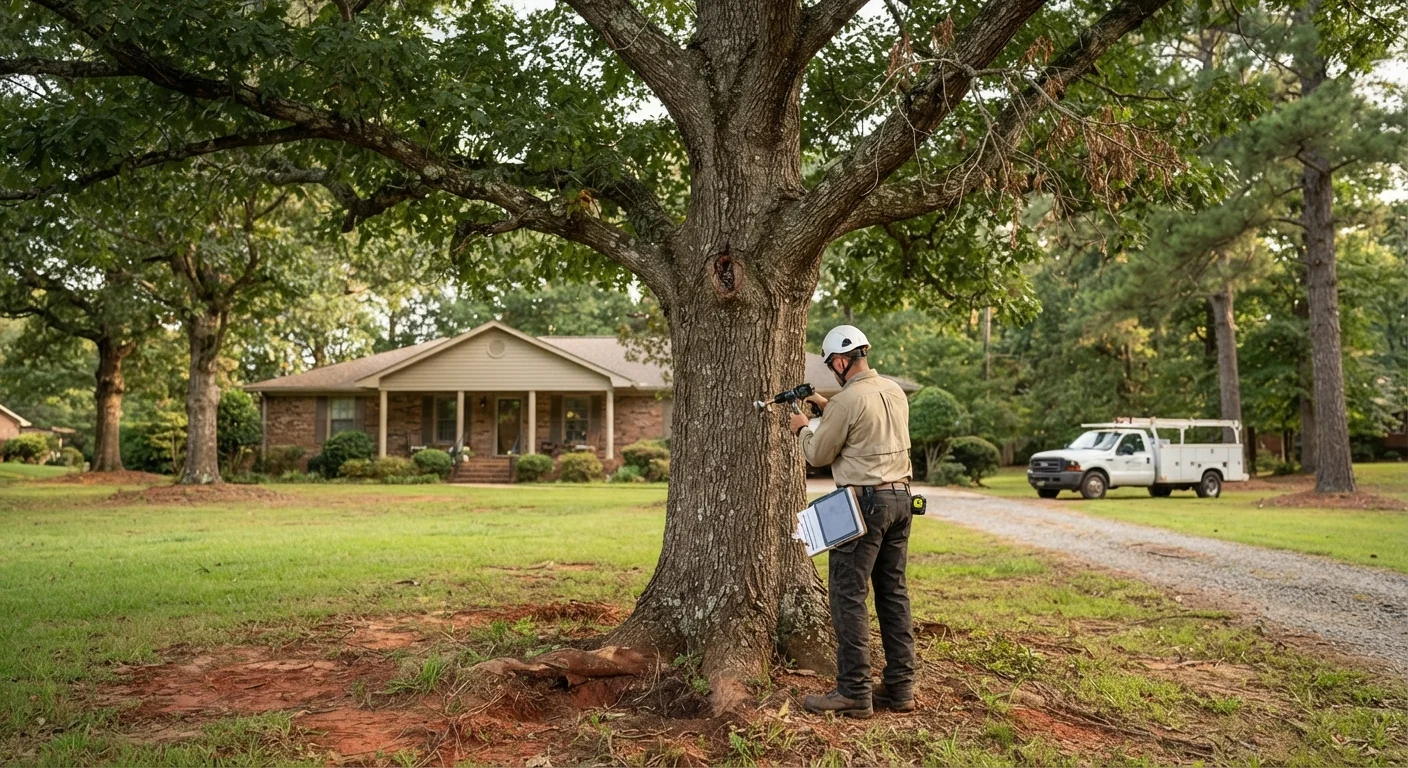
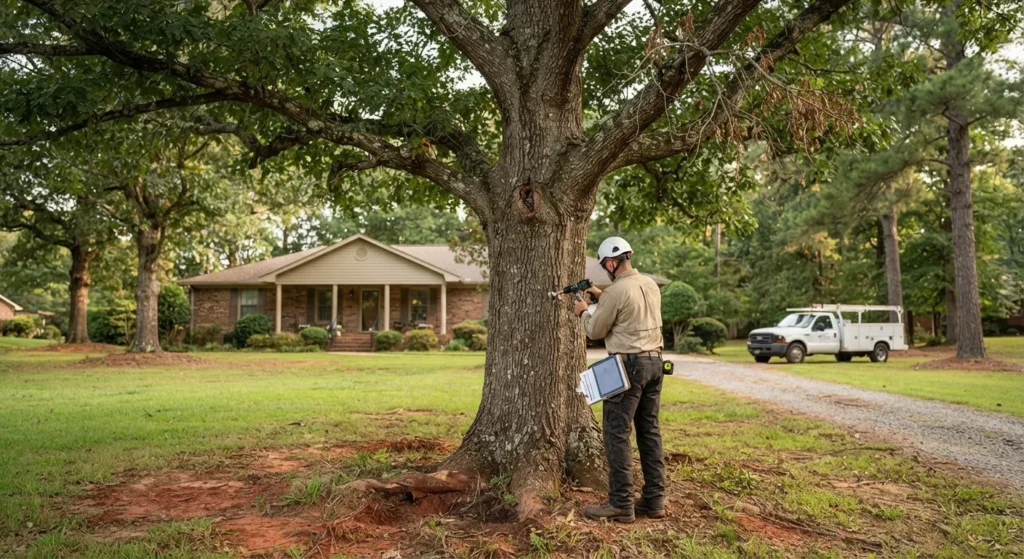
The standard check. The arborist walks all the way around the tree. They look at the crown, trunk, root flare and soil. They may use a mallet, soil probe and binoculars. This gives a risk rating.
Level 3: Advanced
Used when Level 2 is not enough. Tools can include resistance drilling, sonic tomography, pull tests and air excavation of roots.
What the Arborist Looks At
- Targets: what the tree could hit.
- Defects: cracks, decay, dead wood, weak forks.
- Roots and soil: lifting, damage, rot.
- Site changes: digging, new paving, grade changes.
- Likelihood of failure and impact.
What You Get
- A risk rating for the tree or part of it.
- Options: monitor, prune, cable or remove.
- A timeline for action.
The arborist advises. You decide how much risk to accept.
When to Book One
- A large tree near your home shows warning signs.
- After construction near a tree.
- Before buying or selling a home. See tree removal before selling a house.
- When a neighbor or HOA disputes a tree.
- When insurance or a lender asks.
See the signs a tree is about to fall to know when to call.
Why Written Reports Matter
A written report shows you acted with care. In Georgia, knowing a tree was dangerous can affect who pays if it falls. See neighbor tree responsibility.
Our service page: tree assessment in Rome, GA.
Want a tree checked? Call for help near you in Rome or Floyd County.
What Happens on the Day
- You share your concerns and the tree’s history: storms, digging, past pruning.
- The arborist looks at the site: targets, soil, slope, drainage.
- They walk around the tree, checking from root flare to crown.
- They tap, probe and look closely at defects.
- They may recommend advanced testing if something is unclear.
- You get findings and options, often in writing.
Common Findings and What They Mean
- Deadwood: usually solved with pruning.
- Weak V-fork: may be cabled or reduced.
- Root damage from construction: watch closely. Problems can show up later.
- Fungal conks at the base: often serious. May need decay testing.
- Cracks: depends on depth and location.
- Lean with soil lifting: often urgent.
How Often to Reassess
Healthy trees in low-risk spots may only need a look every few years. Trees with known defects or near homes often need a yearly check. Always recheck after major storms, ice events or construction near the roots.
Assessments for Landlords, HOAs and Sellers
Owners responsible for other people’s safety have extra reason to document tree care. A dated report shows you took reasonable steps. See tree care for landlords and tree care for HOAs.
Questions to Ask the Assessor
- Are you ISA Certified or TRAQ qualified?
- Which level of assessment will you do?
- Will I get a written report?
- Do you also sell removal work? If so, how do you keep advice independent?
That last question matters. Some homeowners prefer an assessor who does not also do the removal.
What a Report Typically Includes
- Tree location, species and size.
- Defects found and where.
- Targets and site conditions.
- Risk rating.
- Recommended actions and timeline.
- Limits of the assessment.
Using the Report
Share it with your insurer if they ask about trees. Use it to plan work over time. Keep it with your home records.
Assessments Before Construction
Planning an addition, pool or driveway near a big tree? An assessment before work can show where roots are and how to protect them. That can save the tree and money later.
Trees on Shared Lines
If a risky tree sits on or near a property line, an independent assessment can help neighbors agree on what to do. See can I cut my neighbor’s overhanging branches.
Quick Recap
- Level 1 is a quick screen.
- Level 2 is the standard walk-around check.
- Level 3 uses special tools for hidden decay.
- You get a risk rating and options.
- Written reports help with insurance and disputes.
Local Notes for Rome and Floyd County
Large oaks and tall pines near homes are common in Rome. A Level 2 assessment is a good baseline for big trees near bedrooms, drives and play areas. Recheck after major storms.
FAQs
Is an assessment the same as a free quote?
No. A quote prices work. An assessment judges risk.
Does it guarantee a tree will not fall?
No. It lowers uncertainty. No tree is risk-free.
How long does an assessment take?
A single tree often takes under an hour on site. Advanced testing adds time.
Can an assessment help with my insurance?
It shows you acted with care. It does not guarantee a claim decision.
Does every tree need an assessment?
No. Focus on large trees near homes, drives and play areas.
Who should do a tree risk assessment?
An ISA Certified Arborist, ideally with the Tree Risk Assessment Qualification.
Can an assessment be done in winter?
Yes. Leaf-off conditions can make structure easier to see.
How to Prepare for Your Assessment
- List the trees you are worried about.
- Gather any old photos of the trees.
- Note past storms, pruning and construction nearby.
- Clear brush around the base so the arborist can see the root flare.
How much does an assessment cost?
It varies by level and number of trees. Ask for a written price.
Can my insurer require an assessment?
Some insurers ask about trees. A report helps answer them.
Sources
These outside sources informed this guide:
- ISA: Tree Risk Assessment Qualification (TRAQ) Course, Georgia Arborist Association
- ISA Tree Risk Assessment Datasheet
- TreeInspection: Resistograph
Georgia sources: UGA Extension: Is My Tree Dying? · UGA Extension: Hiring a Tree Care Service