Stump Grinding vs Stump Removal: Which Is Right for Your Yard?
After a tree comes down, the stump stays. You have two main choices: grind it or pull it out. This guide compares stump grinding vs stump removal so Rome and Floyd County homeowners can pick the right fit.

What Is Stump Grinding?
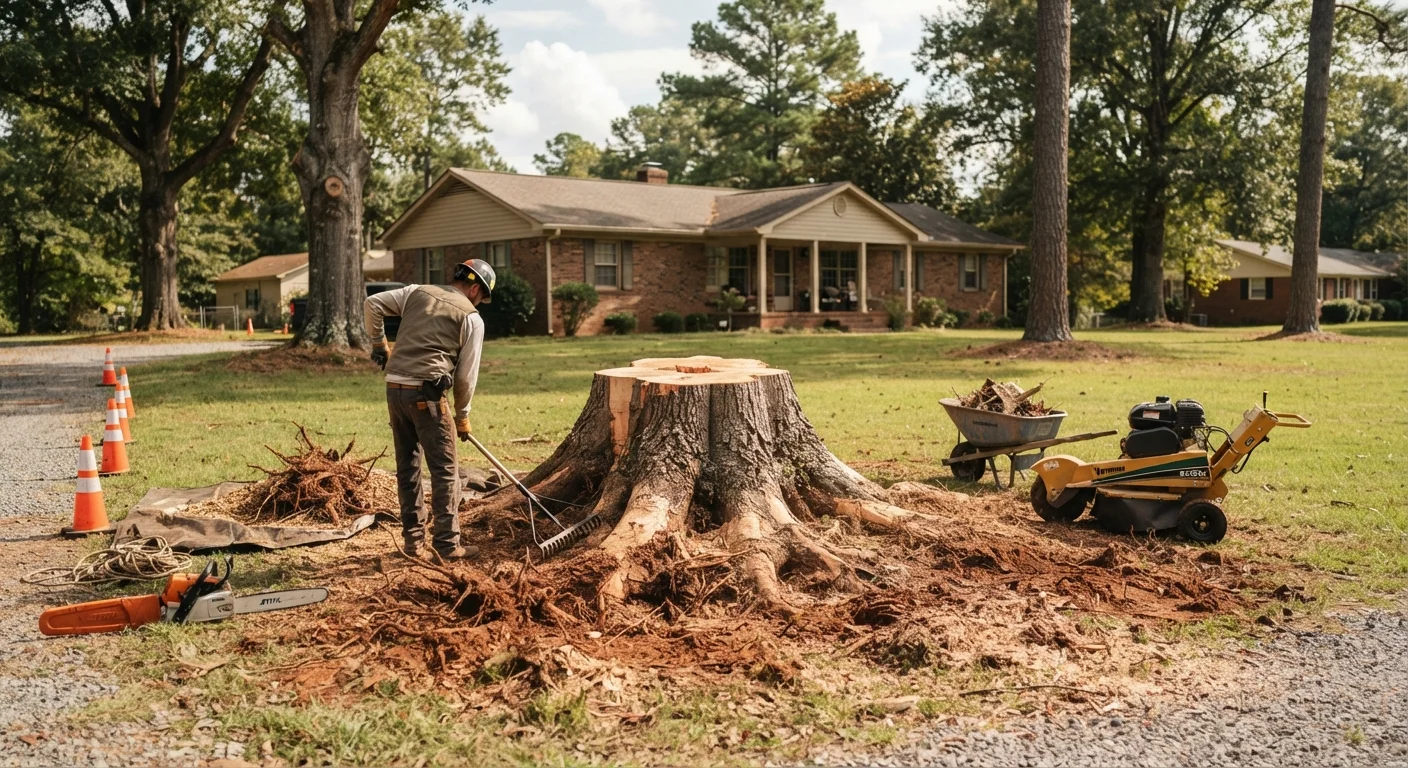
A grinder uses a spinning wheel with teeth to chew the stump into chips. SDSU Extension says pros usually grind the stump 8 to 12 inches deep, plus surface roots that flare out. Roots below that are left to rot.
- Fast. Most stumps take an hour or less.
- Little damage to the lawn around it.
- Leaves a pile of wood chips and a shallow hole.
What Is Full Stump Removal?
Full removal pulls the stump and main roots out of the ground. It often needs an excavator or heavy equipment.
- Removes the root ball.
- Leaves a large hole that needs fill.
- Disturbs much more soil and lawn.
- Often costs more.
Stump Grinding vs Stump Removal: Side by Side
- Depth: Grinding goes about 8 to 12 inches. Removal takes the root ball.
- Yard damage: Grinding is low. Removal is high.
- Time: Grinding is quick. Removal is slower.
- Best for: Grinding suits lawns and beds. Removal suits building sites, driveways and foundations.
When Full Removal Makes Sense
- You are pouring a slab, patio or driveway over the spot.
- You are building an addition or shed there.
- You are clearing a lot for construction. See lot clearing.
Replanting After Grinding
Wood chips can tie up nitrogen in the soil as they break down. Illinois Extension suggests hauling off the chips and filling with quality topsoil if you plan to lay sod there. Plant a new tree a few feet away from the old stump spot.
Can Stumps Sprout?
Yes. Some species send up shoots from a live stump or roots. Grinding helps. Illinois Extension notes that fresh cuts can also be treated with a systemic herbicide to stop sprouts. Follow label directions.
What It Costs
Grinding is often priced by the stump’s diameter. Chip hauling and backfill may cost extra. Ask your crew what is included. See what affects tree removal cost.
Full details on our service are on the stump removal page.
Ready to get rid of a stump? Call for stump grinding help near you in Rome or Floyd County.
What Happens to the Roots After Grinding
The main roots stay in the ground and rot slowly. This is usually fine for lawns and beds. Over years, small dips may form as roots decay. Top them up with soil.
Grinding Near Houses, Walks and Fences
Grinders can work close to structures, but crews take care near foundations, pipes and fences. Point out any irrigation lines, invisible dog fences or lighting wires before work starts.
Clean-Up After Grinding
- Chips can be left in the hole, raked out, or hauled away.
- For lawns, remove most chips and add topsoil.
- For garden beds, chips can be used as mulch elsewhere.
Grinding After Storms
After big storms, many owners have several stumps at once. Ask for a per-stump price and a bundle price.
Stumps Under New Construction
Under slabs, driveways and footings, full removal is the safer choice. Rotting roots can cause settling. See how to clear a lot for building.
Grinding in Rocky or Root-Heavy Ground
Rocks hidden in roots can dull or break grinder teeth. Some lots in Floyd County have rocky soil. Crews may charge more or work more slowly where rocks are common. Point out any known buried rocks, old fence posts or concrete.
Large Root Flares
Big oaks often have wide root flares above ground. Grinding these surface roots adds time. Ask if your quote includes surface roots or just the main stump.
Can You Plant a New Tree in the Same Spot?
It is better to plant a few feet away. The old root zone is full of decaying wood and chips. New trees grow better in fresh soil.
Grinding Near Septic Systems
If you have a septic tank or drain field, mark it before grinding. Heavy machines and deep grinding can damage lines.
Quick Recap
- Grinding goes about 8 to 12 inches deep.
- Full removal suits building sites.
- Remove chips and add topsoil for lawns.
- Plant new trees a few feet away.
- Mark septic and buried lines first.
Local Notes for Rome and Floyd County
Big oak stumps are common in Rome yards. They are dense and slow to rot, so grinding is often the practical choice. Rocky or root-heavy soil in parts of Floyd County can slow grinding.
FAQs
Can I grind a stump myself?
Rental grinders exist, but they are heavy and can throw debris. Hidden rocks and lines add risk. Call 811 before any digging.
Should I leave the stump?
Sometimes it is fine. See should you leave a tree stump.
How deep should a stump be ground?
Many pros grind 8 to 12 inches below grade. Deeper if you plan to plant or lay sod.
How long does grinding take?
Most residential stumps take under an hour.
Is stump grinding noisy?
Yes, grinders are loud. Most jobs are short.
Do I need to be home for stump grinding?
Not always. Mark the stumps and any buried lines, and agree on cleanup in advance.
What size stumps can be ground?
Most stumps can be ground. Very large stumps just take more time.
Before the Grinder Arrives
- Mark each stump you want ground.
- Flag sprinkler heads, lights and buried wires.
- Move cars and outdoor furniture.
- Decide what to do with the chips.
Will grinding leave a hole?
Yes, a shallow hole full of chips. Fill it with topsoil.
Can grinding damage my lawn?
Grinders are fairly light, but some turf marks are normal near the stump.
Sources
These outside sources informed this guide:
- SDSU Extension: How to Remove a Stump
- University of Illinois Extension: What to Do With That Tree Stump
Georgia sources: UGA Extension: Hiring a Tree Care Service