Storm Tree Debris Cleanup: A Safe Step-by-Step Guide
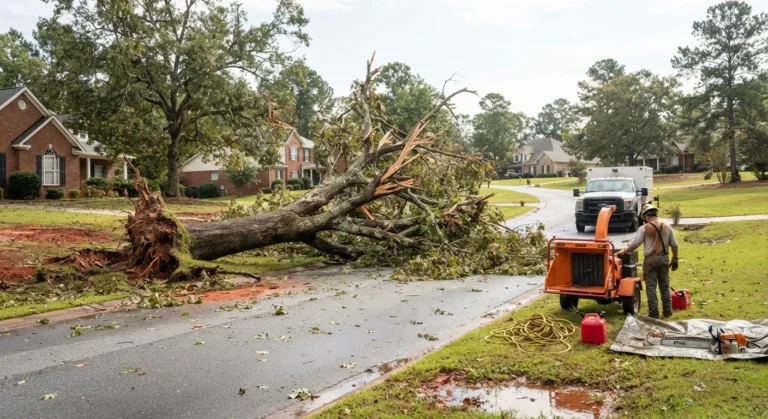
The storm is over. Your yard is full of branches. It is tempting to grab a chainsaw and start. Slow down. Many storm injuries happen during cleanup. This guide walks through storm tree debris cleanup safely for Rome and Floyd County homeowners.
Step 1: Check for Hazards
- Look for downed wires. Stay 35 feet back. See tree on a power line.
- Look up for hanging broken branches.
- Check trees for new leans. See leaning tree after a storm.
Step 2: Photograph Everything
Take photos before cleanup. Your insurer may need them. See does homeowners insurance cover tree removal.
Step 3: Sort What You Can Do
- DIY: Small branches on the ground, with no tension and no wires nearby.
- Pro: Trees on structures, trunks under tension, large limbs, anything near wires.
Step 4: Work Safely
- Wear gloves, eye protection and sturdy boots.
- Do not work alone.
- Watch for bent limbs. They can spring when cut.
- Take breaks. Fatigue causes accidents.
Step 5: Dispose of Debris
- Chip it into mulch.
- Stack firewood to season.
- Use city or county yard waste pickup. Check current rules.
- Burn only when allowed. Floyd County bans open burning May 1 to Sept 30. See can you burn tree debris.
Watch for Scams
Storm cleanup draws door-to-door crews. Check insurance and get a written quote. Read storm tree service scams.
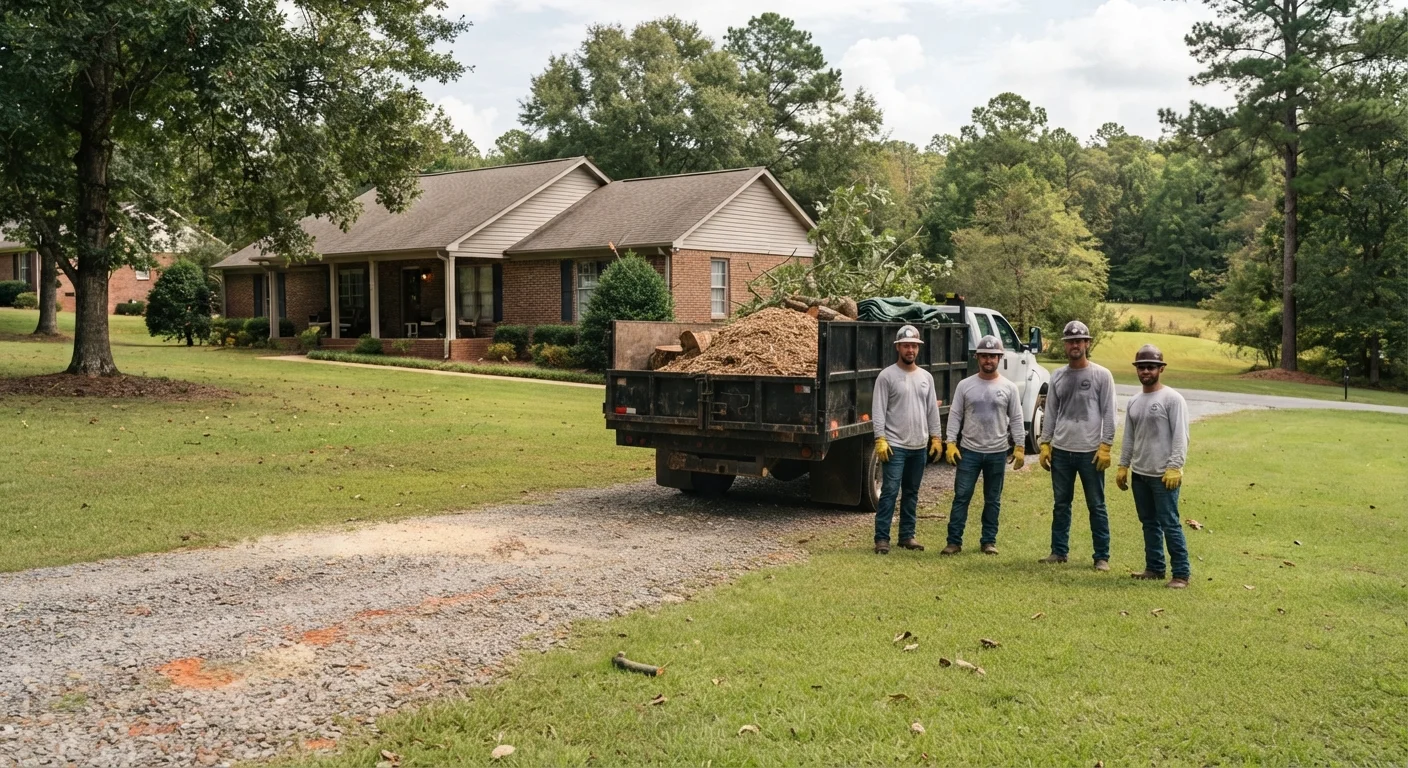
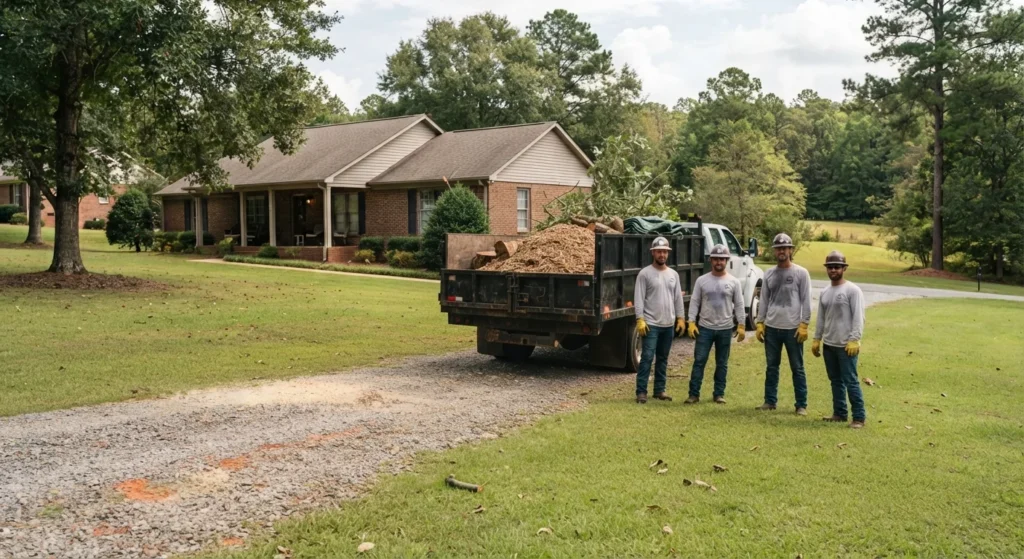
For full cleanup service, see tree debris cleanup.
Too much debris to handle? Call for help near you in Rome or Floyd County.
Chainsaw Safety During Cleanup
Chainsaw injuries rise after every big storm. Many come from people who rarely use a saw. If you must cut small debris yourself, follow these basics.
- Read the manual and check the chain brake before you start.
- Wear chainsaw chaps, a helmet with face shield, ear protection and gloves.
- Cut at waist height or lower. Never above your shoulders.
- Watch the tip of the bar. Kickback happens when the tip touches wood.
- Stand to the side of the cut, not behind it.
- Never cut from a ladder.
If a limb is bent, pinned or twisted, leave it. Stored energy can snap it toward you when cut. That is a job for a trained crew.
Sorting Your Debris for Pickup or Disposal
Good sorting makes cleanup faster and cheaper.
- Brush pile: small limbs and twigs for chipping or pickup.
- Wood pile: trunk and limb sections for firewood. Split and stack off the ground.
- Leaves: bag or compost.
- Do not mix in: trash, lumber, roofing, fencing or metal. These usually need separate disposal.
Keep piles away from the street edge and storm drains. Do not block sidewalks or sight lines at driveways.
Protect Your Lawn and Trees
- Do not drive heavy trucks over tree roots if you can avoid it. Compaction hurts roots.
- Rake debris off the lawn soon. Piles left for weeks can kill grass.
- Check standing trees for torn bark and broken limbs. Clean pruning cuts help them recover.
When Cleanup Becomes a Removal Job
Sometimes cleanup reveals bigger problems. A tree that looked fine may now have a split, a lean or a root plate pulling up. Stop and get it checked. Read the signs a tree is about to fall. If a tree is down on a structure, see what to do when a tree falls on your house.
Keep Records for Insurance
- Before and after photos.
- Receipts for tarps, rentals and hired help.
- Notes on dates and hours you worked.
- Written quotes and invoices from crews.
Many policies pay some debris removal when a covered storm damaged a structure. Limits are often low. See does homeowners insurance cover tree removal.
A Cleanup Plan by Day
- Day 1: Safety checks, photos, insurance call, clear driveways and doors.
- Day 2: Sort debris. Call a crew for big or risky pieces.
- Days 3 to 7: Chip, haul or set out debris for pickup. Recheck trees.
- Weeks after: Grind stumps, repair lawn, plan pruning for damaged trees.
Neighbors Helping Neighbors
After storms, Rome neighborhoods often pull together. Sharing a chipper rental or a crew visit can lower costs. Agree in writing on who pays for what, especially if trees cross property lines.
Common Cleanup Mistakes
- Cutting a trunk that is under tension.
- Working under hanging limbs.
- Burning during the summer ban.
- Throwing debris into creeks or ditches.
- Letting a door-knocker start work without a contract.
Damaged Trees That Can Be Saved
Not every storm-hit tree needs removal. A tree that lost a few limbs but has a sound trunk and roots may recover with good pruning. Clean up torn bark and broken stubs. Then watch it through the next growing season.
Quick Recap
- Check wires and hanging limbs first.
- Photograph before cleanup.
- DIY only small, untensioned debris.
- Sort brush, wood and leaves.
- Avoid door-to-door scams.
Local Notes for Rome and Floyd County
After storms, check Rome and Floyd County announcements for debris pickup schedules. Rules on size and bundling can change after big events. Burning is banned May 1 to Sept 30.
Chainsaw safety tips are also published by OSHA.
FAQs
Does insurance pay for debris cleanup?
Sometimes, with limits, when a covered storm caused damage to a structure.
Can I put branches at the curb?
Usually, if cut and bundled to local rules. Check with Rome or Floyd County.
How long should I wait to start cleanup?
Wait until the storm has fully passed and utilities have cleared any downed lines.
Is it safe to use a generator during cleanup?
Only outdoors and far from doors and windows. Never in a garage.
What do I do with large logs?
Split them for firewood, offer them to neighbors, or have the crew haul them.
Can I rent a chipper?
Yes. Read the safety rules carefully and never reach into the feed.
What to Leave for the Pros
- Trees on roofs, cars or fences.
- Trunks under tension.
- Anything near wires.
How soon will the city pick up debris?
After big storms, pickup can take weeks. Check local updates.
Georgia sources: Georgia Forestry Commission: Trees and Storm Safety