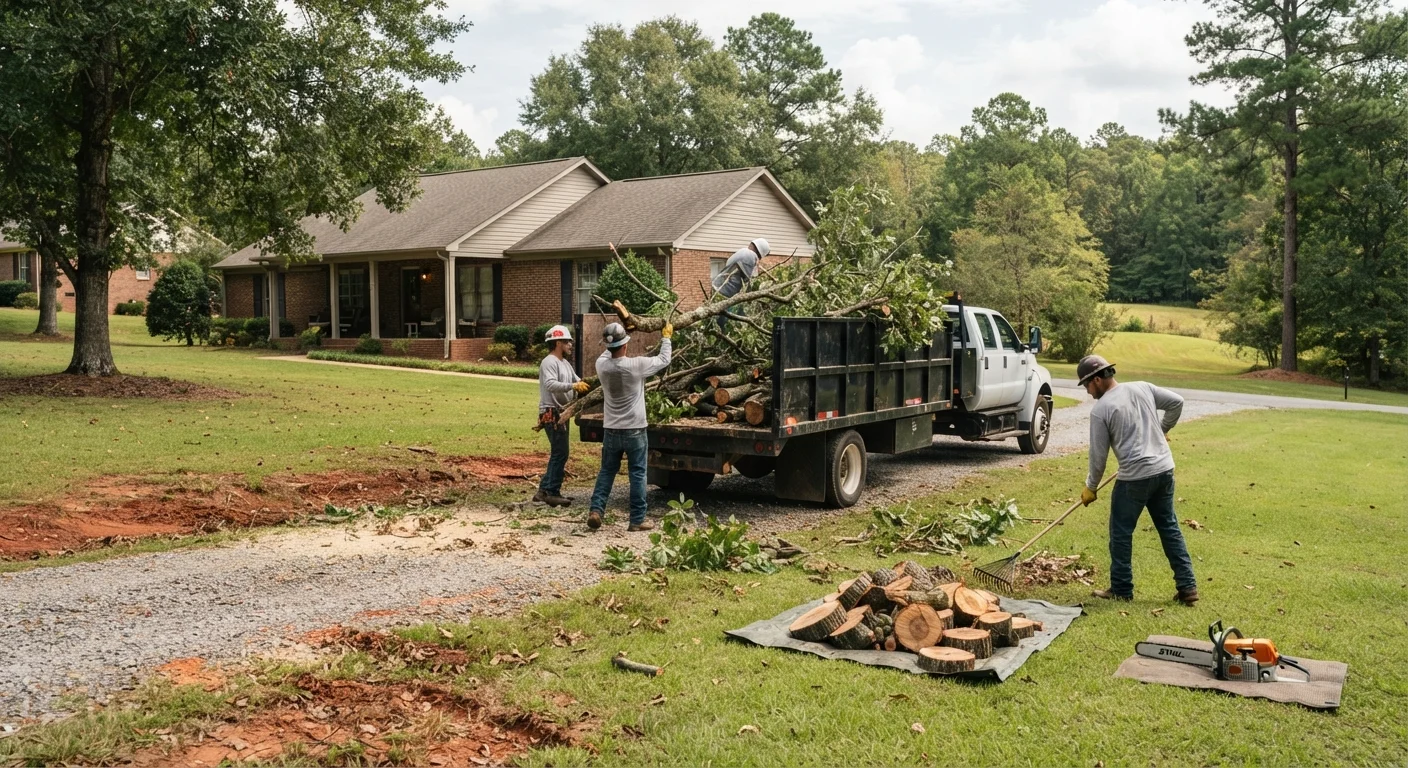
Does Homeowners Insurance Cover Tree Removal? A Georgia Guide
It is one of the first questions after a storm. Does homeowners insurance cover tree removal? The short answer: sometimes, with limits. Here is how it usually works for homeowners in Rome and across Georgia.
This is general information, not insurance or legal advice. Check your own policy and ask your agent.
When Policies Usually Pay
Most standard policies help when two things are true:
- The tree fell because of a covered peril, like wind, hail, lightning or fire.
- It damaged a covered structure, like your house, garage, shed or fence.
National General notes policies may also cover removal when a fallen tree blocks a driveway or a handicap ramp.
When Policies Usually Do Not Pay
- Removing a healthy tree before it falls.
- A tree that falls in the yard and hits nothing.
- A tree that fell from rot or old age, not a storm.
- Damage from a tree you ignored while it was clearly dead.
That last point matters. GEICO notes claims may be denied if negligence is found, such as ignoring a dead or rotting tree.
Removal Limits: The Fine Print
Even when removal is covered, it is often capped. GEICO cites typical debris removal limits of about $500 per tree and $1,000 per event. Big removals can cost far more. So many homeowners still pay part of the bill.
Repairs to the house itself are a separate part of the claim. They fall under your dwelling coverage and deductible.
How Big Are Tree Claims?
National General reports that the average insurance claim involving trees is over $4,000. That is why prevention pays off.
Whose Policy Pays?
- Your tree on your house: your policy.
- Neighbor’s healthy tree on your house: usually your policy.
- Neighbor’s dead tree they knew about: they may be liable. See neighbor tree responsibility.
- Tree on your car: your auto comprehensive coverage. See a tree fell on my car.
How to File a Tree Claim
- Make everyone safe. Stay clear of wires.
- Photograph the tree and all damage before cleanup.
- Call your insurer and get a claim number.
- Ask if removal is covered and what the limit is.
- Prevent more damage. Tarp the roof once the tree is off. Keep receipts.
- Get a written removal quote and itemized invoice.
- Meet the adjuster and share photos and quotes.
First-hour steps are in what to do when a tree falls on your house.
Never Do This
- Never sign your insurance check over to a contractor before the work is done.
- Never accept a crew’s offer to “cover your deductible.” Georgia’s Attorney General flags this as a red flag.
- Never let a crew file the claim for you without your review.
Read more in storm tree service scams.
For our full insurance page, see tree removal insurance in Rome, GA.
Need a tree quote in Rome or Floyd County? Call to describe the tree and get connected with help near you.
Tree Damage to Fences, Sheds and Garages
Most homeowners policies include coverage for other structures, like fences and sheds. A covered storm that drops a tree on a fence may be covered under that part of your policy. Limits and deductibles still apply. Read your declarations page.
Your Deductible
If damage is close to your deductible, a claim may not pay much. Some homeowners skip small claims to avoid rate impacts. Ask your agent before you decide.
Wind and Hail Deductibles
Some policies have separate wind or named storm deductibles, often a percentage of your dwelling coverage. These can be much higher than a standard deductible. Check if yours has one.
Documenting Pre-Storm Tree Care
If you have records showing you pruned or checked a tree, keep them. They help show the tree was not neglected. A tree risk assessment report is strong evidence of care.
Working With the Adjuster
- Be present at the inspection if you can.
- Point out all damage, including inside the attic.
- Share your photos and quotes.
- Ask questions about anything you do not understand.
- Get the adjuster’s findings in writing.
Quick Recap
- Policies usually pay when a covered storm drops a tree on a structure.
- Removal is often capped.
- Neglect can hurt claims.
- Document everything.
- Never sign over your check before work is done.
Local Notes for Rome and Floyd County
Georgia homeowners face spring storms and the occasional tropical system. Review your policy before storm season. Know your deductible, any wind deductible and your debris removal limits.
FAQs
Will a tree claim raise my premium?
It can. Ask your agent how storm claims affect your rate.
Is stump grinding covered?
Usually not. Policies focus on damage and debris, not stumps.
Should I remove a risky tree before it falls?
Often yes. It is not covered, but it may prevent a much bigger loss.
Does insurance cover a tree that fell from rot?
Often not. Rot and neglect are common exclusions.
Can I choose my own tree crew?
Usually yes. Check with your insurer about required documentation.
Does insurance pay to remove a tree that fell across my driveway?
Some policies pay limited removal costs when a tree blocks a driveway or ramp. Check your policy.
Are trees themselves covered?
Some policies pay limited amounts for trees and shrubs, often with exclusions for wind.
Common Claim Mistakes
- Cleaning up before taking photos.
- Waiting weeks to report damage.
- Not tarping and letting rain cause more damage.
- Losing receipts for emergency work.
- Signing over checks to contractors early.
How long do I have to file a claim?
Policies set deadlines. Report as soon as you can.
Does insurance cover a tree that fell with no damage?
Usually not, except limited cases like a blocked driveway.
Will my insurer send a tree crew?
Some insurers have preferred vendors. You can usually choose your own.
Sources
These outside sources informed this guide:
- National General: Storm Impacts of Tree Falling on Home or Car
- GEICO: Does Homeowners Insurance Cover Tree Removal?
- Georgia Consumer Protection Division
Georgia sources: UGA Extension: Tree Ownership and Responsibility