How to Cut a Large Tree Limb Safely (and When Not To)
A big limb needs to go. You have a saw. Before you start, know the right method and the limits of DIY. This guide shows how to cut a large tree limb the right way, for Rome and Floyd County homeowners.
When Not to DIY
- The limb is over a roof, car, fence or wires.
- You would need a ladder and a chainsaw at the same time.
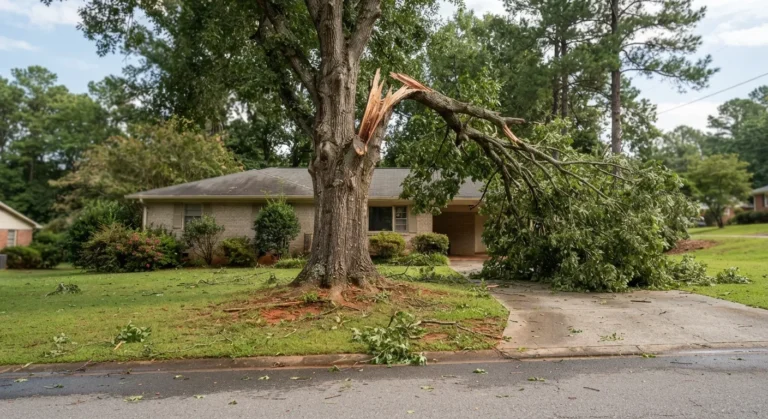
- The limb is broken, hanging or under tension.
- The tree is dead or decayed.
In those cases, call a pro. See hanging broken branches and DIY tree removal safety.
How to Cut a Large Tree Limb: The Three-Cut Method
Arborists use three cuts so a heavy limb does not tear bark down the trunk.
- Undercut. About a foot out from the trunk, cut upward a third of the way through.
- Top cut. A little farther out, cut down from the top until the limb drops.
- Final cut. Cut the remaining stub just outside the branch collar.
Where to Make the Final Cut
Look for the branch collar. It is the swollen ring where the limb meets the trunk. Cut just outside it. Do not cut flush with the trunk. Do not leave a long stub. A proper cut lets the tree seal the wound.
Safety Basics
- Wear eye, ear and hand protection.
- Keep both feet on the ground.
- Clear the drop zone. Keep people back.
- Never cut above shoulder height with a chainsaw.
- Do not use paint or sealer on most cuts. Oaks pruned from March to August are the exception.
Timing tips are in best time to prune trees in Georgia.
When to Call a Pro
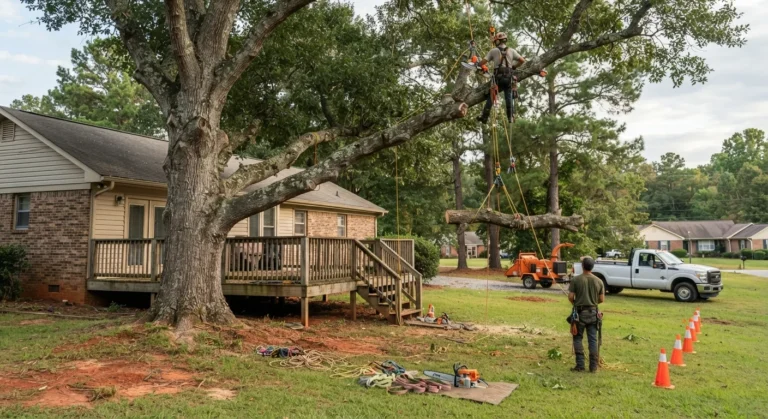
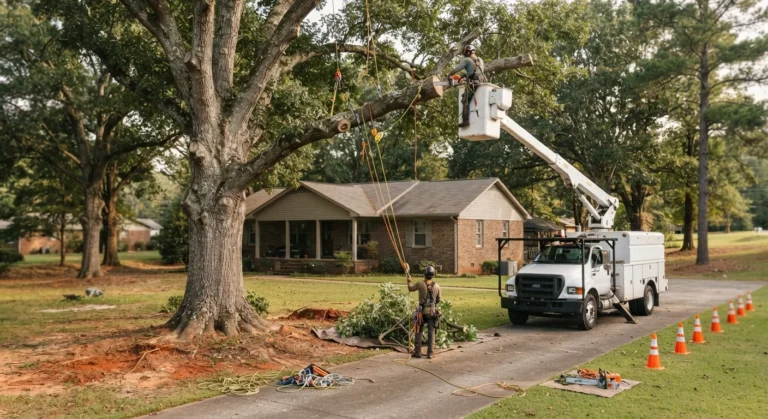
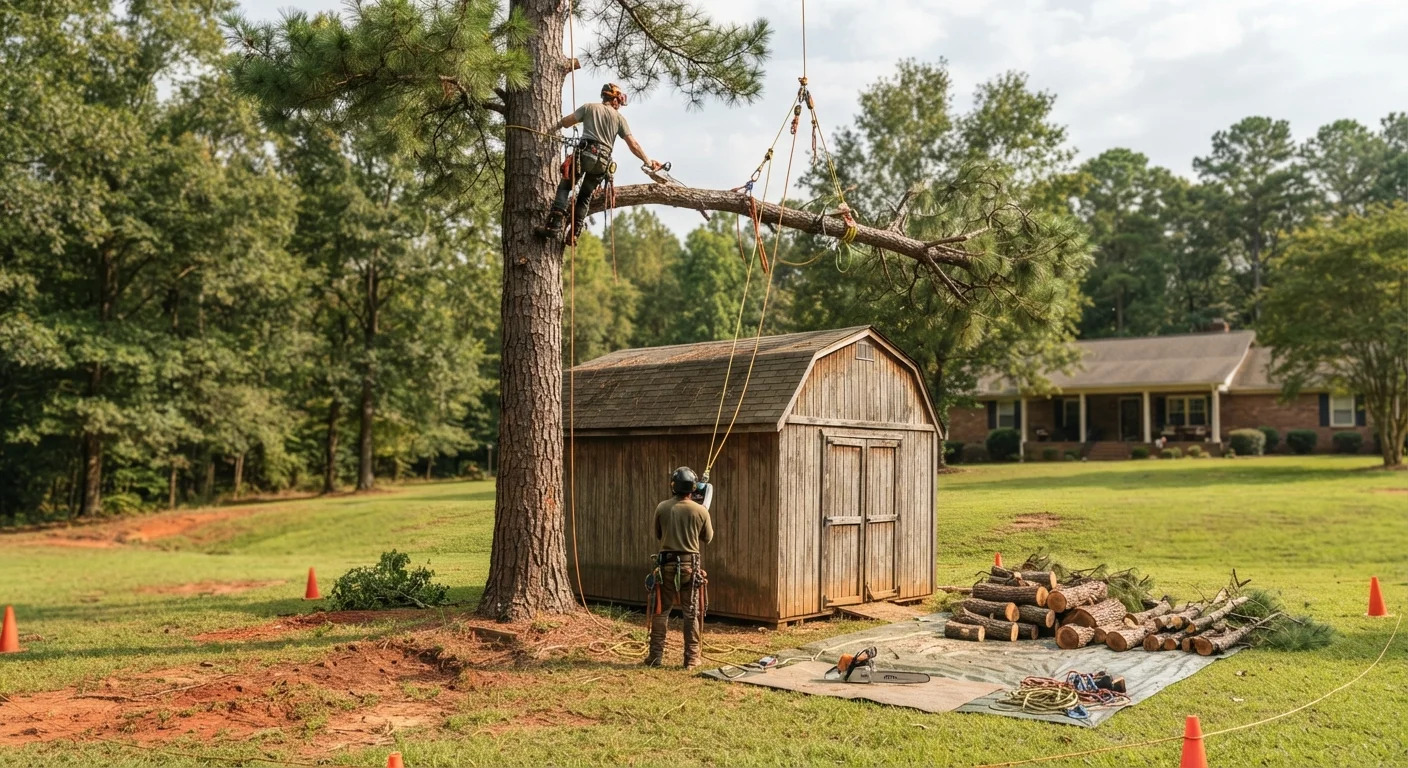
Large limbs over structures need ropes and rigging to lower pieces safely. See our tree limb removal in Rome, GA page.
Limb too big or too risky? Call for help near you in Rome or Floyd County.
Why the Branch Collar Matters
Trees do not heal wounds the way people do. They seal them off. The branch collar holds special tissue that helps grow a ring of new wood over the cut. Cut into the collar and that tissue is lost. Leave a long stub and the tree cannot close the wound at all. Decay can then move into the trunk.
A good cut leaves a slight bump where the collar was. Over a few seasons, a round “donut” of new wood forms around it.
Tools for the Job
- Hand pruners: twigs up to about half an inch.
- Loppers: small branches up to about an inch and a half.
- Pruning saw: limbs up to several inches. Clean, controlled cuts.
- Pole saw: higher limbs from the ground. Keep away from wires.
- Chainsaw: large limbs, at ground level only, with full safety gear.
Keep blades sharp and clean. Dull tools tear bark.
Which Limbs to Remove First
- Dead limbs.
- Broken or cracked limbs.
- Limbs rubbing on other limbs.
- Limbs growing back toward the center.
- Limbs touching the roof.
Stop there unless there is a clear reason to remove more. Each cut is a wound. Healthy trees need their leaves.
Big Limbs Need Planning
A limb that is 6 inches or more across can weigh hundreds of pounds. Where will it land? Will it bounce or roll? Will it swing back toward the trunk? Pros answer these questions before the first cut. They often tie the limb off and lower it with a rope through a pulley in the tree.
If the limb is over your house, fence or car, rigging is a must. DIY drop cuts over structures are a common cause of damage claims.
Oaks and Timing
In Rome, oaks are the most common large shade trees. Avoid cutting oak limbs from March through August if you can. Fresh wounds attract beetles that spread oak wilt. If a storm forces a summer cut, a light coat of wound dressing or latex paint is suggested for oaks only.
After the Cut
- Clear debris from under the tree.
- Watch the wound over the next seasons.
- Look for new sprouts and remove weak ones.
- Do not fertilize heavily to “help” the tree heal.
Signs You Cut Wrong
- Bark torn down the trunk.
- A long stub left behind.
- A flat cut into the trunk.
If this happens, a pro can sometimes clean up the cut to help the tree.
When a Big Limb Removal Changes the Tree
Removing a large limb can change the tree’s balance. Remaining limbs may catch more wind. If you remove a major limb, have the tree checked.
Quick Recap
- Use the three-cut method.
- Cut just outside the branch collar.
- Never cut from a ladder with a chainsaw.
- Big limbs over structures need rigging.
- Avoid oak cuts March through August.
Local Notes for Rome and Floyd County
Oaks are the most common large shade trees in Rome. Plan oak limb removal for late fall or winter. Storm-broken limbs should be cleaned up right away.
For the science behind proper cuts, see the ISA guide to pruning mature trees.
FAQs
Should I cut a limb flush with the trunk?
No. Flush cuts damage the collar and slow healing.
Is it OK to remove a big limb from a healthy tree?
Sometimes, but large wounds invite decay. Remove only what is needed.
How much of a tree can I prune at once?
Keep it light. Removing large portions of a healthy crown at one time stresses the tree.
Will the tree grow back where I cut?
New shoots may sprout near cuts, especially on bad cuts or topped trees.
Can I use a pole saw near wires?
No. Keep all tools and yourself well away from power lines.
Should I remove suckers after cutting a limb?
Yes. Remove weak sprouts so the tree puts energy into strong growth.
Common Limb-Cutting Mistakes
- Skipping the undercut.
- Cutting flush with the trunk.
- Standing under the limb.
- Working alone.
What if a limb is too thick for a handsaw?
Use a chainsaw at ground level or call a pro.
Georgia sources: UGA Extension: Shade and Street Tree Care · UGA Extension: Hiring a Tree Care Service