Does Tree Cabling Work? What Homeowners Should Know
You have a big tree you love. It has a weak fork or a heavy limb. Someone mentions cables. Do they really work? This guide explains what cables can and cannot do, for homeowners in Rome and Floyd County.
What Tree Cabling Does
Cables are installed high between major limbs. They limit how far the limbs can move apart in wind. Braces are rods bolted through weak unions or splits lower down. Together they share loads across the tree.
When It Helps
- A V-shaped fork with two similar stems.
- A union with bark trapped inside, called included bark.
- A heavy limb over a roof or driveway.
- A valuable tree you want to keep and can monitor.
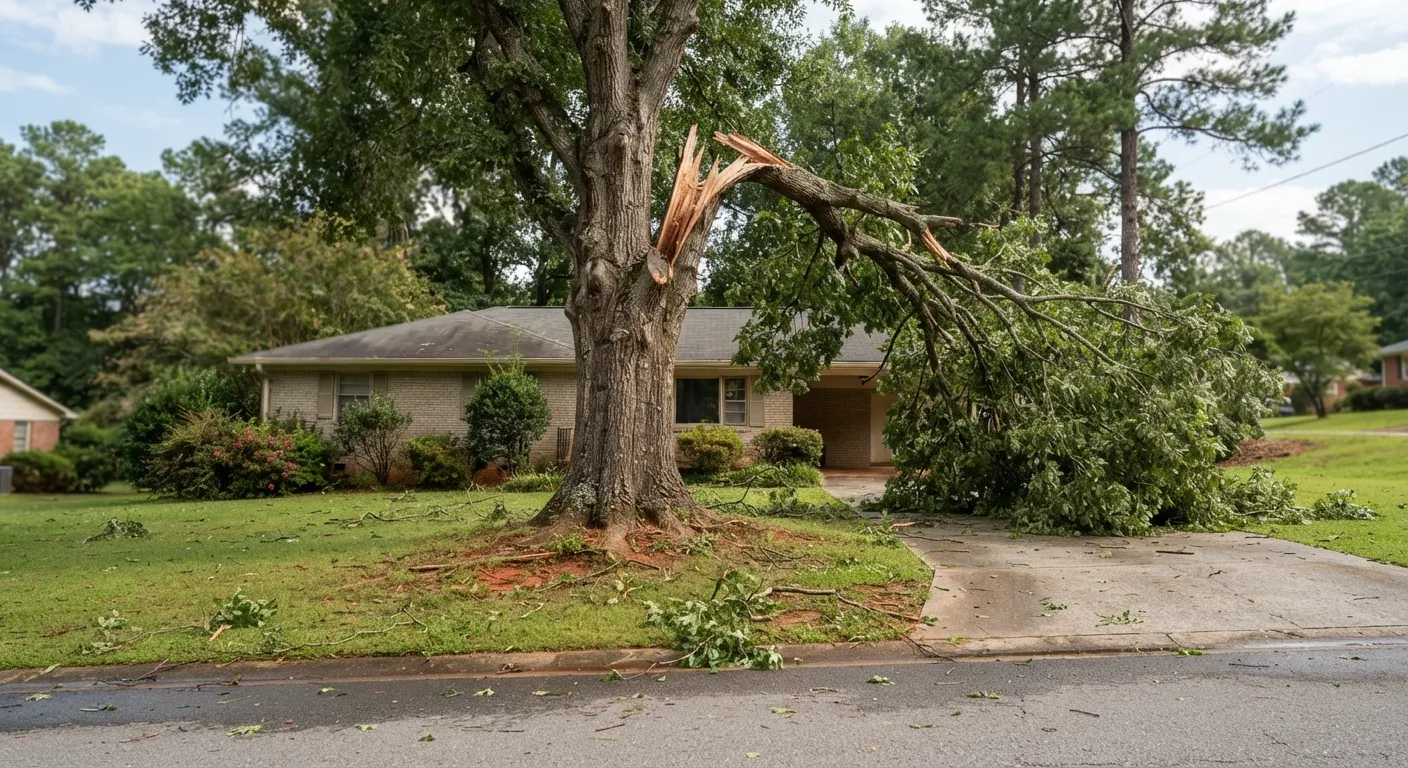
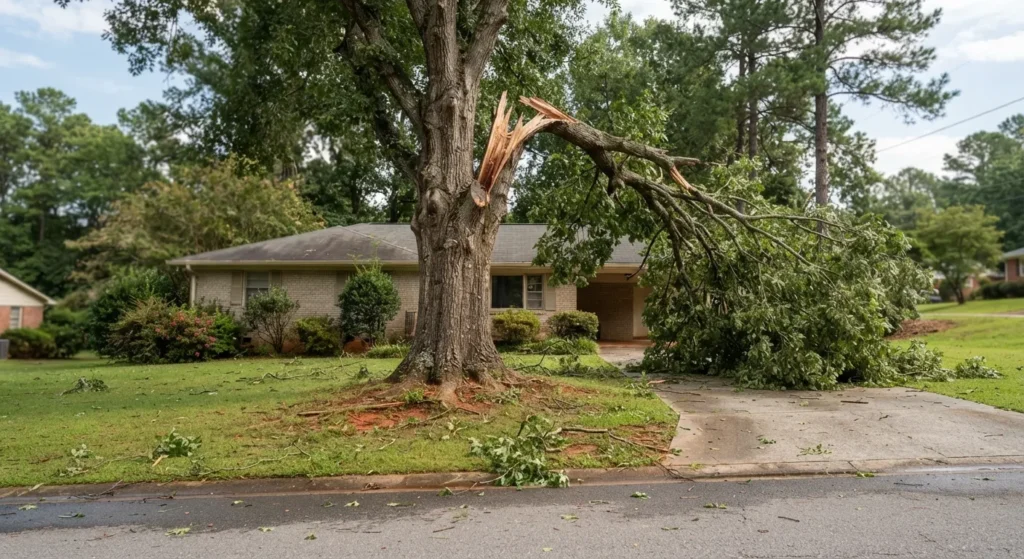
Learn about weak forks in is a cracked tree trunk dangerous.
When It Will Not Help
- Root problems or a new lean. Cables do not hold roots.
- Major decay in the trunk.
- A deep crack that is already opening.
- A tree that is already dying.
In those cases, removal is often safer. See leaning tree after a storm and mushrooms at the base of a tree.
Cabling Needs Upkeep
Cables are not install-and-forget. Industry standards (ANSI A300) recommend checking support systems at least once a year and after severe weather. Cables can loosen, wear or get grown over. Hardware may need adjusting as the tree grows.
Static vs. Dynamic Systems
Steel cables are strong and stiff. Synthetic dynamic systems allow some movement. Your arborist will choose based on the defect and tree.
Is It Worth It?
For a healthy, valuable tree with a weak fork, often yes. It can add years of safe life. For a failing tree, no. An honest assessment matters. Book a tree risk assessment first.
Service details are on our tree cabling and bracing page.
Want to know if cabling can save your tree? Call for help near you in Rome or Floyd County.
How Cables Are Installed
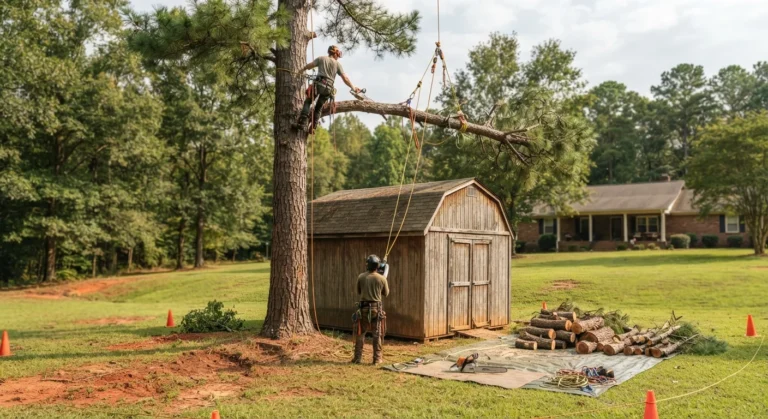
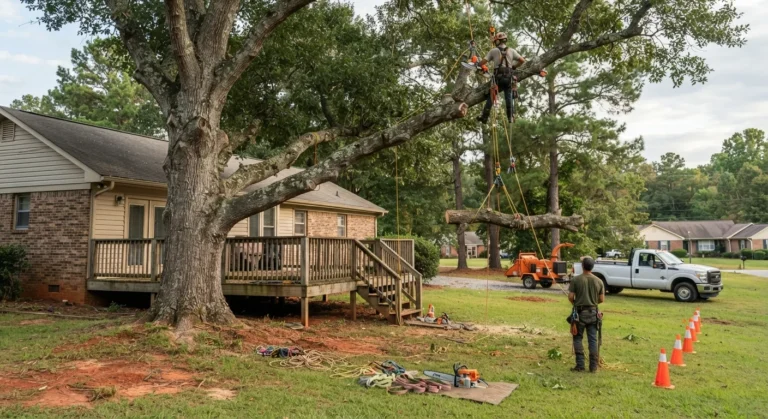
A climber goes up into the tree. They pick anchor points about two-thirds of the way from the weak union to the branch tips, where support is most effective. Hardware is set into sound wood. The cable is pulled snug but not tight, so the limbs can still move a little. Braces, when used, are bolted through the union lower down.
Good installs follow ANSI A300 standards. Ask your crew if they do.
Signs Your Existing Cables Need Attention
- Slack or sagging cable.
- A cable rubbing bark or being grown over.
- Rust or frayed strands.
- New cracks near the hardware.
- The tree has grown much since install.
Have cables checked at least yearly and after storms.
Cabling Oaks in Rome
Many large oaks in older Rome neighborhoods have codominant stems. These are common candidates for support. Remember oak timing. Work that wounds an oak is best done in late fall or winter. See best time to prune trees in Georgia.
Cabling Plus Pruning
Cables work best when paired with light pruning. Reducing weight at the ends of long limbs lowers the load on the cable and the union. That combination can add many years of safe life.
Cabling and Liability
A cable is not a guarantee. If a cabled tree fails, questions may arise about the install and upkeep. Keep records of installation and inspections.
Real-World Example
Picture a large white oak in a Rome front yard with two trunks rising from a V at about 12 feet. A storm cracks a small limb, and the owner worries about the fork. An arborist checks for cracks and decay. The union is sound. They reduce the longest limbs and install a cable high in the crown. The tree is rechecked yearly. That is cabling at its best: a healthy tree, a known weak spot, and a plan.
When an Arborist Says No
If an arborist says a tree is not a good candidate, listen. Cabling a tree with root rot or a failing trunk can give false comfort. Removal may be the safer call.
Cost Considerations
Cabling is often far cheaper than removing and replacing a large shade tree. But add yearly inspections to the cost over time.
Quick Recap
- Cables limit limb movement at weak forks.
- They help healthy trees, not failing ones.
- Inspect at least yearly and after storms.
- Pair cabling with light weight reduction.
- Get an assessment first.
Local Notes for Rome and Floyd County
Many older oaks in Rome have codominant stems, especially in yards developed decades ago. Cabling can extend their safe life when the tree is healthy. Pair it with yearly checks.
FAQs
Does cabling hurt the tree?
Installed correctly, the small hardware wounds are minor compared with the support provided.
Can I install cables myself?
No. It needs climbing, proper hardware and knowledge of tree loads.
How long do tree cables last?
It varies with hardware, tree growth and weather. Regular inspection tells you when to adjust or replace.
Can cables be removed later?
Yes, but do not remove them without a pro checking that the tree no longer needs support.
Can cables stop a tree from falling in a hurricane?
They reduce stress on weak unions. They cannot hold a tree with failing roots.
Will cabling stop a crack from spreading?
A brace may help hold a split. It does not guarantee the crack will not grow.
How soon after a storm should cables be checked?
As soon as practical, especially after high wind or ice.
Before Installing Cables
- Get a risk assessment of the whole tree.
- Ask which system and hardware will be used.
- Ask about inspection schedules and costs.
- Keep written records of the install.
Does cabling need a permit?
Usually not on private property. Check any HOA rules.
Can I cable a pine?
Pines are rarely cabled. Ask an arborist.
Sources
These outside sources informed this guide:
Georgia sources: UGA Extension: Shade and Street Tree Care · UGA Extension: Hiring a Tree Care Service