Home / Neighbor Tree Responsibility
Rome, GA & Floyd County — Whose Tree, Whose Responsibility
Neighbor Tree Responsibility in Rome, GA — Who’s Liable?
Neighbor tree responsibility in Rome, GA raises a different set of questions than a problem entirely on your own land.
Whose tree is it, what can you do about branches or roots crossing over, and who’s responsible if it actually falls. This page covers what Georgia guidance generally says on each.
Neighbor Tree Responsibility in Rome, GA: Whose Tree Is It, Technically?
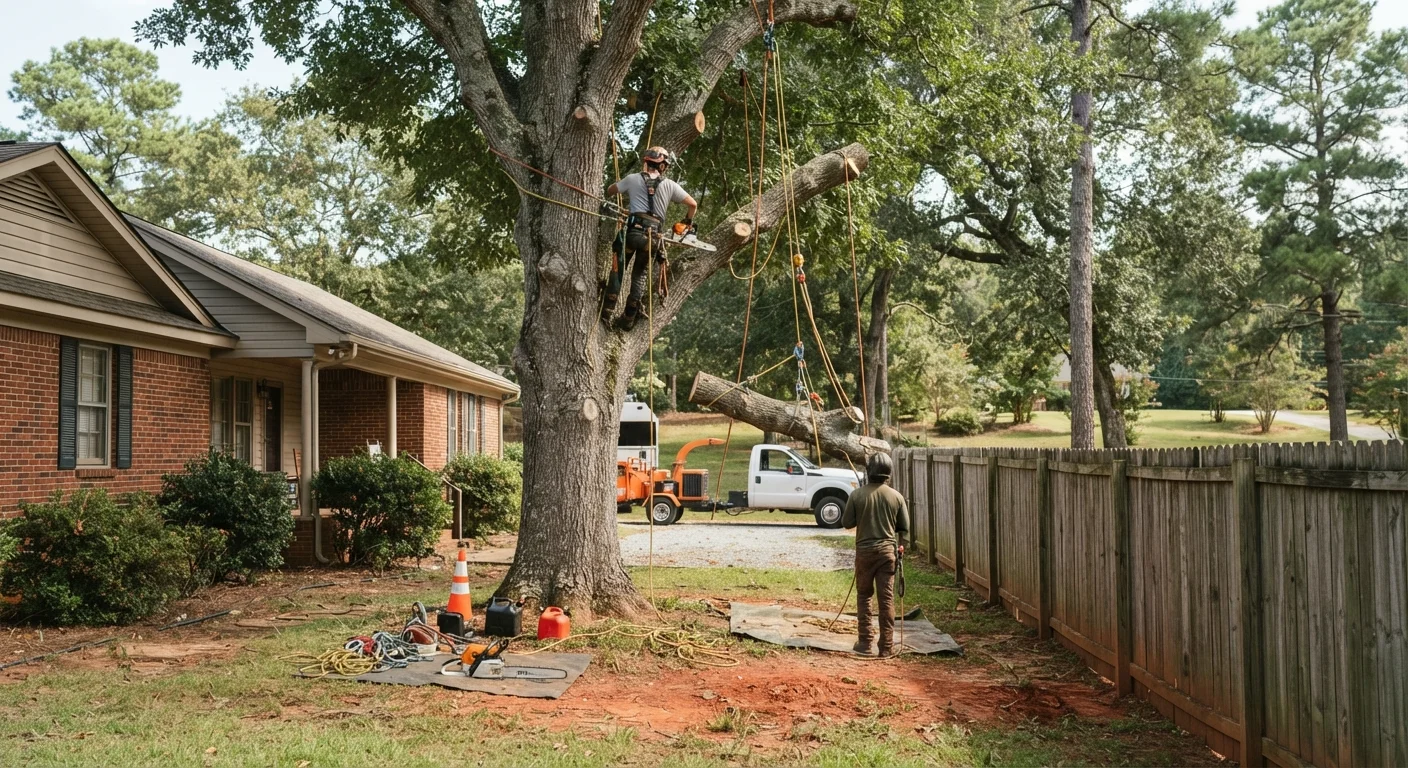
Tree ownership is generally determined by where the trunk is rooted, not by where the branches or canopy extend.
If the trunk is on your neighbor’s property, it’s their tree, even if most of its canopy hangs over your yard.
If a tree’s trunk straddles a property line, ownership can be considered shared, which tends to complicate decisions about removal or major work.
This is a situation worth clarifying with both property owners in writing before anyone acts unilaterally.
Can I Trim Branches That Hang Over My Property?
Generally, yes. Georgia guidance allows a property owner to trim overhanging branches back to the property line, from their own side, without needing the tree owner’s permission.
As long as the trimming doesn’t cross onto the neighbor’s property and doesn’t damage or kill the tree itself.
A few practical points:
- Stay on your side of the line. Trimming from a ladder or lift positioned on your neighbor’s property without permission is a different matter. It isn’t the same as cutting branches that hang over from your own yard. Neighbor tree responsibility in Rome, GA starts with the property line.
- Don’t over-prune. Excessive cutting that damages the tree’s health or structural stability can shift a straightforward trim into a liability question of its own.
- The cut branches are generally yours to deal with, not something to hand back over the fence.
- This gets more complicated if the tree is dead, dying, or an obvious hazard. At that point, the conversation shifts from routine trimming to a hazard concern, covered further down this page.
Can I Cut Roots That Cross Onto My Property?
The same general principle tends to apply — you can typically address roots on your own side of the property line, within reason.
The caveat matters more here than with branches. Aggressive root cutting can seriously damage or destabilize a tree. Sometimes the damage isn’t obvious until much later (canopy decline, a new lean, or even a delayed structural failure).
If you’re dealing with root intrusion from a neighbor’s mature tree, a conversation with an arborist before cutting significant roots is worth the time.
Both to protect the tree and to protect yourself if cutting roots contributes to a later failure. → More on root damage and stability
Free written estimate — call now, day or night.
📞 Call Now: (762) 470-0249If a Neighbor’s Tree Falls on Your Property
This is where most of the real confusion happens, so it’s worth being precise about it.
The general rule: responsibility for a fallen tree generally follows where it lands.
If your neighbor’s tree falls into your yard, your own homeowners insurance is typically what responds. It’s not a claim against your neighbor, even though it was their tree.
The exception: if the tree’s owner knew, or reasonably should have known, that the tree was hazardous before it fell. Visibly dead, clearly leaning, or previously flagged trees all count. That knowledge can shift responsibility back to them.
Neighbor tree responsibility in Rome, GA can change on that point.
This is genuinely case-specific and often turns on documentation: had you raised a concern with them beforehand? Was the hazard visibly obvious to any reasonable observer? Had the tree already shown clear warning signs?
What actually helps your position, if this applies to you:
- Any written communication (texts, emails, a letter) where you’d previously raised a concern about the tree
- Photos of the tree’s condition before it fell, if you have any
- Documentation of the tree’s condition immediately after it fell
If Your Tree Falls on a Neighbor’s Property
The same general rule works in reverse. Responsibility typically follows the landing property. Your neighbor’s insurance is usually what responds, not a direct claim against you, unless the same hazardous-knowledge exception applies in reverse.
If you were aware your tree was a hazard and hadn’t addressed it, that awareness can work against you. It works the same way against a neighbor in the same position. That’s neighbor tree responsibility in Rome, GA in both directions.
What If It Was a City-Owned Tree?
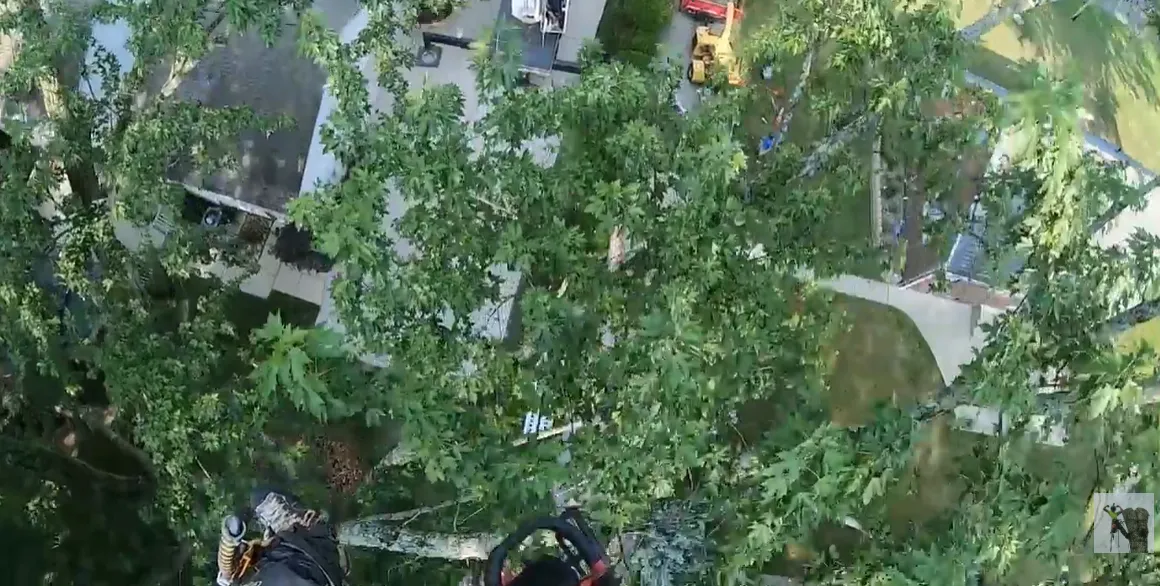
A tree in the city right-of-way (the strip between the sidewalk and the street) that falls and damages your property is a different situation. It isn’t like a neighbor’s tree.
Neighbor tree responsibility in Rome, GA differs for city trees. It involves a government entity rather than a private property owner.
If you’d previously reported the tree as a concern, that documentation matters here just as much as it would with a neighbor.
A written report to Rome Urban Forestry (706-236-4585) or a similar prior complaint is worth keeping.
Cities generally have some level of protection from liability for conditions they weren’t made aware of. That’s part of why documenting a concern before a failure, not just after, genuinely matters if you’re ever in this situation.
How to document a concern about a city tree, going forward: a written report rather than only a phone call. Email is easiest to keep a record of. Note the specific tree’s location and what concerned you.
That gives you something concrete if the situation escalates later. Neighbor tree responsibility in Rome, GA is easier to sort out with records. Neighbor tree responsibility in Rome, GA is easier to sort out with records.
This is a separate process from a private hazardous-tree nuisance case.
A hazardous tree on private property and a hazardous tree in the public right-of-way are handled by different mechanisms. Both start with reporting a concern. → Full permit and jurisdiction breakdown
Not sure if it’s urgent? Call and describe it — free advice, no pressure.
📞 Call Now: (762) 470-0249If a Hazardous Tree Isn’t Being Addressed
If a neighbor’s tree is genuinely hazardous and a direct conversation hasn’t resolved it, Rome’s city code includes a hazardous tree provision that allows the City Arborist to investigate.
In qualifying cases, the City Arborist can pursue abatement of a hazardous tree on private property as a public nuisance.
This is a separate process from an insurance claim after the fact. It’s meant to address the problem before it fails. → Full permit and legal question breakdown
If You Disagree With a Neighbor
- Put concerns in writing rather than relying only on a verbal conversation — this protects both of you if the situation escalates later
- Photograph the tree’s condition if you believe it’s genuinely hazardous, dated if possible
- Mediation through a local community mediation resource is sometimes a faster, less costly path than litigation for a straightforward dispute
- A licensed Georgia attorney is worth consulting for anything involving significant damage, a contested claim, or a neighbor relationship that’s already broken down. General guidance like this page is a starting point, not a substitute for advice on your specific situation
Rome & Floyd County Context
This applies across Rome (ZIP codes 30161, 30162, 30165) and surrounding Floyd County communities including Armuchee, Cave Spring, Lindale, and Shannon.
Given how often storms bring trees down across property lines in this area, neighbor-tree situations come up regularly here. You’re not dealing with an unusual scenario.
Tree emergency near you? A local crew is one call away.
📞 Call Now: (762) 470-0249How to Handle a Neighbor’s Tree Problem: Step by Step
- Document the tree. Take dated photos of dead limbs, lean, or damage risk.
- Talk to your neighbor. Share your concern in person first. Stay calm and specific.
- Send written notice. If nothing changes, send a dated letter describing the hazard.
- Get an arborist opinion. A written assessment supports your case if the tree is hazardous.
- Know when to escalate. Contact your insurer or an attorney if damage happens or risk grows.
Get Connected With Emergency Help
Tell us what happened and where — we’ll connect you with an available local crew serving Rome and Floyd County.
We serve all of Floyd County, GA.
Related guides: HOA tree rules: common areas vs. private lots
Frequently Asked Questions
Can I make my neighbor remove a tree I think is dangerous?
Not directly on your own. But if a direct conversation doesn’t resolve it and the tree genuinely poses a public safety risk, the city’s hazardous tree ordinance provides a path. The City Arborist can investigate and potentially pursue abatement.
Am I responsible for cleanup if my neighbor’s tree falls in my yard?
Generally yes. Your own homeowners insurance is typically what responds to clean it up and repair any damage. That’s similar to how it would with any other storm damage on your property. Unless the hazardous-knowledge exception applies.
What if we can’t agree on who’s at fault?
Documentation is what actually resolves these situations — written communication, photos, and dates matter more than verbal recollections. If a dispute doesn’t resolve informally, mediation or a licensed attorney’s involvement is the next step.
Does it matter if the tree was leaning toward my yard for years before it fell?
It can. A long-standing, visible lean that was never addressed is exactly the kind of fact that plays into the “knew or should have known” exception.
Which is part of why documenting a concern in writing, if you have one, is worth doing sooner rather than later.