Forestry Mulching vs Traditional Land Clearing: Which to Choose
Clearing overgrown land? You have two main paths. Forestry mulching grinds brush and small trees in place. Traditional clearing removes everything, roots and all. This guide helps Rome and Floyd County landowners choose.
What Is Forestry Mulching?
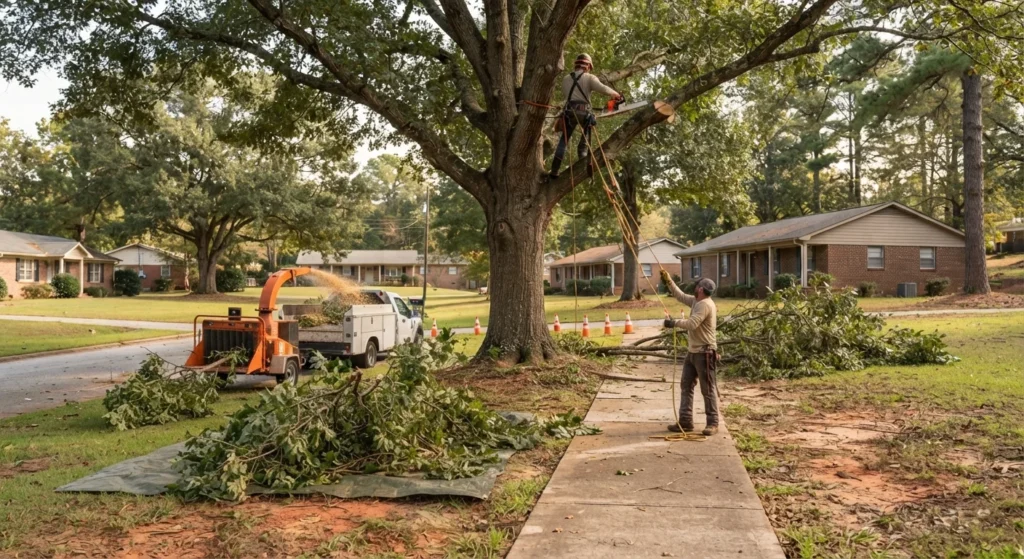
A tracked machine with a spinning drum grinds brush, saplings and small trees into mulch. The mulch is spread on the ground as it works. Stumps are often ground near the surface. There is no brush pile to burn or haul.
What Is Traditional Land Clearing?
Machines like dozers and excavators push over trees, pull stumps and roots, and pile debris. The debris is hauled off, chipped or burned where allowed. The ground is left bare.
Side by Side
- Soil: Mulching leaves a mulch layer that helps hold soil. Traditional clearing leaves bare dirt.
- Erosion: Mulch helps reduce runoff on slopes. Bare dirt needs erosion control.
- Debris: Mulching leaves none to haul. Traditional clearing creates piles.
- Roots and stumps: Mulching leaves roots in the ground. Traditional clearing removes them.
- Best for: Mulching suits trails, fence lines, pasture and lot cleanup. Traditional clearing suits building pads, driveways and foundations.
Which Is Right for You?
- Building a house or slab? You likely need roots out. Traditional clearing, or mulching plus stump removal.
- Opening up a wooded lot for views or use? Mulching is often faster and neater.
- Reclaiming pasture or fence lines? Mulching works well.
- Clearing on a hillside near a creek? Mulching may limit erosion.
Local Things to Check
- Burn rules, if debris will be burned. Floyd County has a May to September ban. See can you burn tree debris.
- Erosion and land disturbance rules for larger sites.
- Buried lines. Call 811 before work.
- Tree rules inside Rome city limits. See tree removal permits.
Learn more on our mulching service and land clearing pages.
Planning to clear land? Call for help near you in Rome or Floyd County.
What a Forestry Mulcher Looks Like at Work
Most mulchers are compact track loaders or tracked carriers with a drum head on the front. The head spins fast and grinds wood on contact. The operator walks the machine through brush and small trees. Mulch falls behind as a layer on the ground.
Good Uses Around Floyd County
- Clearing overgrown pasture edges.
- Opening up wooded lots for views or walking.
- Clearing fence lines and trails.
- Cutting back privet and other invasive brush.
- Fire breaks on rural land.
Limits of Mulching
- Big trees usually need to be felled first.
- Roots stay in the ground. That is fine for yards, not for foundations.
- Rocky ground can damage teeth and slow work.
- Very steep slopes may be unsafe for machines.
After the Work
The mulch layer breaks down over time. Grass and native plants often come back through thin spots. You may need to reseed bare areas. Expect some regrowth of brush from roots. A follow-up pass or spot treatment may be needed.
Erosion and Creeks
Georgia protects state waters with a 25-foot buffer under the Erosion and Sediment Control Act. Mulching is gentler on soil than bulldozing, but keep work near creeks within the rules. Larger land disturbance can also trigger permits. See how to clear a lot for building.
Questions for Your Contractor
- What size trees can your machine handle?
- Will you remove stumps where needed?
- How do you handle steep or wet ground?
- Are you insured for land clearing work?
Cost Factors for Mulching
- Density of brush and trees.
- Size of the area.
- Slope and ground conditions.
- Access for a tracked machine.
- Travel distance.
- Any stump or root removal needed.
Mulching for Wildfire Risk
Thick brush near homes can feed wildfire. Mulching reduces the fuel and creates defensible space. This matters most on rural lots.
Mulching Around Keeper Trees
Good operators can clear around trees you want to keep. Mark them clearly. Keep machines away from their root zones when possible.
Quick Recap
- Mulching grinds brush in place.
- Traditional clearing removes roots and stumps.
- Mulching helps limit erosion.
- Building pads need roots out.
- Respect the 25-foot stream buffer.
Local Notes for Rome and Floyd County
Rural parts of Floyd County, from Armuchee to Cave Spring, have plenty of overgrown pasture and woodlots. Forestry mulching is a good fit for many of these. Building sites usually need traditional clearing under the house.
FAQs
Can mulching handle big trees?
Mulchers handle brush and small to medium trees. Large trees are usually felled first.
Will grass grow through the mulch?
Often yes, over time, especially where the mulch layer is thin.
Does mulching kill invasive plants?
It cuts them down. Many will resprout, so follow-up is often needed.
How fast is forestry mulching?
Speed depends on density and terrain. Light brush goes fast. Thick woods take longer.
Can mulching be done in wet weather?
Tracked machines can work in some wet conditions, but very soft ground can cause ruts.
Is forestry mulching good for wildlife?
It can open habitat and leave mulch that feeds the soil. Leaving some brush islands helps wildlife.
How long does the mulch last?
It breaks down over a few years, faster in warm, wet weather.
Before Mulching Starts
- Mark property lines.
- Flag trees to keep.
- Mark wells, septic and buried lines.
- Call 811.
- Discuss creek buffers with your contractor.
Does mulching harm the soil?
It usually adds organic matter. Heavy machines can compact wet soil.
Can I mulch near my house?
Yes, operators can work close with care.
Can mulching remove poison ivy?
It cuts it down, but roots may resprout.
Sources
These outside sources informed this guide:
Georgia sources: Georgia Forestry Commission: Care for Your Trees